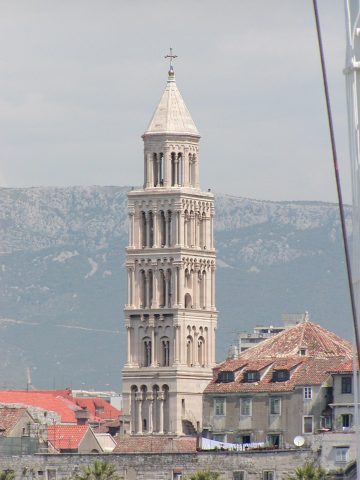
The Cathedral of St. Duje stands as one of the most recognizable landmarks in Split, a city where ancient history feels alive at every corner. Built on the site of an early Christian basilica, which itself was constructed over the ruins of Diocletian’s mausoleum, the cathedral carries layers of time within its walls. The original structure dates back to the 7th century, when the people of Split repurposed the emperor’s tomb into a place of worship, a decision that reflected both practicality and reverence. Over the centuries, the building evolved, blending Romanesque, Gothic, and later Baroque elements into a form that feels both grand and intimate.
The bell tower, rising above the city’s rooftops, is perhaps the most striking feature of the cathedral. Construction began in the 12th century, but the tower wasn’t completed until the 16th, and even then, it underwent several modifications. Climbing its narrow, winding staircase rewards visitors with a sweeping view of Split’s old town, the Adriatic Sea, and the distant islands on clear days. The tower’s uneven levels and asymmetrical details tell a story of patience and adaptation, a testament to the craftsmen who worked on it across generations.
Inside, the cathedral retains a sense of quiet dignity. The high altar, dedicated to St. Duje—Split’s patron saint—is a focal point, surrounded by intricate carvings and religious art that span centuries. The wooden choir stalls, adorned with delicate inlays, date back to the 13th century and offer a glimpse into the craftsmanship of the time. The cathedral’s treasury holds relics, manuscripts, and liturgical objects, some of which are rarely displayed but speak to the deep spiritual and cultural significance of the place.
One of the most intriguing aspects of the cathedral is its connection to Diocletian, the Roman emperor who built his palace in Split in the early 4th century. The mausoleum’s original structure was circular, a shape that still defines the cathedral’s core. The peristyle, the open courtyard just outside, was once part of the palace complex and remains one of the best-preserved examples of Roman architecture in the world. Walking through it, you can almost hear the echoes of ancient footsteps, the murmur of merchants, and the distant sound of waves against the palace walls.
The cathedral isn’t just a monument to the past; it’s a living part of Split’s daily life. Locals gather here for mass, weddings, and festivals, and the building’s presence is woven into the city’s rhythm. On the feast day of St. Duje, the streets fill with processions, music, and the scent of traditional foods, turning the cathedral into the heart of a celebration that has been repeated for centuries. Even on ordinary days, the peristyle serves as a meeting place, a spot for tourists to rest, and a stage for impromptu performances by street musicians.
The surrounding Lower Town, with its labyrinth of narrow streets and stone houses, complements the cathedral’s grandeur. The area feels like a village within a city, where laundry hangs between buildings and neighbors chat across balconies. Cafés spill onto cobblestone squares, and the scent of fresh seafood drifts from open-air konobas. The cathedral’s presence looms over these everyday scenes, a reminder that history isn’t just something to observe—it’s something you walk through, touch, and even taste when you sit down for a meal in one of the nearby restaurants.
Visiting the Cathedral of St. Duje is less about ticking off a landmark and more about stepping into a story that’s still unfolding. The building has survived earthquakes, invasions, and the slow march of time, yet it remains a place of quiet strength. Whether you’re drawn by its architecture, its history, or simply the chance to sit in the peristyle and watch the world go by, the cathedral offers something rare: a sense of continuity in a world that often feels fragmented. It’s a place where the past isn’t just remembered—it’s lived.