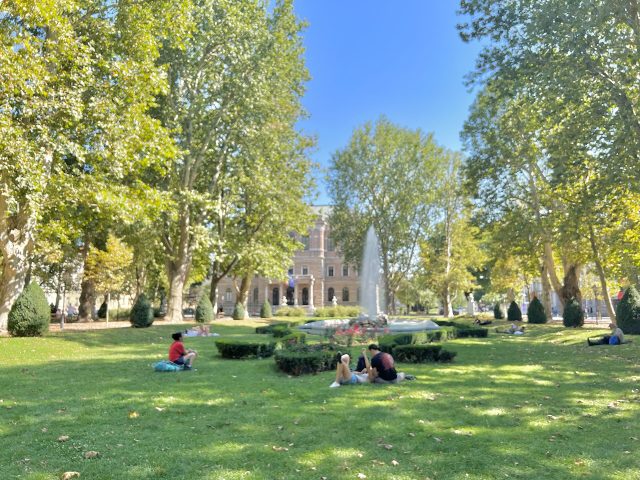
The Art Pavilion in Lower Town is one of those rare places where time seems to stand still, preserving the spirit of an era when art wasn’t just decoration but a vital part of urban life. Built in the early 20th century, it has witnessed the upheavals and revivals that shaped Croatia’s history. Today, it’s more than just a building—it’s a living space where the past and present intersect, hosting exhibitions, concerts, lectures, and workshops that inspire both locals and visitors.
The architecture of the Pavilion tells its own story, one of stone and light. Designed in a neoclassical style with subtle Art Nouveau touches, it reflects the cultural centers of early 20th-century Europe. The façade is adorned with columns and intricate stucco work, while tall windows flood the interior with soft, diffused light, creating an atmosphere that feels both grand and intimate. Inside, the spaces are thoughtfully arranged to serve as a backdrop for art—whether paintings, sculptures, or installations—without distraction. The simplicity of the design allows visitors to fully engage with the work on display.
From the beginning, the Pavilion was conceived not just as an exhibition space but as a meeting point for artists, critics, and art lovers. Over the years, it has hosted landmark exhibitions by both Croatian and international artists, many of which left a lasting mark on the country’s cultural scene. Some of the most influential local artists debuted their groundbreaking work here, and the building continues that tradition today, remaining a platform for experimentation and dialogue across generations.
For Lower Town, the Art Pavilion is more than a cultural institution—it’s part of the neighborhood’s identity. Situated in the heart of the historic district, it’s surrounded by narrow streets and old houses that give the area its charm. Nearby, you’ll find cozy cafés, small galleries, and bookshops where life hums at its own unhurried pace. It’s easy to spend an entire day here, moving from one exhibition to the next, then stopping for coffee to discuss what you’ve seen.
While the Pavilion is best known for its visual art exhibitions, it’s far from limited to them. The space regularly hosts classical and contemporary music concerts, theatrical performances, and poetry readings. In the summer, the inner courtyard transforms into an open-air stage, where jazz improvisations or spoken-word performances unfold under the stars. This versatility makes the Pavilion a truly dynamic place, where there’s always something to suit different tastes.
The building hasn’t always looked the way it does today. Over the decades, it has undergone several renovations, each adding new layers to its character. In the mid-20th century, it nearly lost its cultural purpose when it was repurposed for other uses. Fortunately, thanks to the efforts of local advocates and city officials, the Pavilion was restored to its original role, and today it once again plays a central part in the city’s cultural life.
Visiting the Art Pavilion isn’t just about viewing exhibitions—it’s about immersing yourself in an atmosphere of creativity. There are no rigid rules here; you can linger in front of a painting, chat with other visitors, or simply sit in quiet contemplation. Guided tours often delve into the building’s history, its architectural details, and the people who have shaped its legacy, offering a deeper understanding of the space.
For those interested in contemporary art, the Pavilion is a treasure trove. It frequently showcases the work of emerging artists whose pieces haven’t yet made it into major museums. This is a place where you can see art in the making, observe current trends, and even meet the creators themselves. Some exhibitions spark debates, and that’s part of what makes the Pavilion so vibrant and relevant.
The Art Pavilion in Lower Town is more than just a building—it’s a place where history and modernity intertwine, where art becomes part of everyday life, and where the city’s cultural pulse beats a little stronger. Whether you spend an hour or a whole day here, you’ll leave with something new—whether it’s a glimpse into the past or a fresh perspective on the present. That’s why it remains a favorite for both locals and first-time visitors to Lower Town.