Diocletian’s Palace in Split is one of those rare places where history doesn’t just linger in museums or ruins—it lives in the streets, the walls, even the way people move through the city. Built at the turn of the 4th century as a retirement home for the Roman emperor Diocletian, this sprawling complex was never just a palace in the modern sense. It was a fortified town, a statement of power, and eventually, the foundation of what would become Split itself. The emperor, who had spent his life expanding and defending the empire, chose this spot on the Adriatic coast for its mild climate and strategic position. What he left behind was a structure so vast and well-planned that it would shape the city’s destiny for centuries to come.
Walking through the palace today, it’s easy to forget you’re in a 1700-year-old structure. The original layout—a rectangle with walls nearly 200 meters long on each side—still defines the heart of Split. The southern facade, facing the sea, was once lined with grand arcades where Diocletian could stroll with a view of the water. Now, those same arches frame cafes and small shops, their tables spilling onto the promenade where locals and visitors alike sip coffee in the afternoon sun. The palace’s main streets, the cardo and decumanus, intersect at the Peristyle, the central square that was once the ceremonial heart of the complex. Here, the emperor would address his subjects from a raised platform, while today, the space is alive with the murmur of tourists and the occasional street performer.
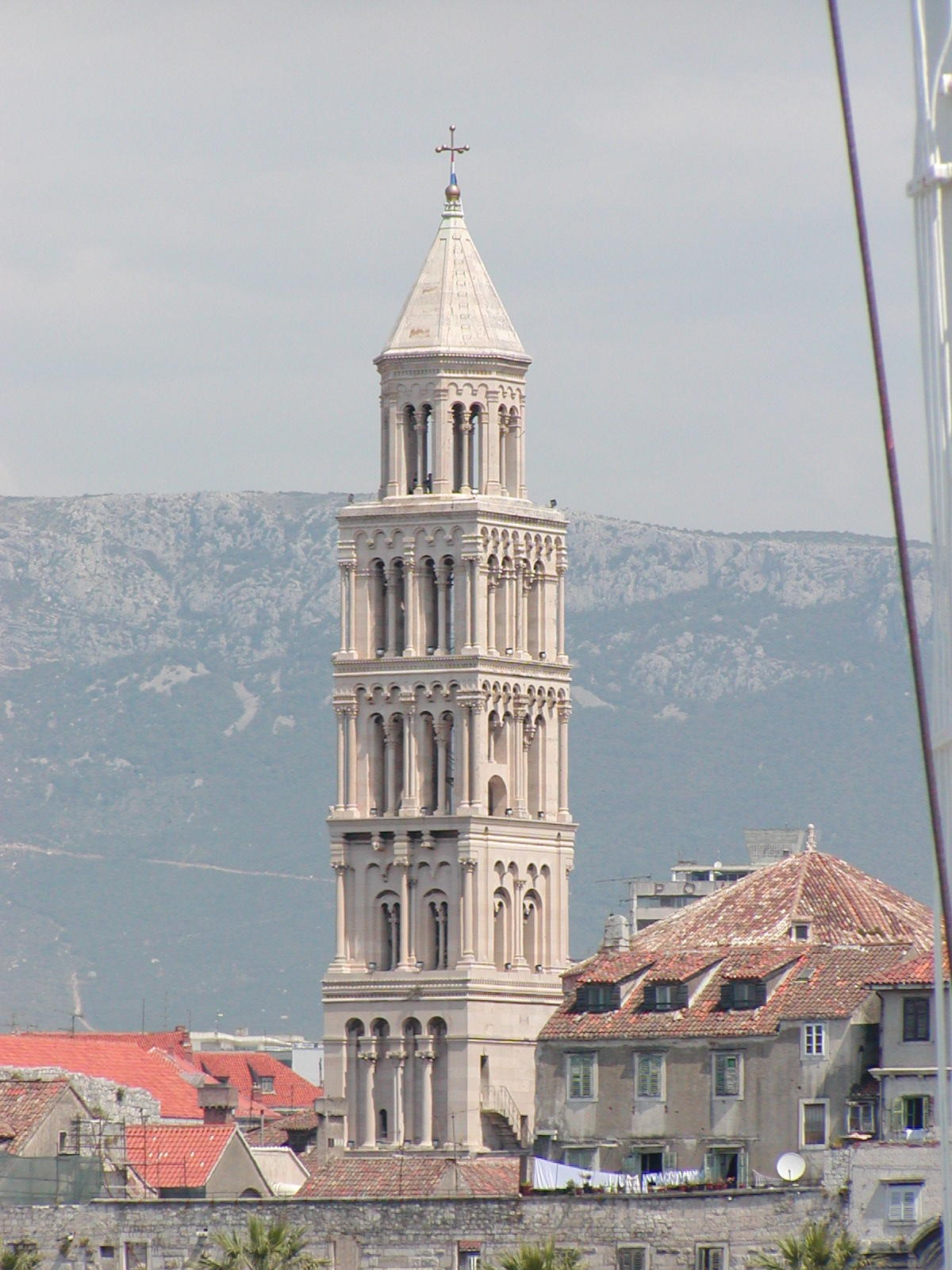
The architecture of the palace is a mix of Roman grandeur and practicality. The walls, thick and imposing, were built to withstand sieges, while the interior was designed for comfort. Diocletian’s private quarters were located in the southern part of the palace, closer to the sea, where the emperor could enjoy the breeze and the view. The basement halls, a labyrinth of vaulted chambers, were originally used for storage and service spaces, but their cool, dim interiors now house small stalls selling souvenirs and local crafts. Above ground, the mausoleum—later converted into Split’s cathedral—stands as one of the best-preserved examples of Roman imperial architecture. Its octagonal shape and intricate carvings are a testament to the craftsmanship of the era, though the addition of a bell tower in the Middle Ages gives it a distinctly medieval silhouette.
What makes Diocletian’s Palace unusual is how seamlessly it has been absorbed into the fabric of modern life. Unlike many ancient ruins, which feel like relics frozen in time, this place has been continuously inhabited for nearly two millennia. After the fall of the Roman Empire, the palace became a refuge for locals fleeing invading tribes, and over time, its empty halls and courtyards were filled with houses, shops, and churches. The original Roman streets became the city’s main thoroughfares, and the palace’s walls became the boundaries of Split’s old town. Even today, people live in apartments built into the ancient stone, their laundry strung between the columns of a Roman temple. It’s this layering of history—Roman, medieval, Venetian, and modern—that gives the palace its unique character.
The Peristyle, the palace’s central square, is where this blend of past and present is most visible. Flanked by Corinthian columns and the remains of the emperor’s audience hall, the space is now a gathering place for both locals and tourists. In the summer, the square is often filled with the sound of klapa, a traditional Dalmatian a cappella singing, or the clinking of glasses from nearby cafes. The cathedral’s bell tower looms over the scene, its Romanesque and Gothic details a reminder of the many hands that have shaped this place. Nearby, the small temple of Jupiter, now a baptistery, stands as another example of how the palace’s original structures have been repurposed over time. The carvings on its entrance, depicting Diocletian and his co-emperor Maximian, are some of the few surviving portraits of the emperor from antiquity.
Beyond the Peristyle, the palace’s narrow streets lead to quieter corners where the modern world feels far away. The Golden Gate, the northern entrance to the palace, was once the main route for processions and dignitaries. Today, it’s a less crowded spot where you can stand beneath its massive arch and imagine the fanfare that once accompanied its use. The Iron Gate, on the eastern side, opens onto the Riva, Split’s waterfront promenade, where the palace’s walls meet the sea. This is where the city’s social life spills out in the evenings, with crowds gathering to watch the sunset over the Adriatic. The palace’s southern walls, once lapped by the waves, are now separated from the water by a modern road, but the view remains much the same as it was in Diocletian’s time.
The basement halls of the palace are another world entirely. These vast, dimly lit chambers were originally used for storage and as service areas for the imperial household. Over the centuries, they’ve been used as everything from wine cellars to bomb shelters, and today, they’re one of the most atmospheric parts of the palace. The uneven stone floors and low ceilings create a sense of stepping back in time, and the occasional shaft of light filtering down from above adds to the effect. Some of the halls are open to the public, while others remain closed off, their purpose still a mystery. It’s easy to imagine these spaces filled with the hustle and bustle of servants and slaves, or later, with the quiet industry of medieval craftsmen.
Diocletian’s Palace isn’t just a monument to the past; it’s a living part of Split’s identity. The city’s residents have a deep connection to the place, not just as a tourist attraction, but as the foundation of their daily lives. The palace’s walls have witnessed everything from imperial ceremonies to medieval trade, from Venetian rule to the modern tourism boom. Yet, despite all these changes, the core of the palace remains remarkably intact. The streets still follow the same paths laid out by Roman engineers, the same stones still bear the weight of centuries, and the same sea breeze still drifts through the arcades. It’s this continuity that makes the palace so compelling—not just as a relic of history, but as a place where the past is still very much alive.