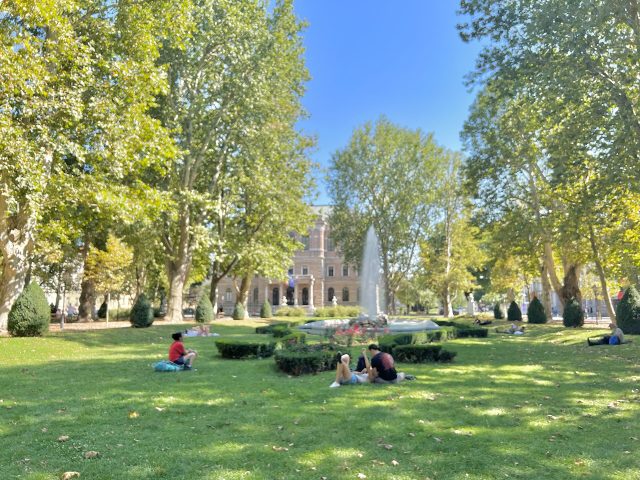
The Ethnographic Museum in Lower Town is one of those quiet places where Croatia reveals itself not through grand landmarks or well-trodden tourist paths, but through the ordinary rhythms of life that once shaped this land. Housed in a historic building, the museum preserves the traditions, crafts, and daily routines of people who lived here across generations. There’s no palace opulence or cathedral grandeur—just the quiet authenticity of objects that were once part of someone’s home, work, or celebration.
The building itself is a piece of history. Constructed in the late 19th century during a period of economic growth in Lower Town, its architecture blends late classicism with local influences. High ceilings, sturdy wooden doors, and spacious halls give it a sense of solidity without overwhelming the visitor. The inner courtyards, visible from some of the exhibition rooms, hint at the bustling life that once filled these spaces—traders hawking their goods, artisans at work, neighbors exchanging news. It’s easy to imagine the sounds and movements that once animated these walls.
The museum’s collection is organized around key themes of Croatian culture and daily life. One of the most compelling sections focuses on traditional clothing. Here, you’ll find not just elaborate festival attire embroidered with gold and intricate patterns, but also the simple, worn garments of peasants and townspeople. Each costume tells a story about its region: vibrant colors and delicate designs reflect the influence of Mediterranean culture, while muted tones and coarse fabrics speak to the harsher conditions of inland life. Women’s headwear is particularly fascinating—across different parts of Croatia, a hat could reveal a woman’s marital status, age, or even social standing.
Another essential part of the collection is devoted to everyday objects. The museum displays tools, pottery, furniture, and household items used in Croatian homes from the 18th to the early 20th century. There are wooden spinning wheels, ceramic wine jugs, clay cooking pots, and old chests where dowries were once stored. Some of the most intriguing exhibits relate to agriculture—sickles, scythes, wooden plows, and even models of ancient mills. These objects don’t just showcase craftsmanship; they illustrate the hardships of rural life, the dependence on nature, and the ingenuity required to adapt to local conditions.
A separate hall is dedicated to traditional crafts and trades. Here, you’ll find the work of potters, blacksmiths, weavers, and woodcarvers. The lace-making exhibits are especially striking, as Croatia has a long and respected tradition in this art. On the island of Pag, for instance, lace was considered a true masterpiece, passed down through families for generations. The museum displays not only finished pieces—tablecloths, collars, doilies—but also the tools used to create them: bobbins, needles, and wooden frames. Nearby, wooden items like carved chests, spoons, and musical instruments offer a glimpse into the practical and artistic skills that once defined village life.
The museum goes beyond static displays by recreating entire interiors of traditional Croatian homes. A peasant’s cottage with its hearth and wooden benches sits alongside a townhouse room furnished with carved furniture and rugs, while a craftsman’s workshop shows the tools of various trades. These setups help visitors imagine what daily life was like in different eras—the objects that filled homes, the sounds that echoed through them, the scents that lingered in the air. In the peasant’s cottage, you might see clay dishes used for cooking and wooden spoons shared from a communal pot. In the townhouse room, antique clocks, ornate mirrors, and embroidered cushions reflect the urban desire for comfort and beauty.
One of the museum’s most engaging sections is its collection of musical instruments. Croatian folk music is rich and varied, with each region developing its own traditions. Here, you’ll find the *gusle*, a single-stringed bowed instrument often called the Croatian violin, as well as *tamburicas*—plucked instruments similar to mandolins—and *frule*, wooden flutes. Some instruments are adorned with carvings or paintings, turning them into works of art in their own right. Nearby, sheet music and recordings of folk songs offer a sense of how music sounded across the country, from coastal villages to inland towns.
The museum doesn’t romanticize the past or present it as something static. Instead, the exhibits show how traditions evolved alongside historical changes. In the section dedicated to the 19th century, for example, you can see how industrialization began to influence rural life—factory-made fabrics, metal tools, and simple machines that eased the burden of farm work. These objects serve as a reminder that tradition isn’t something frozen in time; it’s a living process, constantly adapting and shifting.
Visiting the Ethnographic Museum in Lower Town is less about ticking off another attraction and more about stepping into a slower, more contemplative space. There are no crowds rushing for photos or the usual tourist hustle. Instead, there’s a quiet rhythm, a chance to linger over details. The museum doesn’t aim to impress with scale or luxury, and that’s precisely its strength. It offers a way to connect with history through simple, meaningful objects that were once part of someone’s life. Afterward, you might leave with the sense that you’ve glimpsed the real Croatia—not the one in guidebooks, but the one that lives in the memories of its people.