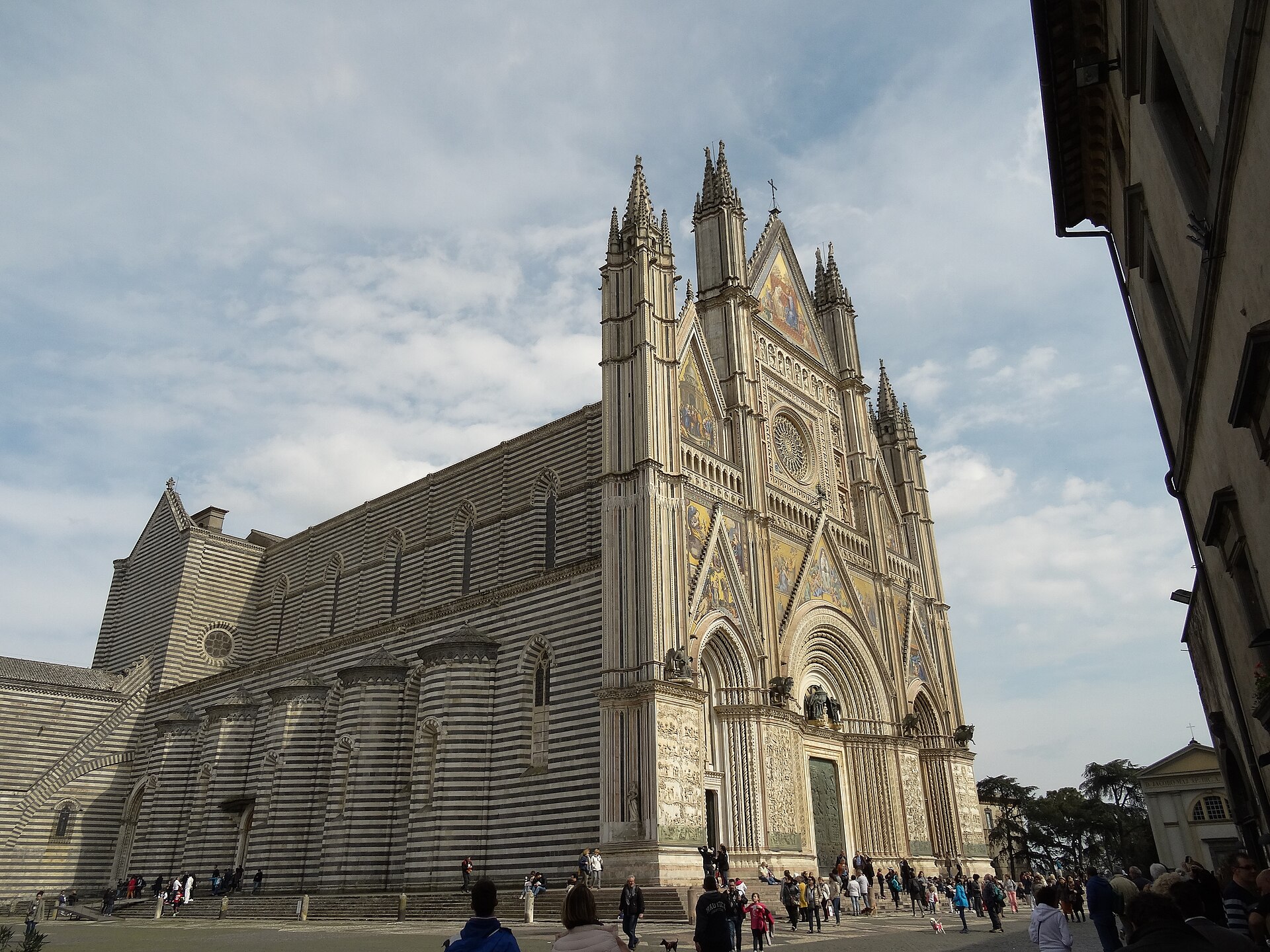
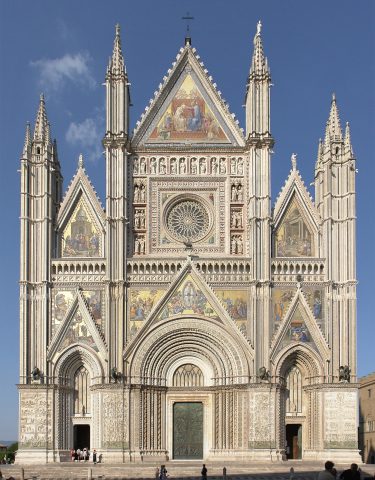
Orvieto Cathedral is one of those rare places that stops you in your tracks, even if you’ve never been one for old churches. Perched on the edge of a cliff, it looms over the town like a silent guardian, a reminder that time moves differently here, in the heart of Umbria. The façade isn’t just a wall—it’s a story carved in stone, where every detail has something to say. The mosaics catch the sunlight like scattered jewels, the Gothic rose windows frame the sky, and the delicate marble carvings weave together a scene that has endured for centuries.
Construction began in the late 13th century, when Orvieto was a powerful religious and political hub. The city, built atop an impregnable tuff cliff, often served as a refuge for popes, and the cathedral was conceived as a symbol of their authority and piety. But its creation was also a matter of pride and rivalry. The people of Orvieto wanted to outshine their neighbors—Siena and Florence—and spared no expense. The project dragged on for three hundred years, with architects coming and going, each leaving their mark. The result is a striking blend of Romanesque solidity and Gothic elegance, where massive walls meet graceful arches, and the austerity of stone is softened by light and color.
Step inside, and the atmosphere shifts. The grandeur of the exterior gives way to something more intimate, though no less impressive. The soaring nave, the sturdy columns, and the frescoes adorning the chapel walls pull you into another era. The Chapel of San Brizio is a masterpiece in its own right, its walls covered in Renaissance art. Luca Signorelli’s frescoes of the Last Judgment are particularly striking—not just for their technical skill, but for their raw emotional power. Painted in the early 16th century, they bridge the gap between the Middle Ages and the Renaissance, every figure frozen in motion, as if they might step down from the walls at any moment.
Yet Orvieto Cathedral is more than just a showcase of art and architecture. It has always been a living part of the city, woven into its daily rhythm. Beyond religious services, it hosted civic gatherings, important decisions, and even business deals. Even now, with tourists filling its aisles, it hasn’t become a museum. People still come to pray, to think, or simply to sit in silence. That’s why it doesn’t feel like a relic—it retains the warmth of human presence, as if the stones themselves remember the hands that built them.
The streets around the cathedral are just as captivating. Narrow lanes wind down from the cliff, inviting slow, meandering walks. You might stop in a small shop selling local wine and olive oil, or pause at a café with a view of the valley below. Orvieto moves at its own unhurried pace, and the cathedral, towering above it all, feels like a natural part of the landscape. It doesn’t dominate—it watches over the town, a quiet witness to centuries of life unfolding beneath it.
The cathedral hasn’t always looked as it does today. Over the centuries, it has been restored, rebuilt, and even partially destroyed. During World War II, its façade was damaged, but later repaired. Time and again, when it seemed the building might be lost, people stepped in to preserve it. That resilience might be part of its charm—Orvieto Cathedral didn’t just rise from the rock; it grew from it, shaped by the same forces that shaped the city itself.
Visit early in the morning, before the crowds arrive, and you’ll feel the magic of the place. The first light of dawn sets the mosaics aglow, turning the façade into a shimmering tapestry of gold and blue. In those quiet moments, the cathedral seems almost alive, breathing slowly, as if gathering strength for the day ahead. By evening, when the streetlights flicker on, it transforms into something out of a fairy tale, floating above the valley like a dream. It’s easy to see why artists and writers have been drawn to Orvieto—the line between reality and imagination blurs here, as naturally as the changing light on the cathedral’s stones.
Orvieto Cathedral isn’t the kind of place you can fully capture in words. You have to see it, stand inside it, spend time with it to understand why it lingers in the minds of those who visit. It’s not just a monument or a religious site—it’s a piece of the city’s soul, its history, and the people who have called it home. That’s why, after all these centuries, it still feels alive.