Perched atop a sheer cliff of volcanic tufa, Orvieto seems to float above the Umbrian valley, its medieval streets winding between ancient buildings like veins through stone. Among its many layers of history, one structure stands out—not for its grandeur, but for its quiet ingenuity. The Well of St. Patrick is a marvel of Renaissance engineering, a feat of foresight and craftsmanship hidden beneath the city’s surface. Its name, borrowed from an Irish legend about a cave leading to purgatory, was never meant to be taken literally. Instead, it reflects the era’s fascination with the mystical, a time when even practical projects were wrapped in an air of enigma.
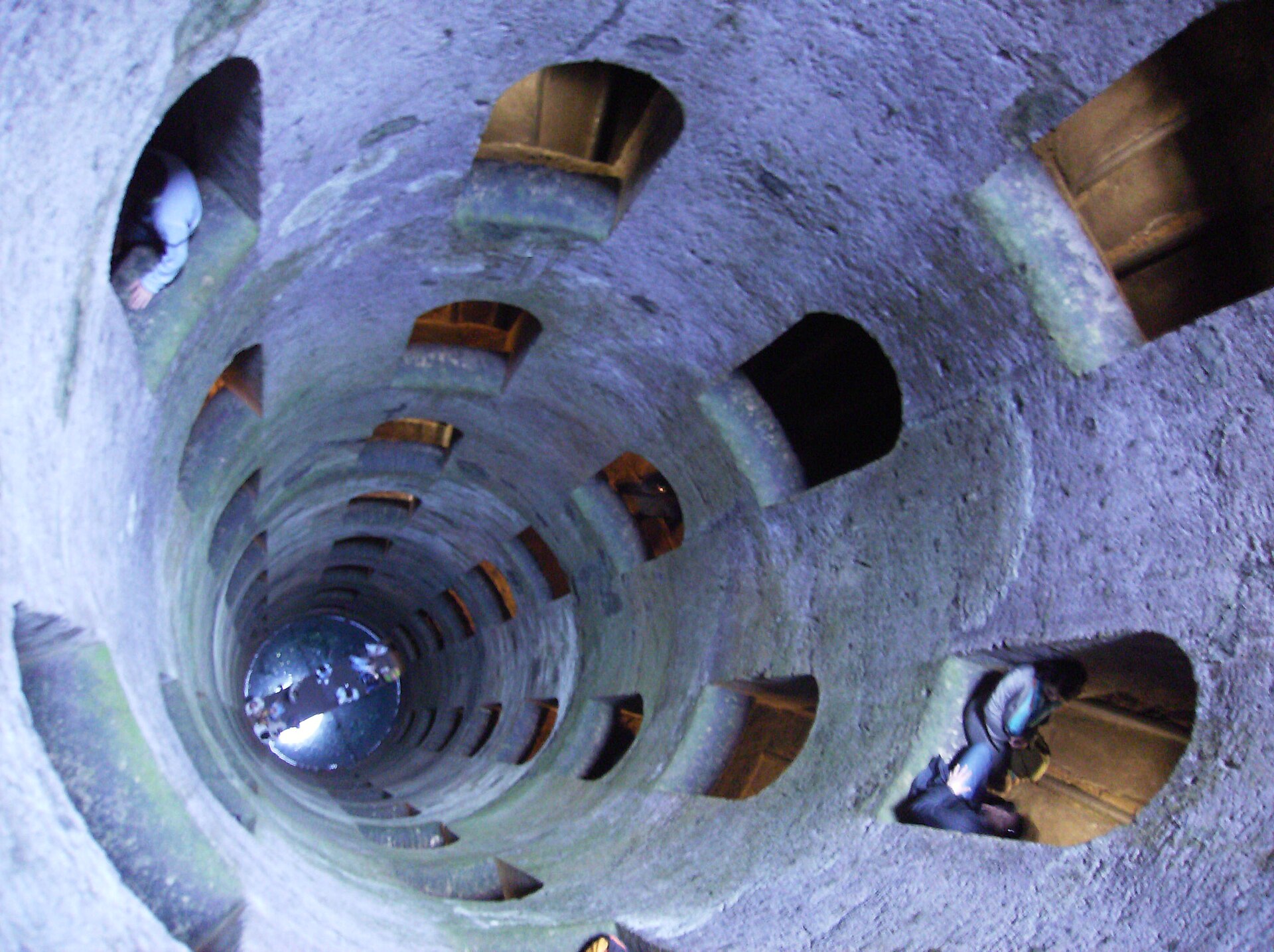
Commissioned in the sixteenth century by Pope Clement VII, the well was designed as a safeguard against siege. Orvieto, a strategic stronghold, needed a reliable water source independent of outside supply. The solution was as bold as it was brilliant: a deep, self-sustaining shaft that could keep the city alive even under blockade. What makes the well remarkable isn’t just its depth—sixty-two meters, the height of a twenty-story building—but its design. Two separate spiral staircases wind down its sides, one for descent, the other for ascent. This dual-path system ensured that people and pack animals could move without crossing paths, a crucial detail in times of crisis. The brick-lined walls curve gently downward, punctuated by seventy-two small windows that cast shifting patterns of light and shadow, turning the descent into a slow, hypnotic journey.
The architect behind this masterpiece was Antonio da Sangallo the Younger, a name synonymous with some of the era’s most ambitious projects, including St. Peter’s Basilica in Rome. His work on the well demonstrates a rare blend of practicality and artistry. The structure had to function flawlessly—drawing water from an underground spring at the bottom—while also being aesthetically striking. Sangallo achieved both, creating a space that feels almost sacred in its precision. The well’s construction required not just architectural skill but a deep understanding of hydrology, a field still in its infancy during the Renaissance. That it remains intact today, its mechanics as sound as they were five centuries ago, is a testament to its brilliance.
Stepping inside the well is like entering a time capsule. The air is cool and damp, carrying the scent of stone and earth, while the distant echo of dripping water lingers in the stillness. As you descend, the modern world fades, replaced by the imagined sounds of history—clinking buckets, the lowing of oxen, the murmur of voices rising through the shaft. At the bottom, the spring still flows, its surface shimmering under the faint light filtering down from above. It’s easy to picture the well in use, a lifeline for a city under threat, though in reality, Orvieto was never besieged. The well’s true purpose was never tested, yet its existence speaks volumes about the foresight of its creators.
What makes the Well of St. Patrick enduring isn’t just its engineering but the way it captures the spirit of its time. The Renaissance was an era of transition, when medieval traditions began to give way to new ideas about science, art, and human potential. The well embodies that shift—practical yet poetic, functional yet beautiful. It’s a reminder that even the most utilitarian structures can hold a kind of magic, especially when viewed through the lens of history. Today, the well attracts not only tourists but also architects, engineers, and historians, all drawn to its elegant simplicity and the questions it raises about the past.
Orvieto itself is a city of layers, where every street and building seems to whisper stories of the people who once walked there. Beneath its surface lies a labyrinth of caves and tunnels, some dating back to Etruscan times, while above ground, the streets twist and turn in ways that feel deliberately mysterious. The Well of St. Patrick fits seamlessly into this atmosphere, its depth mirroring the city’s own hidden complexities. It’s a place where legend and reality blur, where the practical and the mystical coexist. To visit is to step into a different era, one where every stone has a story and every shadow holds a secret.
If you find yourself in Orvieto, the well is more than worth the descent. It’s not just a historical site but an experience—one that lingers long after you’ve climbed back to the surface. The journey down is slow, deliberate, a chance to reflect on the passage of time and the ingenuity of those who came before. And when you emerge, blinking in the sunlight, the city above feels different, as if you’ve glimpsed something hidden, something only the well could reveal. In a place already rich with history, it offers one more layer to unravel, one more reason to look beneath the surface.