Orvieto
Italy · 5 places
Photo: Hans Peter Schaefer, http://www.reserv-a-rt.de, CC BY-SA 3.0
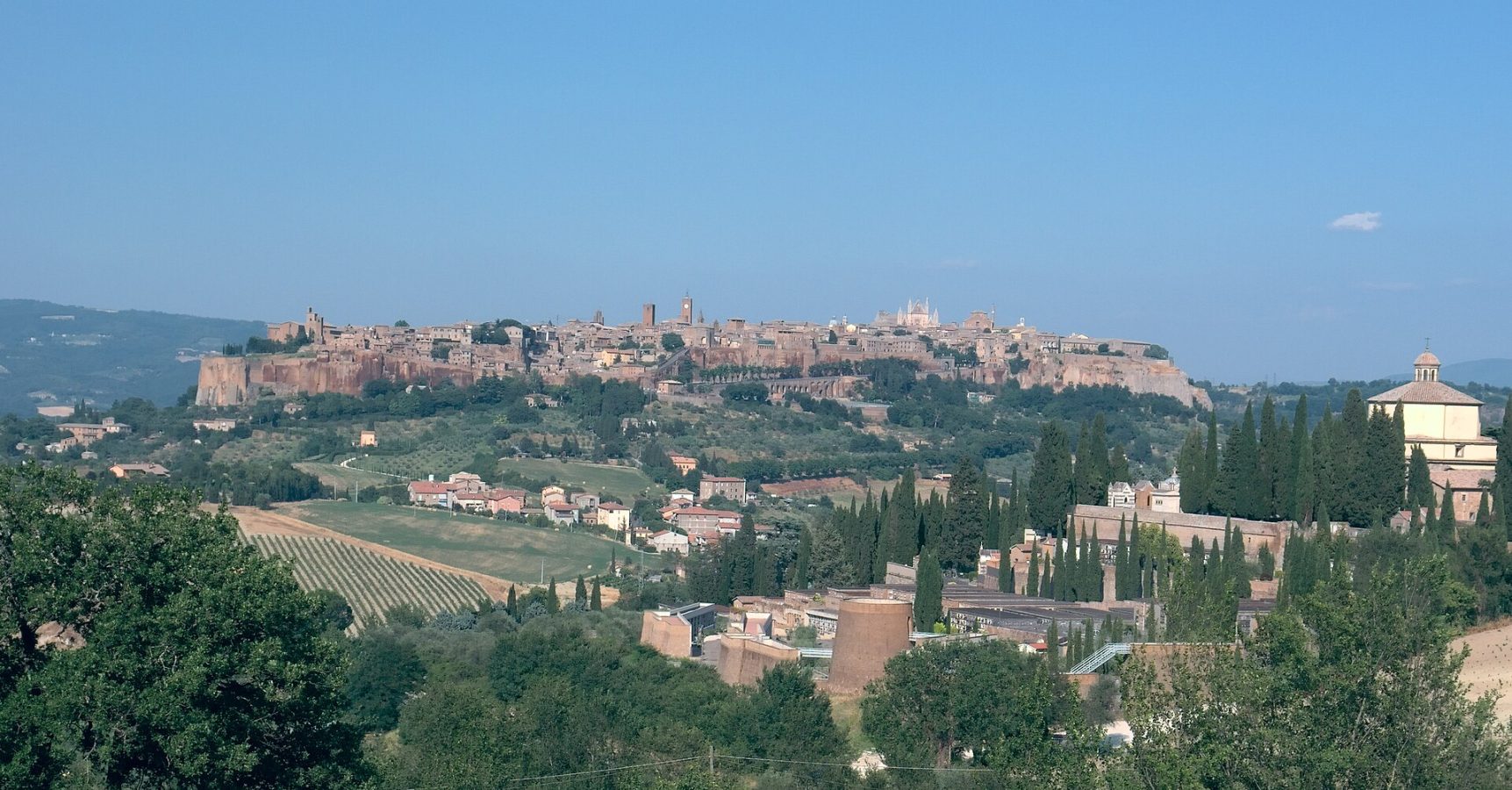
Orvieto rises from the volcanic cliffs of Umbria like a dream half-remembered, its honey-colored stone glowing in the afternoon light. The town sits atop a massive tufa plateau, a natural fortress that has shaped its history as much as the people who built upon it. From a distance, the skyline is unmistakable—towers, domes, and the soaring spire of the cathedral punctuate the horizon, while below, the land falls away into the rolling green of the Paglia Valley. This is a place where the past isn’t just preserved; it’s lived in, with every narrow alley and hidden courtyard telling a story that stretches back to Etruscan times.
The Etruscans were the first to recognize the strategic value of this sheer-sided plateau, carving out tombs and cisterns into the soft rock long before the Romans arrived. Their legacy lingers in the underground city, a labyrinth of tunnels and caves that honeycomb the cliff beneath the modern streets. Some of these chambers were used for storage, others for worship, and a few even served as escape routes during sieges. Today, guided tours take visitors through this subterranean world, where the cool, dim passages open suddenly into vast chambers, their walls still bearing the marks of ancient tools. It’s a reminder that Orvieto’s history isn’t just written in its buildings—it’s carved into the very earth beneath them.
Above ground, the town unfolds at a pace that feels untouched by time. The main street, Corso Cavour, is a gentle slope lined with shops selling local ceramics, truffles, and bottles of Orvieto Classico, the crisp white wine that has been produced here since the Middle Ages. The wine is as much a part of the town’s identity as the cathedral, its vineyards clinging to the hillsides just beyond the city walls. In the evenings, the street fills with the murmur of conversation and the clink of glasses as locals and visitors alike gather in the small piazzas, where the scent of wood-fired pizza mingles with the earthy aroma of wild mushrooms. There’s no rush here, no need to chase the next attraction—just the quiet pleasure of watching the light change over the valley as the day fades.
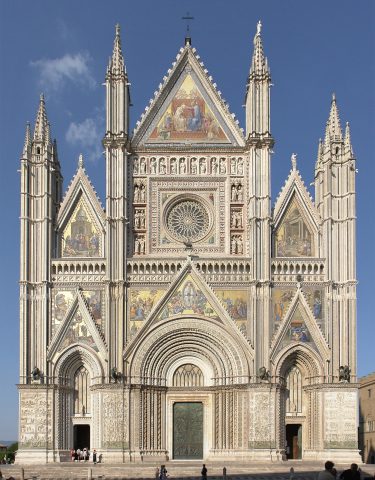
The cathedral, or Duomo, is the undisputed crown of Orvieto, a masterpiece of Gothic architecture that took nearly three centuries to complete. Its façade is a dazzling mosaic of gold, blue, and white, with intricate carvings and statues that seem to shift in the sunlight. Inside, the Chapel of the Corporal houses one of Italy’s most revered relics—a bloodstained cloth said to be from the Miracle of Bolsena, when a doubting priest witnessed the Eucharist bleed during Mass. The chapel’s frescoes, painted by some of the greatest artists of the Renaissance, depict the event in vivid detail, their colors still vibrant after centuries. But the cathedral’s true magic lies in its ability to feel both grand and intimate, a place where the weight of history is balanced by the quiet devotion of those who still come to pray.
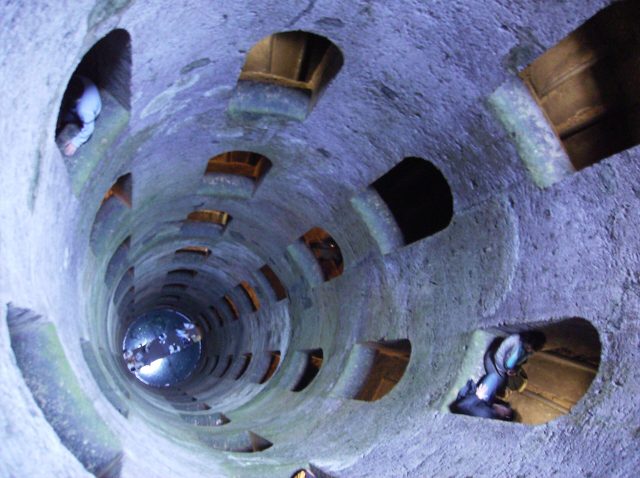
Beyond the cathedral, Orvieto reveals itself in unexpected ways. The Pozzo di San Patrizio, or St. Patrick’s Well, is a marvel of Renaissance engineering—a deep, double-helix staircase that descends 62 meters into the earth, designed to provide water during sieges. The well’s name comes from an Irish legend, a nod to the town’s connections beyond Italy’s borders. Nearby, the Fortezza Albornoz stands as a reminder of Orvieto’s turbulent past, its sturdy walls built by a Spanish cardinal to assert papal authority. Today, the fortress is a peaceful park, where locals walk their dogs and children play beneath the shade of ancient trees. From its ramparts, the view stretches across the valley, a patchwork of vineyards, olive groves, and distant hilltop towns.
What makes Orvieto special isn’t just its beauty or its history, but the way it feels like a living place rather than a museum. The town has managed to preserve its soul without becoming a caricature of itself. There are no neon signs or chain stores here, just small bakeries where the scent of fresh bread spills onto the street, and workshops where artisans still shape clay into the same designs their ancestors did centuries ago. In the early mornings, the town belongs to the locals—old men playing cards in the piazza, women setting out trays of pastries in café windows, the occasional clatter of a Vespa echoing off the stone walls. By midday, visitors arrive, but the town never feels crowded, as if it has enough space for everyone, whether they’re here for a day or a lifetime. Orvieto doesn’t demand attention; it simply offers itself, and those who take the time to look will find that it has more to give than they ever expected.
See & Do
All of them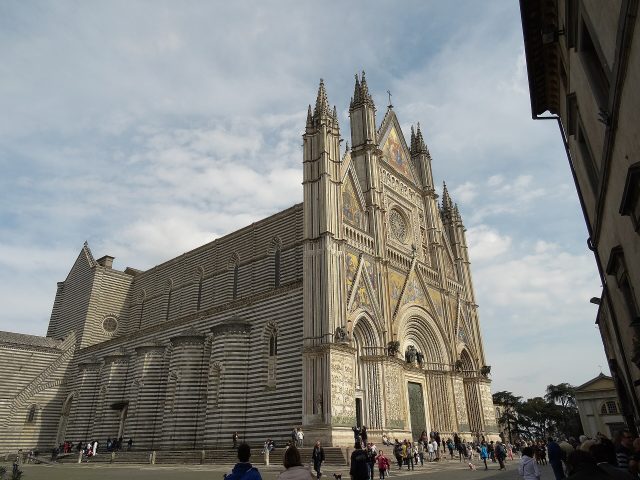
Places on the map
Marker colour follows the categoryClimate and weather
Detailed weather: Orvieto- Average temperature
- 15 °C
- Precipitation per year
- 783 mm
- Average humidity
- 75 %
- Sunshine hours per day
- 9.6 h
- Time zone
- UTC+2 (GMT+2)
Average air temperature
°C
7
7
10
12
16
23
26
25
20
16
10
6
Jan
Feb
Mar
Apr
May
Jun
Jul
Aug
Sep
Oct
Nov
Dec