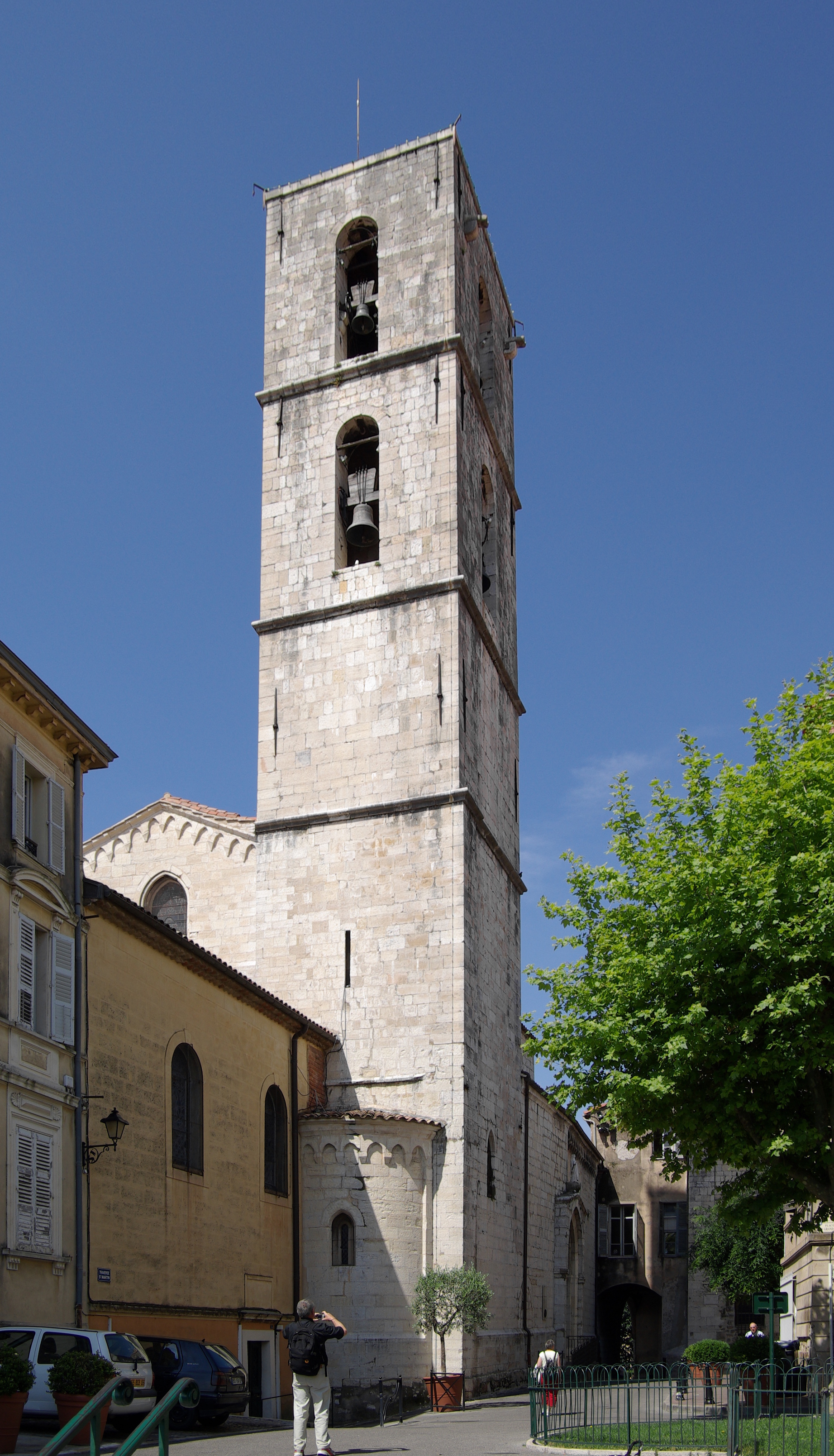
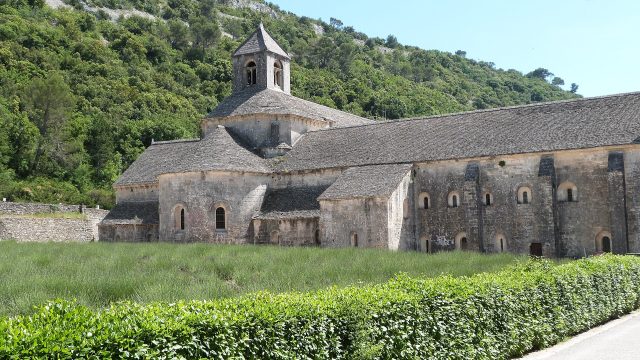
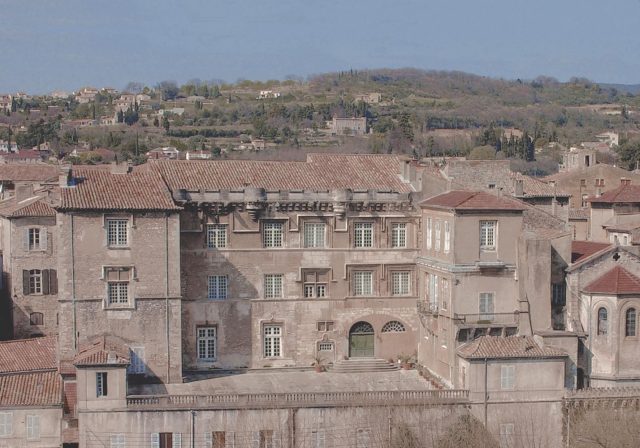
Perched on a rocky hill in the heart of Gordes, the Cathédrale Notre-Dame-du-Puy watches over the Rhône Valley like a silent guardian of centuries past. This is not just a building but a living chronicle of time, where every stone tells a story—from its ancient Roman foundations to the medieval renovations that shaped its present form. From its heights, the village unfolds below in a patchwork of narrow streets, ochre houses, and terraced vineyards spilling toward the river. The view feels suspended in time, as if the modern world has barely touched this corner of Provence.
The first Christian sanctuary here dates back to the 5th century, when Gordes was already a significant religious center in the region. Yet the cathedral we see today took shape much later, primarily between the 11th and 12th centuries, when a Romanesque basilica rose on the site. Its thick walls, sturdy columns, and rounded arches are hallmarks of the style, though Provence gave it a distinct character. Local builders favored soft pink and white limestone, lending the structure a warmth that contrasts with the austere cathedrals of the north. The result is a building that feels both monumental and intimate, as if it grew naturally from the earth rather than being imposed upon it.
For medieval pilgrims, Notre-Dame-du-Puy was more than just a waypoint—it was a place of respite and reflection. Gordes lay along one of the routes to Santiago de Compostela, and the cathedral welcomed thousands of travelers journeying to venerate the relics of Saint James. They found shelter here, but also something deeper: a space for prayer, for quiet contemplation, for the kind of weary hope that comes with long journeys. Traces of that era linger in the cathedral’s details—the carved capitals depicting biblical scenes, the faded frescoes of saints, the small crypt where relics were once kept. These elements aren’t just decorative; they’re echoes of lives that passed through these walls, of hands that touched the same stone centuries ago.
The exterior of the cathedral commands attention with its sheer presence. The main façade is dominated by a portal whose tympanum bears the figures of Christ and the apostles, their forms worn smooth by time. Above it, the bell tower rises, its spire a familiar landmark against the Provençal sky. Inside, the space feels vast yet welcoming, light streaming through high windows to illuminate the nave. Massive columns divide the interior into three aisles, their arches creating a rhythm that draws the eye upward. The apse, in particular, holds fragments of medieval frescoes, offering a glimpse of how the cathedral might have looked in its prime.
Over the centuries, the building has been altered and restored, but these changes feel like natural evolutions rather than disruptions. In the 17th century, chapels were added, and in the 19th, a restoration sought to return the cathedral to its original form. Yet these layers don’t compete with one another; they coexist, each telling its own part of the story. Today, Notre-Dame-du-Puy remains an active place of worship, hosting services, organ concerts, and exhibitions. It’s also open to visitors, inviting them to walk the same worn stone floors that generations of pilgrims and townspeople have trodden.
Gordes itself moves at a slower pace than its more famous neighbors like Avignon or Arles. There’s no rush here, no sense of being overwhelmed by crowds. The cathedral isn’t just a tourist attraction; it’s woven into the fabric of daily life. Locals come not only for Mass but to sit in quiet reflection, to admire the view from the hill, or simply to listen to the echo of their footsteps beneath the vaulted ceilings. In the late afternoon, when the sun dips behind the Rhône, the stone takes on a golden hue, as if the building itself is glowing from within.
For those drawn to history, the cathedral is a treasure trove. It reveals how architecture evolved over the centuries, how Romanesque gave way to Gothic, and later, to Baroque influences. Elements from different eras coexist here—ancient columns alongside Baroque altars, medieval carvings next to 19th-century restorations. Some details offer glimpses into the lives of the people who built and used the cathedral: the stonemasons’ marks on the columns, the scenes of medieval craftsmanship carved into the capitals, or the frescoes depicting everyday moments from a world long gone.
Like many ancient places, Notre-Dame-du-Puy is steeped in legend. One story claims that a fragment of the True Cross, brought from Jerusalem, is hidden within its walls. Another tells of how the cathedral miraculously survived a Saracen invasion in the 8th century, its bells ringing on their own to warn the townspeople of danger. These tales can’t be verified, of course, but they add to the sense of mystery that lingers in the air, especially in the quiet moments when the crowds have gone and the light slants low through the windows.
More than just an architectural landmark, the cathedral is a symbol of endurance. It has weathered wars, revolutions, and neglect, yet it stands as resilient as the hill it’s built upon. Visiting Notre-Dame-du-Puy isn’t about being dazzled by grandeur or spectacle. It’s about sensing the weight of history in the silence, about feeling the presence of those who came before. The cathedral doesn’t demand attention; it earns it, quietly, through the stories etched into its stones and the lives it has touched. To stand beneath its vaults or gaze out over Gordes from its heights is to step into a current of time that flows differently here—slower, deeper, and with a grace that lingers long after you’ve left.