The Henri Rousseau Museum in Gordes is one of those rare places where the spirit of an artist lingers long after you’ve left. Tucked away in a medieval hilltop village in Provence, the museum feels less like an institution and more like a quiet conversation between Rousseau’s work and the landscape that surrounds it. Gordes itself is the kind of place that slows you down—its narrow, winding streets paved with centuries-old stone, its squares where locals still gather to sell lavender and goat cheese, its golden light that softens the edges of everything. It’s easy to imagine Rousseau, the self-taught painter who never fit into the art world’s expectations, finding something familiar here. His vibrant, dreamlike canvases, with their unfiltered gaze on the world, seem to belong in this unhurried rhythm of provincial life.
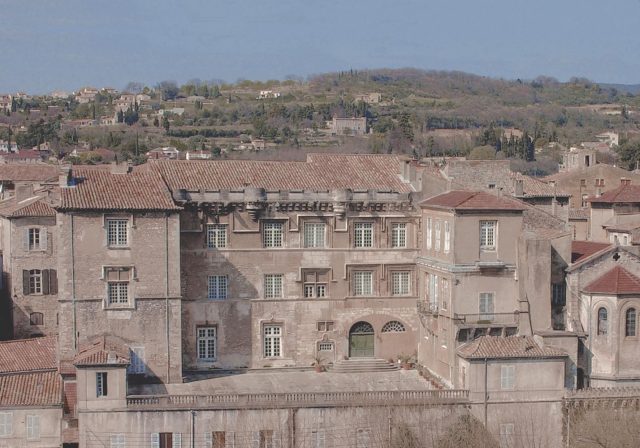
The museum occupies a 16th-century mansion that carries its own history in its bones. The building, once home to a noble family, retains the hallmarks of Renaissance architecture: soaring ceilings with exposed wooden beams, wide stone staircases worn smooth by time, and windows that filter sunlight through delicate stained glass. Inside, the space is arranged to let the art breathe. There are no overwhelming crowds or labyrinthine galleries—just a carefully curated collection that feels intimate, almost like stepping into Rousseau’s studio. Alongside his most famous jungle scenes and exotic landscapes, you’ll find lesser-known portraits, still lifes, and even a few early works from before he fully committed to painting. Together, they tell the story of a man who saw the world differently, not through the lens of technique, but through raw, unfiltered curiosity.
Rousseau’s life was as unconventional as his art. Born in 1844 in Laval to a family of modest means, he spent most of his working years as a customs officer in Paris, painting only in his spare time. Critics initially mocked his work for its apparent clumsiness, but over time, that very naivety became his signature. Though he never traveled to the tropics, his lush jungles—teeming with strange beasts and vibrant foliage—feel so vivid that it’s hard not to believe he drew from firsthand experience. In reality, he painted from memory, postcards, and the stories of others, transforming the ordinary into something magical. Gordes, with its own dramatic landscapes of vineyards and rocky hills, seems to echo that same alchemy, where the real and the imagined blur.
What makes the museum in Gordes particularly compelling is the way it ties Rousseau’s work to the place itself. Though he never visited the village, his paintings often evoke the essence of provincial France—its quiet streets, its timelessness, its sense of being slightly apart from the rush of the modern world. The museum doesn’t just preserve his legacy; it continues a dialogue between the artist and this corner of Provence. After a visit, Gordes begins to feel different, as if the town itself has become part of Rousseau’s world, where fantasy and reality intertwine. The jagged cliffs, the ochre houses, the way the light slants across the valley—suddenly, everything seems to carry a hint of his vision.
Beyond the paintings, the museum offers glimpses into Rousseau the man. His palette, still stained with the colors of his last works, sits alongside his brushes, letters, and photographs. There’s his violin, a reminder that he loved music and even composed small pieces. Old newspapers display the mixed reactions to his exhibitions—some critics dismissed him as amateurish, while others recognized the boldness of his approach. These personal artifacts don’t just humanize him; they reveal a man who refused to conform, who painted what he saw in his mind’s eye, regardless of whether it fit the trends of the time. In Gordes, where tradition and innovation have always coexisted, that stubborn individuality feels right at home.
A visit to the museum naturally spills into the rest of Gordes. The village is small enough to explore on foot in an afternoon, with plenty of time to wander its alleys, browse the tiny shops selling local wines and olive oil, or linger at a café terrace with a view of the valley below. In summer, the air is thick with the scent of lavender and wisteria, and the evenings bring live music to the squares. The museum becomes part of this rhythm, as if Rousseau himself might have once sat on one of these sun-warmed stones, sketching the play of light on the rooftops.
This isn’t a place for those seeking grand, blockbuster exhibitions. There are no vast halls or overwhelming crowds, no pressure to rush from one masterpiece to the next. Instead, the Henri Rousseau Museum invites you to slow down—to sit on a bench in front of a painting, to let your thoughts wander, or simply to enjoy the quiet. It’s the kind of museum locals cherish, not just as a cultural stop, but as a living part of the community, where art isn’t something to be consumed, but something to be lived with.
Rousseau died in 1910, largely forgotten by the art world, but today his influence is undeniable. His works hang in major museums across the globe, and his impact on 20th-century art is profound. Yet in Gordes, he feels closer to his roots—not as a celebrated figure, but as the man who once picked up a brush and painted what he saw in his own way. The museum here isn’t about fame or prestige; it’s about the quiet persistence of an artist who trusted his vision, even when no one else did. And perhaps that’s why it resonates so deeply. In a world that often demands perfection, Rousseau’s work reminds us that there’s beauty in the unpolished, the unexpected, the deeply personal.