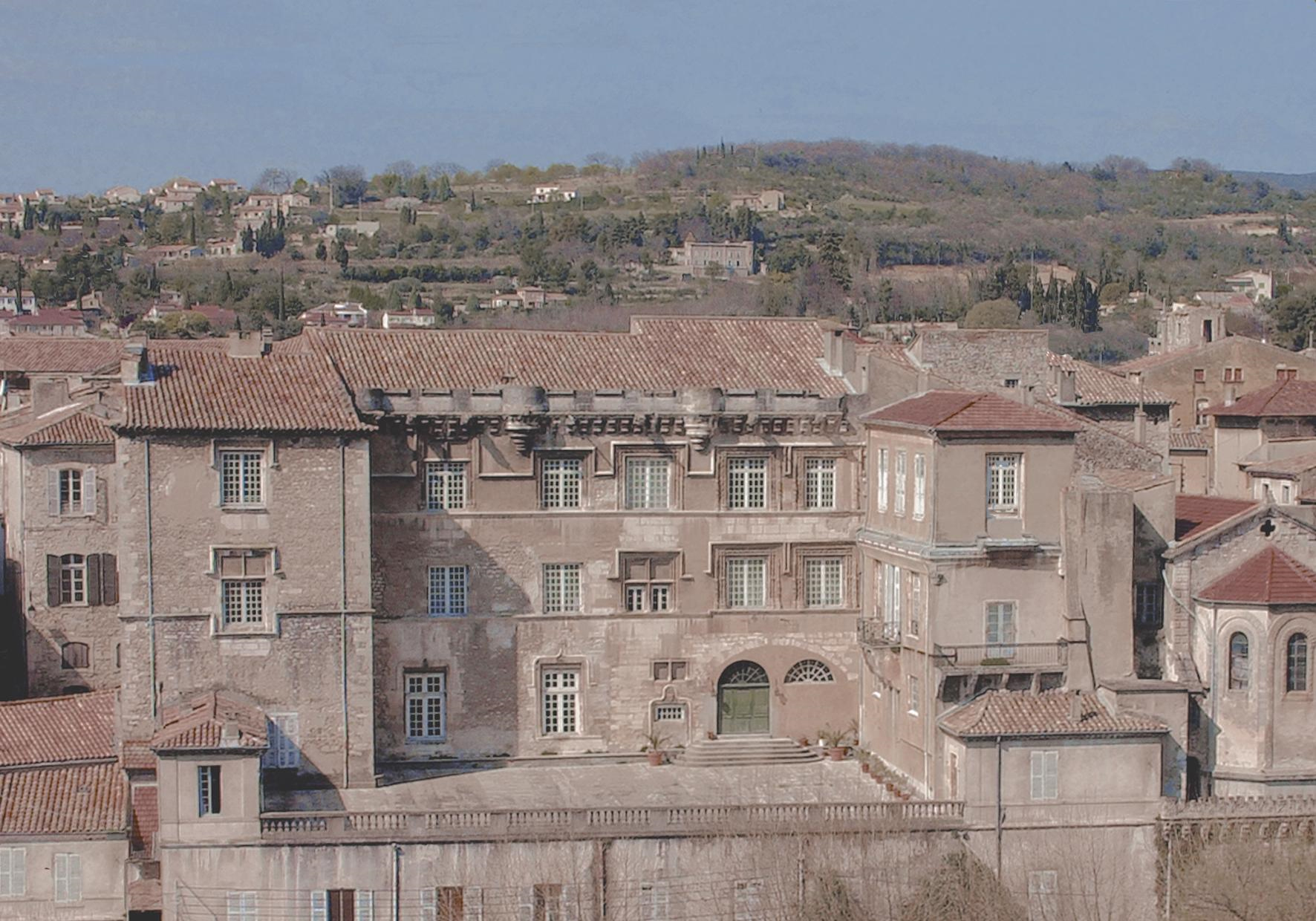
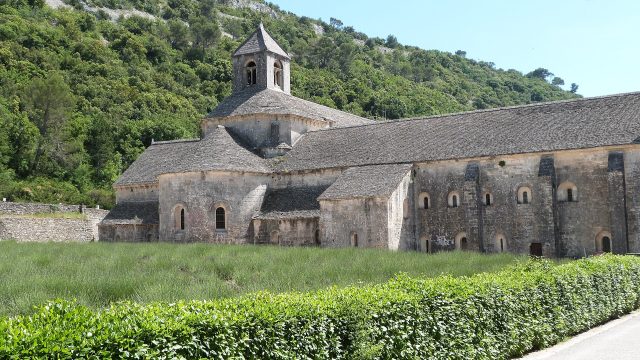
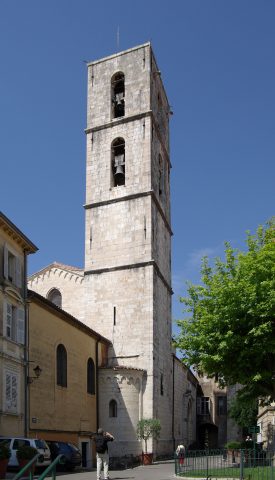
The Bishop’s Palace in Gordes stands as a quiet witness to centuries of Provençal history, its stone walls holding more than just the weight of time. Built in the twelfth century, it served as the residence of the bishops of Cavaillon, who shaped the region’s religious and political life for generations. Perched above the old town, the palace overlooks the landscape with the same solemn presence it must have had when Gordes was not just another sleepy village but a center of power. The thick limestone walls, the narrow windows, the sturdy buttresses—all remain largely unchanged, as if the building itself has resisted the urge to fade into the past. Even now, the modern world feels distant here, its noise softened by the layers of history that linger in the air.
The architecture blends Romanesque solidity with the early touches of Gothic elegance, a style common in medieval Provence. The main façade faces a square where markets and gatherings once took place, its entrance marked by a rounded archway that still bears faint traces of heraldic carvings, though time has worn them smooth. Inside, the chapter house stands out with its high vaulted ceilings and sturdy columns, a space where bishops once made decisions that shaped the fate of the region. The walls are nearly a meter thick, keeping the interior cool even in the height of summer, as if the building itself remembers the need for refuge from the Provençal heat. Some rooms still hold fragments of frescoes, though most have been lost to centuries of neglect and restoration.
Gordes itself feels like a place untouched by the rush of time. Its cobbled streets wind between houses with terracotta roofs, where geraniums spill from window boxes and wrought-iron lanterns cast soft shadows in the evening. The Bishop’s Palace fits seamlessly into this setting, as if it grew from the same earth as the rest of the town. In the Middle Ages, Gordes was a fortified stronghold on the border between Provence and Languedoc, and the palace played a dual role—as both a religious seat and a defensive structure. From its heights, the Durance River valley stretches out below, once a vital trade route, now flowing quietly, a reminder of the region’s former importance.
Today, the palace is more than just a historical monument; it’s a living part of Gordes’ cultural life. Exhibitions, concerts, and lectures on Provençal history take place within its walls, and in the summer, the inner courtyard comes alive with music. The sound of a violin or guitar drifting over the ancient stones creates an atmosphere where past and present merge effortlessly. The palace also hosts displays on the lives of the bishops, their influence on the region, and how Gordes itself has evolved over the centuries. Occasionally, local artists exhibit their work here, bringing modern creativity into dialogue with the building’s medieval heritage.
One of the palace’s most intriguing features is its underground passages, discovered during restoration work and now open to visitors. Narrow tunnels carved into the rock lead to small chambers where food, wine, and perhaps even prisoners were once kept. In one room, the remains of an old well still stand, a lifeline during sieges. The underground spaces feel like a world apart, cool and dimly lit, where every stone seems to whisper stories of survival and secrecy. Visitors often remark on the sense of stepping back in time, as if the dangers and uncertainties of the Middle Ages still linger in the shadows.
The Bishop’s Palace isn’t just a museum—it’s a place where history feels immediate. You could spend hours wandering its halls, examining old documents and everyday objects, or simply sitting in the courtyard, watching how the light plays across the stone. Gordes is a small town, and while the palace is one of its main attractions, it’s far from the only one. Nearby, the old bridge over the Durance, the church of Notre-Dame-du-Lac, and the town’s cozy cafés—where local wines and Provençal dishes are served—all contribute to the unhurried rhythm of life here. There’s no need to rush; the town invites you to slow down and savor the moment.
If you find yourself in Gordes, the palace is worth visiting not just for its history, but for the way it makes the past feel tangible. Unlike more famous French destinations, it’s rarely crowded, allowing you to explore at your own pace. The building has a way of making you feel as though the voices of those who lived here centuries ago are still echoing in the halls. That’s the quiet magic of places like this—they don’t just tell stories of the past; they let you step into them, if only for a little while.