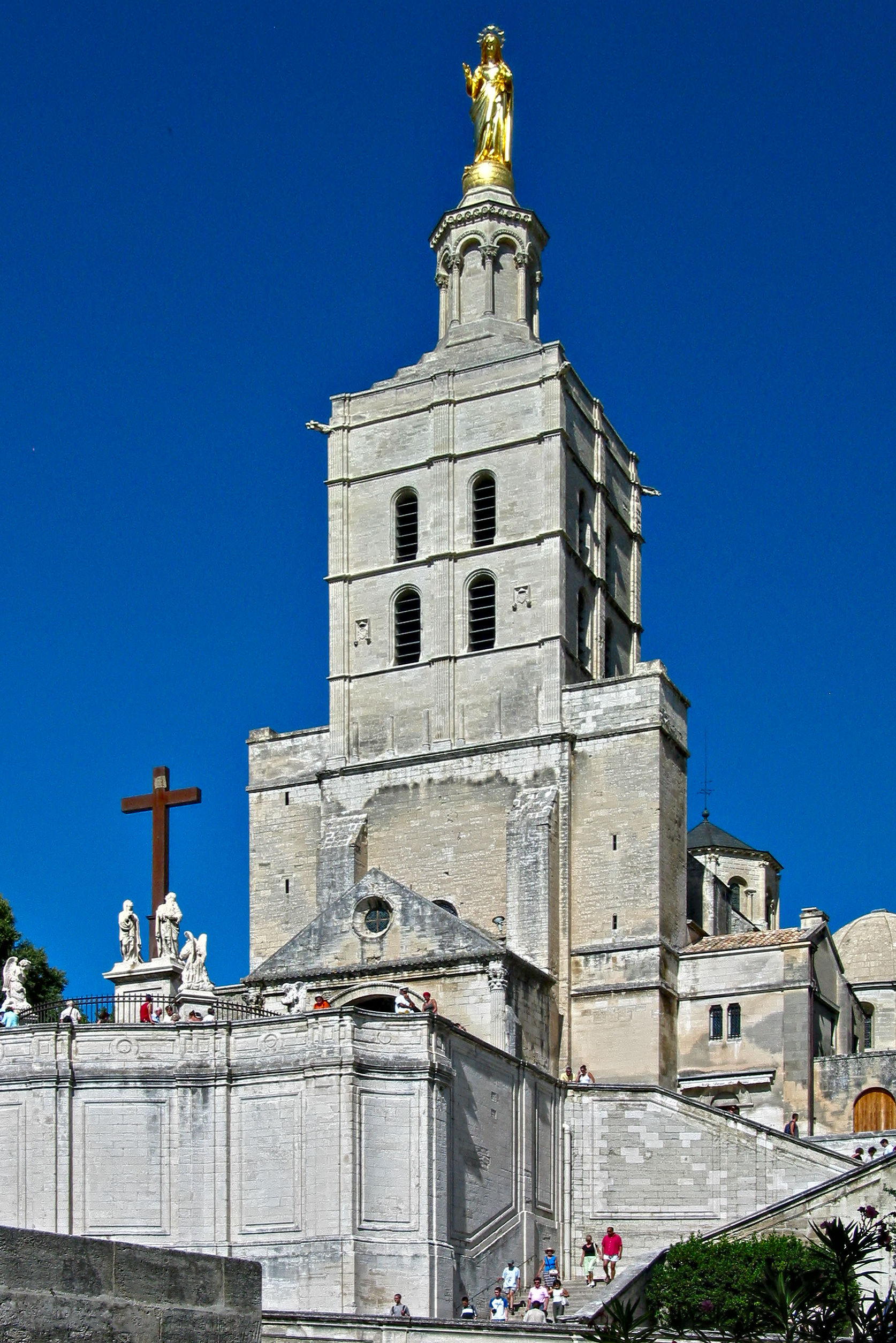
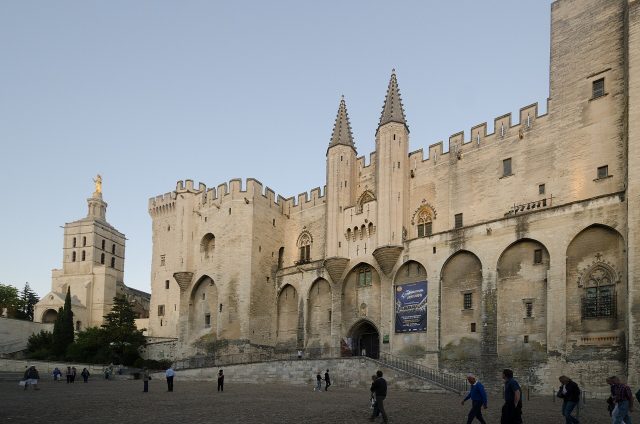
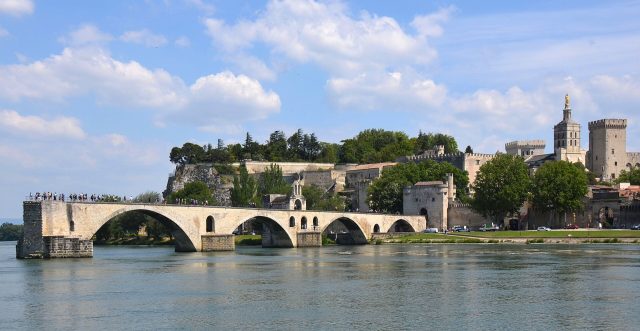
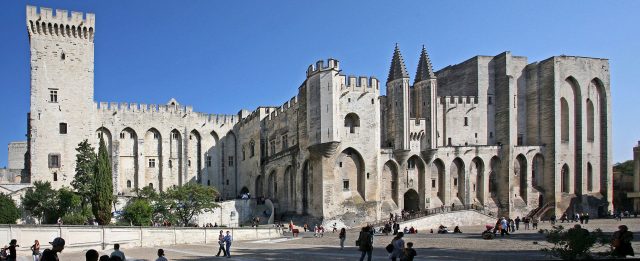
Perched on the Rocher des Doms, the rocky outcrop that rises above Avignon, Notre-Dame des Doms is more than just a cathedral—it’s a quiet witness to centuries of faith, power, and the shifting tides of European history. Built in the 12th century, its sturdy silhouette has watched over the city through times of splendor and upheaval, its stones holding the echoes of papal processions, whispered prayers, and the everyday lives of those who sought solace within its walls.
The cathedral’s architecture tells a story of evolution, blending the solid, unadorned lines of Romanesque design with the soaring verticality of Gothic influences. The thick walls and narrow windows speak of an era when churches were not only places of worship but also fortresses, built to withstand both spiritual and physical storms. Inside, the nave stretches upward, its height accentuated by the soft, colored light filtering through stained glass. The effect is one of quiet grandeur, a space designed to lift the gaze and still the mind. Above it all, the gilded statue of the Virgin Mary atop the spire has become a defining feature of Avignon’s skyline, a beacon visible from the winding streets below.
Notre-Dame des Doms is deeply tied to the Avignon Papacy, the period when the city served as the seat of the Catholic Church from 1309 to 1377. During these decades, the cathedral was at the heart of Christendom, hosting coronations, councils, and the daily rituals of papal life. The tomb of Pope John XXII, carved in the 14th century, is one of the most striking remnants of this era. More than a mere monument, it’s a masterpiece of medieval sculpture, its intricate details—from the folds of the pontiff’s robes to the serene expressions of the figures surrounding him—revealing the skill and devotion of its creators. Nearby, faded frescoes and altarpieces depict scenes from scripture and the lives of saints, their colors still vivid in places, offering a glimpse into the religious artistry of the time.
Even after the papacy returned to Rome, the cathedral remained a vital part of Avignon’s identity. It weathered the turbulence of the Hundred Years’ War, the religious conflicts of the Reformation, and the upheavals of the French Revolution, emerging each time as a symbol of endurance. Over the centuries, it has been expanded, restored, and adapted, yet its core remains unchanged—a place where the sacred and the historical intertwine.
Today, the cathedral is still an active place of worship, its doors open to both the faithful and the curious. The sound of the organ fills the nave during services, while the scent of incense lingers in the air, mingling with the faint mustiness of ancient stone. Visitors climb the steep paths of the old town to reach it, passing through narrow alleys that feel suspended in time. From the terrace outside, the view stretches across the Rhône Valley, where the river winds through the landscape like a silver thread, and the red-tiled roofs of Avignon spread out below. It’s a panorama that connects the past with the present, the spiritual with the earthly.
For those who step inside, the cathedral offers more than just a lesson in history. There’s a stillness here, a sense of timelessness that invites reflection. The play of light on the worn flagstones, the hushed footsteps of other visitors, the occasional murmur of a prayer—all of it contributes to an atmosphere that feels both intimate and vast. Even those who don’t consider themselves religious often find themselves lingering, drawn by the quiet dignity of the space.
Notre-Dame des Doms has seen empires rise and fall, witnessed the ebb and flow of power, and provided solace to generations of worshippers. Yet its greatest strength lies not in its grandeur or its art, but in its ability to endure. It stands as a reminder that some places are more than just buildings—they are repositories of memory, vessels of meaning, and bridges between the past and the present. In a world that moves ever faster, the cathedral offers a rare chance to pause, to look upward, and to remember what it means to be part of something larger than oneself.