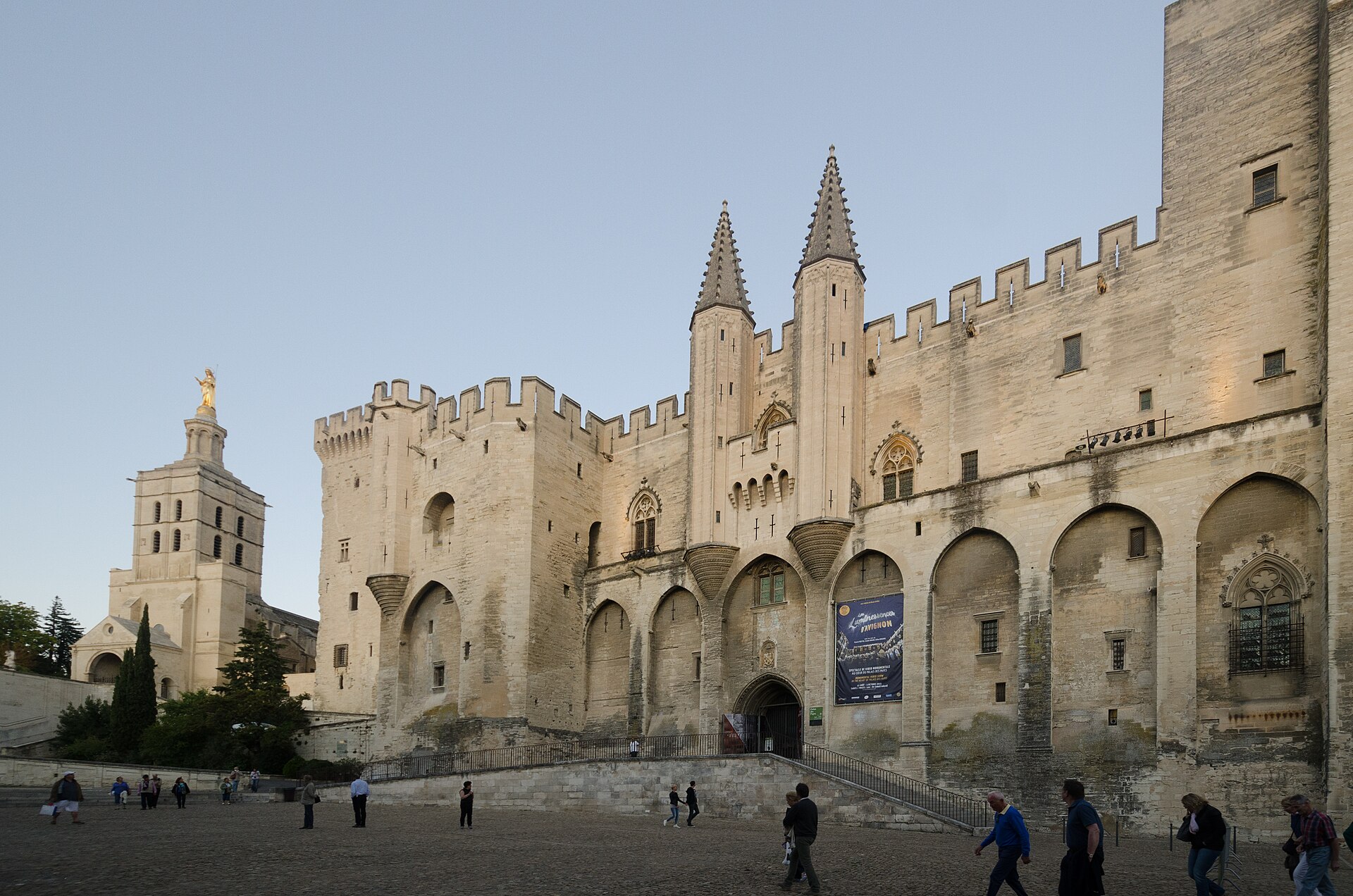
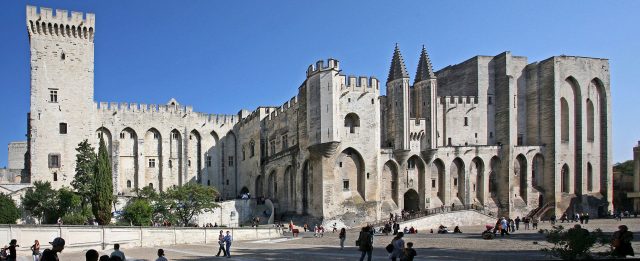
The Palais des Papes in Avignon is one of those rare places where history isn’t just remembered—it lingers in the air, in the weight of the stone, in the hush of the corridors. This sprawling Gothic fortress, perched above the old city, isn’t merely an architectural relic; it’s a monument to a time when the papacy abandoned Rome and made its home on the banks of the Rhône. For nearly seven decades in the 14th century, Avignon was the center of the Catholic world, a place where the fate of Europe was debated, where power was wielded, and where the Church’s influence stretched from the halls of the palace to the farthest corners of Christendom. The walls here have witnessed intrigue, schism, and the kind of grandeur that only an institution at its peak could command.
Construction began in 1335 under Pope Benedict XII, who envisioned not just a residence but an impregnable stronghold, a physical manifestation of the Church’s authority. Yet it was his successor, Clement VI, who transformed the palace into the lavish complex we see today. Clement, a patron of the arts with a taste for opulence, expanded the structure into something far grander—a blend of military might and courtly splendor. The vast halls, adorned with faded frescoes, the soaring vaults that echo with the ghosts of medieval voices, and the quiet courtyards where cardinals and envoys once gathered all speak to an era when the papacy sought to assert its dominance not just spiritually but in stone and mortar. The architecture itself is a contradiction: austere on the outside, almost fortress-like, yet inside, it unfolds into spaces of surprising elegance, where every arch and column tells a story of ambition and faith.
Walking through the palace is like stepping into a different century. The Great Audience Hall, where councils convened and judgments were handed down, still carries the weight of those deliberations. The Chapel of Saint-Jean, with its remarkable acoustics and fragments of original paintings, offers a glimpse into the role of music and ritual in the papal court. Then there are the private chambers of Clement VI, decorated with scenes of hunting and courtly life, a reminder that even the most powerful religious figures were not immune to the pleasures of the world. The Consistory, where popes received dignitaries, now houses rare manuscripts and artifacts from the era, each one a silent witness to the daily rhythms of life in this extraordinary place.
The Avignon Papacy, as this period came to be known, was a time of deep contradiction. On one hand, the palace stood as a symbol of the Church’s unshakable power; on the other, it was a reminder of the fractures within Christendom. The Great Western Schism, which began in 1378, saw rival popes claim authority—one in Rome, another in Avignon—splitting Europe along political and religious lines. The conflict lasted for decades, leaving scars that would take generations to heal. Yet even as the schism raged, the palace remained a bastion of papal authority, a physical anchor in a time of spiritual upheaval. When Gregory XI finally returned to Rome in 1377, Avignon didn’t fade into obscurity. For years afterward, it remained an important outpost of the Church, governed by papal legates who ensured its continued influence.
Today, the Palais des Papes is more than a museum; it’s a living connection to an era when Avignon was the political heart of Europe. Its walls have borne witness to kings and emperors, to diplomats and pilgrims, and now to visitors from around the world. In the summer, the palace courtyard becomes a stage for the renowned Avignon Festival, where the medieval stones resonate with the voices of contemporary theater. But even without the festival, the palace has a presence all its own. The quiet of the inner courtyards, the coolness of the stone passageways, the way the light filters through the narrow windows—it all feels suspended in time, as if the centuries between then and now have somehow blurred.
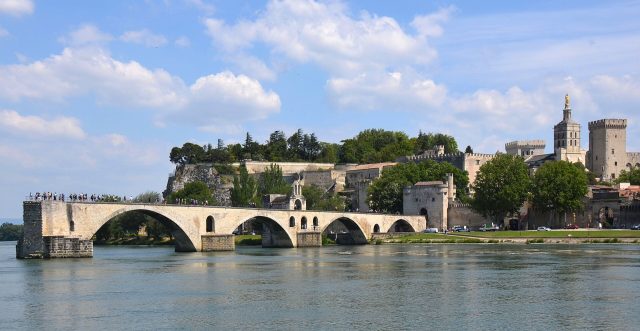
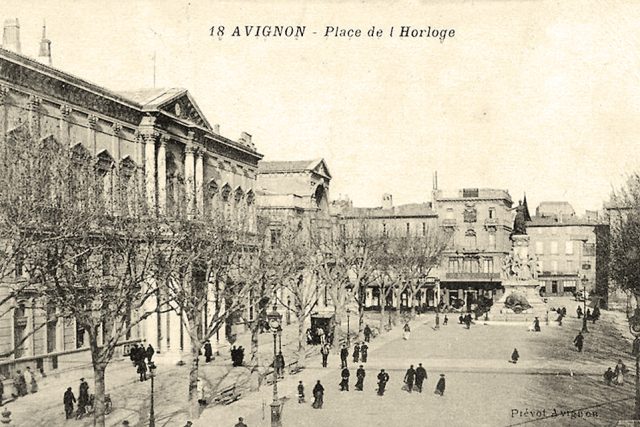
What makes the palace truly remarkable, though, is how seamlessly it fits into the fabric of Avignon. From its towers, the view stretches over the city, the Rhône River, and the rolling hills beyond, offering a sense of why this place, of all places, became the temporary seat of the papacy. Avignon itself is a city that feels like an open-air museum, its medieval walls and winding streets preserving the atmosphere of the 14th century. The palace is its beating heart, a reminder that this was once a place where merchants, artisans, monks, and knights all played their part in a world where faith and power were inextricably linked.
There’s something about the Palais des Papes that resists the usual detachment of a historical site. Unlike other ancient buildings, where the past feels distant and untouchable, here it feels immediate, almost tangible. The stones seem to remember the voices that once filled these halls, the footsteps that echoed through the corridors, the weight of the decisions made within these walls. It’s why the palace draws not just history enthusiasts but anyone who wants to feel a connection to something real, something enduring. Few places in the world offer the chance to step so directly into the past, to sense its presence so vividly. In Avignon, history isn’t just something you learn about—it’s something you experience.