Perched on a gentle rise just outside Biertan, this unmarked hilltop offers something far rarer than the village’s famous fortified church—silence, space, and a view that stretches beyond history into the very soul of Transylvania. The climb is short but steep enough to slow your pace, winding between terraced vineyards and orchards where the same varieties of apples and plums have been cultivated for centuries. The air carries the scent of warm earth and wild thyme, and if you’re lucky, you might catch the distant clatter of sheep bells or the cry of a hawk circling overhead. There are no signs here, no benches, no neatly framed vistas—just the land as it has always been, rolling away toward the distant blue outline of the Carpathians.
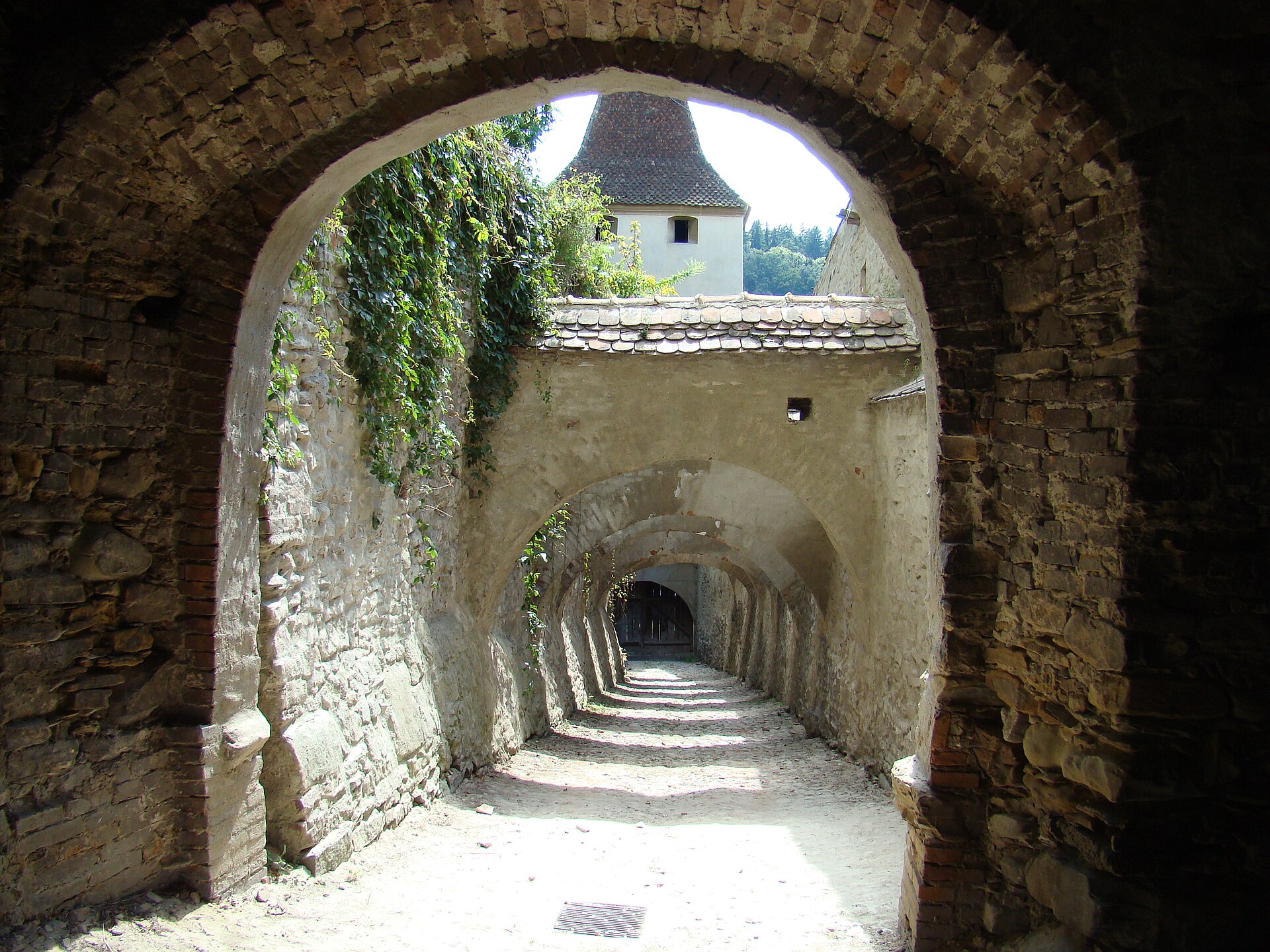
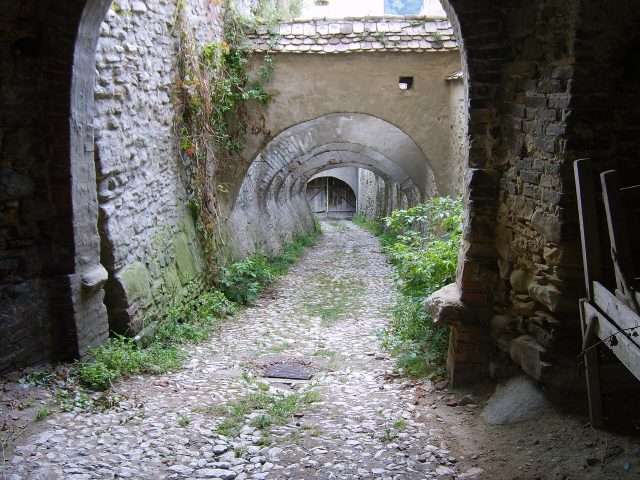
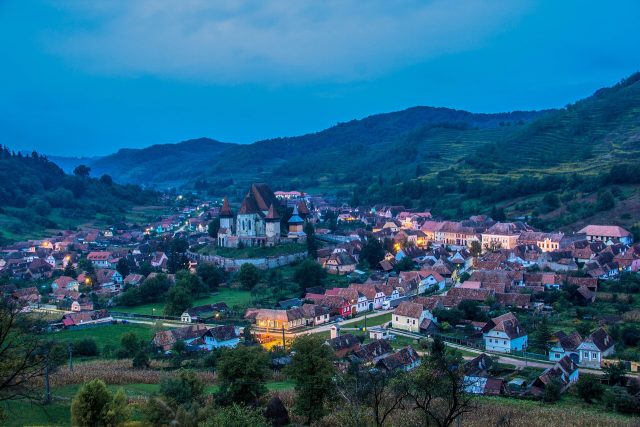
Biertan itself is a place where time feels suspended, its cobbled streets and red-tiled roofs untouched by the rush of modern life. But from this hill, the village reveals itself as part of something larger—a patchwork of fields, forests, and scattered farmsteads that have shaped the region for generations. The fortified church, with its thick walls and watchtowers, dominates the view below, a reminder of the Saxon settlers who arrived in the 12th century and built their lives around defense and community. From this vantage point, it’s easy to imagine how the hill might have served as a lookout, its open slopes offering a clear line of sight to approaching danger. The land still bears traces of that past: faint terraces where vineyards once flourished, crumbling stone walls that once marked property lines.
What makes this place special isn’t its grandeur, but its quiet persistence. The hill has seen centuries of change—wars, migrations, the slow ebb and flow of empires—yet it remains unchanged, a silent witness to the rhythms of rural life. The locals who tend the orchards or graze their sheep here do so with the same methods as their ancestors, their routines dictated by the seasons rather than the clock. For visitors, the hill is often an afterthought, a detour from the more obvious attractions of Biertan. But that’s precisely why it feels authentic. There are no crowds, no guided tours, no pressure to capture the perfect shot. Just the wind in the grass, the occasional chime of the church bells, and the vast, unbroken expanse of the Transylvanian countryside.
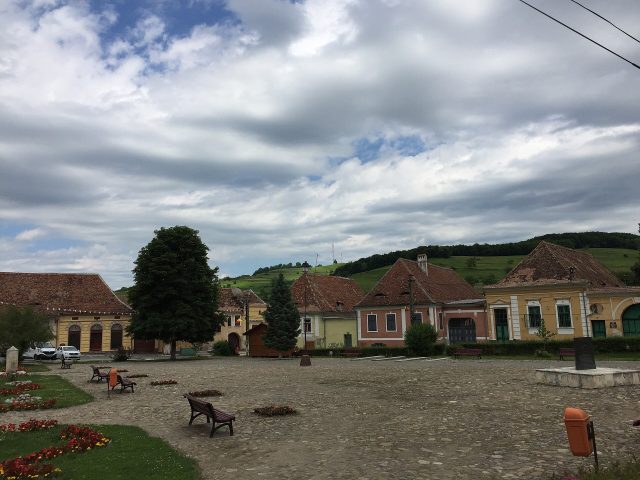
Evening transforms the hill into something almost magical. As the sun dips toward the horizon, the light softens, casting long shadows across the fields and gilding the rooftops of the village below. The air cools quickly, carrying the faintest hint of woodsmoke from distant chimneys. If you linger, you might hear the distant strains of a violin or the murmur of voices rising from the village square, where impromptu concerts sometimes take place in the church. The lights of Biertan flicker on one by one, tiny pinpricks of warmth against the encroaching dark. It’s a scene that feels timeless, as if the village and its surroundings have always existed in this delicate balance between light and shadow.
Winter here is a different kind of quiet. Snow blankets the fields and muffles the sounds of the village, turning the landscape into a monochrome study of black and white. The trees stand bare, their branches etched against the sky, and the only movement comes from the occasional crow or the distant figure of a farmer making his way home. On clear days, the sun reflects off the snow, turning the valley into a shimmering sea of white. The cold sharpens the senses, making the silence feel even deeper. Some of the older villagers still come here in winter, not for any particular reason, but simply to sit and watch the world from a distance, as if the hill offers a kind of perspective that can’t be found anywhere else.
This isn’t the kind of place that makes it onto postcards or travel brochures. There are no dramatic cliffs, no cascading waterfalls, no grand monuments to admire. Instead, it offers something far more subtle: the chance to step outside of time, if only for a little while. The hill doesn’t demand your attention; it simply exists, patient and unchanging, as it has for centuries. If you’re the kind of traveler who seeks out the quiet corners of the world, the places where history feels alive rather than preserved, then this is where you’ll find it. Sit on the grass, listen to the wind, and let the view stretch out before you. In a world that moves too fast, this hill reminds you what it means to slow down.