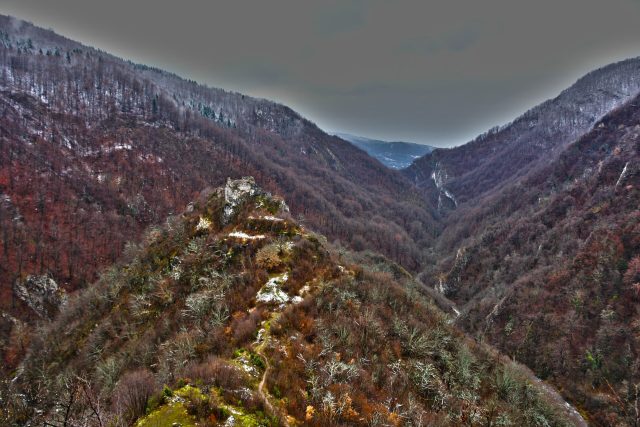
Mount Zvijezda rises above Vareš like a quiet witness to centuries of history in this corner of Bosnia and Herzegovina. Its forested slopes hold traces of ancient settlements, medieval mines, and the slow, steady rhythm of a land shaped by mining. The viewpoint at the summit isn’t just a place to take in the scenery—it’s where the past lingers in the folds of the hills, waiting to be noticed.
Vareš was once one of the Balkans’ most important centers for iron and silver extraction. Miners worked here as far back as Roman times, and later in the Middle Ages, carving out tunnels and shafts that left behind a labyrinth of underground passages. Zvijezda, like many of the surrounding peaks, was part of this industrial landscape. Its name might come from the word for "star," perhaps because of its shape or because the night sky feels unusually close from its heights. Today, little remains of that era—just the ruins of old smelters and heaps of slag—but the mountain still carries the memory of those times.
There are a few ways to reach the top, each with its own character. The easiest is a dirt road winding up the slope, passing through beech and hornbeam groves. Along the way, you’ll see old stone walls built without mortar and the occasional house where locals once kept livestock. Another route takes you through the forest, where the remains of long-abandoned foundations hide in the shade of the trees. Signs appear now and then, but they feel more like echoes of a busier past than practical guides.
The summit is bare—no cafes, no souvenir stalls, not even a bench. Just a flat clearing and a few wooden posts marking the edge of the cliff. From here, the view stretches far: the green valleys of Herzegovina to the south, the rolling hills of Bosnia to the north, and on clear days, even the distant outline of Sarajevo. But the real draw isn’t just the scale of the landscape. It’s the silence, thick enough to touch. The wind carries the scent of pine and damp earth, while far below, the Strijegovi River murmurs faintly.
Zvijezda isn’t a mountain for thrill-seekers or those chasing postcard-perfect views. It’s for people who want to feel the weight of time. In the Middle Ages, watchtowers may have stood here, warning of raids, and later, miners’ lookout posts. Now, there’s no trace of them, but if you look closely, you might spot uneven ground where fortifications once stood. Locals say children used to find pottery shards and rusted nails here, though such discoveries are rare now.
The mountain changes with the seasons. In spring, wildflowers carpet the slopes, and the air fills with the scent of wild garlic. Summer brings cooler temperatures, a relief from the heat below. Autumn turns the forest into a blaze of red and gold, while winter sometimes dusts the summit with snow, making it a quiet white island in the dark green. Few people visit in winter, and the silence deepens.
Vareš isn’t a tourist town, and Zvijezda isn’t the kind of place that makes it into guidebooks. That’s part of its charm. There are no crowds, no hustle, no must-see attractions—just the mountain, the wind, and time moving slower than it does below. You can drive up, leave your car at the base, and hike the rest of the way, or wander the trails without a plan. The key is not to rush.
If you’re lucky, you might meet locals on your way down—shepherds tending their flocks or foragers gathering mushrooms. They rarely pay much attention to passersby, but if you strike up a conversation, they might share stories: how ore was once mined here, how old roads led to Sarajevo, or how the climate has shifted over the decades. There’s no grand storytelling, just people talking about what they know.
Zvijezda won’t impress those looking for dramatic sights or well-marked historical sites. But for anyone who wants to feel the spirit of this place, it’s perfect. You can sit on the edge of the cliff, looking out over the valleys, and imagine miners, merchants, and shepherds walking these same paths centuries ago. The mountain won’t tell its story—you have to feel it. And maybe that’s the point.