- Home
- Bosnia and Herzegovina
- Vareš

Vareš
Bosnia and Herzegovina · 8 places
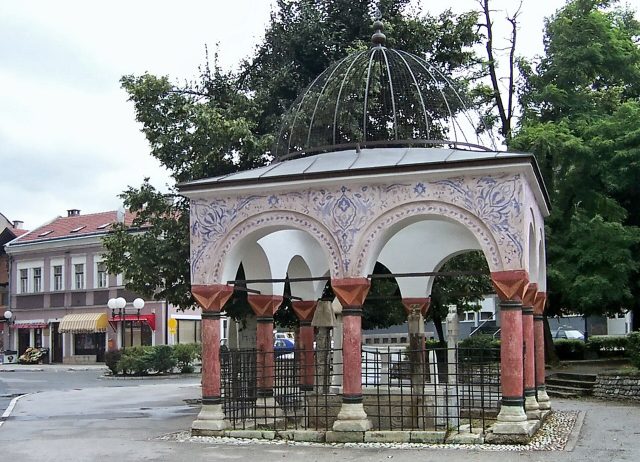
Photo: Badener, CC BY 3.0
Vareš is one of those places that feels suspended in time, tucked away in the green hills of central Bosnia. There are no crowds, no grand boulevards, no world-famous landmarks—just silence, broken only by the occasional clink of a hammer in an old workshop or the rustle of leaves in the wind. The town moves at its own unhurried pace, and that’s where its quiet charm lies. It’s the kind of place for those who’ve grown tired of the rush, where you can wander narrow streets, peek into half-forgotten courtyards, and catch a glimpse of the Bosnia that exists beyond the tourist trails.
The story of Vareš is written in the earth beneath it. For centuries, the town thrived on mining—iron in the Middle Ages, then lead and silver. The industry shaped everything: the sturdy stone houses built for workers, the winding streets climbing the hills, the skeletal remains of old factories still standing on the outskirts. By the 20th century, the mines had dried up, leaving behind empty quarries and abandoned settlements. Yet the memory of that past lingers—in local museums, in the stories of old-timers, in the names of streets. Even now, as the town slowly finds its footing again, the weight of its industrial history is impossible to ignore.
Life in Vareš unfolds at its own rhythm. Summers are hot, and locals seek shade under ancient plane trees, sipping coffee on the terraces of small cafés. Winters blanket the town in snow, muffling its already quiet streets, as if the whole place is holding its breath until spring. People here live simply: working in small workshops, tending vegetable gardens, gathering in courtyards in the evenings. Visitors are rare, and that only adds to the town’s appeal. Those who do make the journey often remark on how easy it is to breathe here—no rush, no pressure, no need to be anywhere else.
The real attraction of Vareš is the town itself. Walking its streets feels like stepping back in time—past carved wooden balconies, moss-covered factory ruins, and tiny churches tucked away around corners. The Brgule district is particularly atmospheric, with its traditional Bosnian houses built on stone foundations and wooden walls. Climb one of the surrounding hills, and the view stretches out over the valley, green in summer, white in winter, revealing how seamlessly the town blends into the landscape.
For all its modesty, Vareš has its surprises. A small but fascinating museum chronicles the history of mining, filled with old tools and photographs of miners. Local craftsmen still work with wood and metal, keeping traditional Bosnian techniques alive. And in the hills nearby, you’ll find ancient necropolises dotted with *stećci*—medieval tombstones unique to the Balkans, carved with enigmatic symbols: suns, crescents, human figures. These weathered stones seem to guard secrets from a distant past.
Vareš won’t make it into glossy travel magazines or Instagram feeds. That’s precisely why it matters. This is Bosnia as it truly is—not the postcard version, but the one that exists quietly, on its own terms. The town doesn’t try to impress; it simply endures, with its scars, its memories, and its quiet hopes. If you ever find yourself here, don’t rush away. Sit by an old fountain, listen to the wind in the trees, and let the town tell its story—in its own time, in its own way.
See & Do
All of them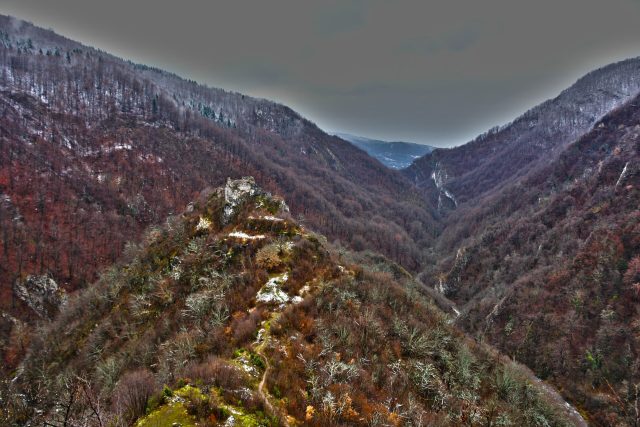

Places on the map
Marker colour follows the categoryClimate and weather
Detailed weather: Vareš- Average temperature
- 10 °C
- Precipitation per year
- 1024 mm
- Average humidity
- 76 %
- Sunshine hours per day
- 8.9 h
- Time zone
- UTC+2 (GMT+2)
Average air temperature
°C
1
2
6
9
13
18
21
20
16
11
5
2
Jan
Feb
Mar
Apr
May
Jun
Jul
Aug
Sep
Oct
Nov
Dec