Gutenfels Mountain rises above the Rhine, its slopes holding centuries of stories. The viewpoint at the summit doesn’t just show the landscape—it lets the valley speak for itself. Knights, poets, and travelers have stood here, all searching for the same thing: the heart of the Rhine.
The mountain is named after the castle that once stood at its peak. Built in the 13th century, Gutenfels Castle guarded the river, overseeing trade and movement. The Rhine was never just water—it was a highway, a border, a lifeline. Now, only ruins remain, but they still hold the past: the shouts of boatmen, the clatter of hooves, the watchful eyes of sentries. The details are gone, but the mountain’s shape carries its history.
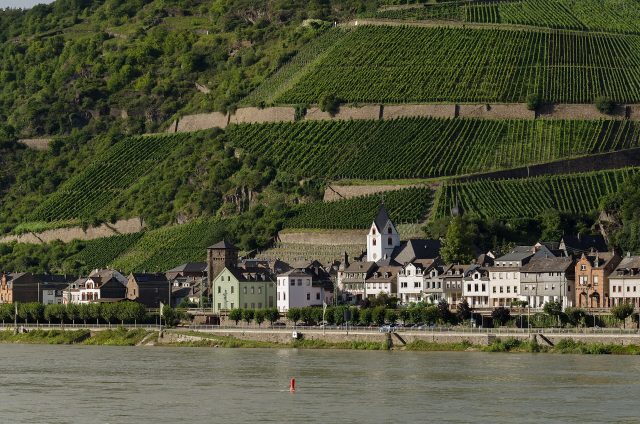
Getting to the viewpoint takes effort. The path climbs through vineyards and forests, each turn revealing more of the Rhine’s curves. The climb is steep, but the view makes it worth it—a stretch of river, towns, and cliffs that seem to go on forever. Across the water, the Lorelei rocks rise, sharp and myth-shrouded. On clear days, the valley unfolds: red-roofed villages, terraced vineyards, the Rhine narrowing and widening like a living thing.
Dusk is the best time to visit. The light softens, and if you’re lucky, mist drifts over the water, blurring the edges of the landscape. Locals say this is when the Rhine shows its true self—slow, powerful, a little mysterious. Many who come once return, pulled back by something they can’t explain.
The viewpoint is just a wooden platform, unmarked and quiet. No signs, no crowds, no stalls. Just you, the wind, and the river below, flowing as it always has. Gutenfels doesn’t try to impress. It simply is—a place where each visitor finds their own connection.
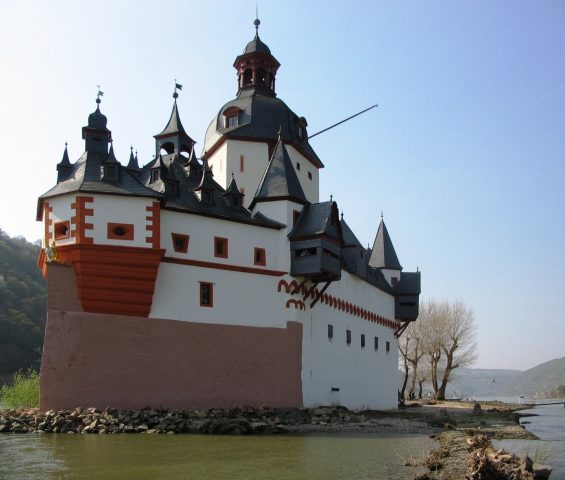
If you like history, the mountain is a starting point. Nearby Kaub has a medieval center and Pfalzgrafenstein Castle, a fortress on an island in the Rhine. Like Gutenfels, it once controlled river traffic. Now, its ruins seem to call across the water, two silent sentinels of the past.
The vineyards on Gutenfels’ slopes are another reason to stay. The Rhine Valley is known for its Rieslings, grown in soil shaped by the mountain. In autumn, the harvest fills the air with voices and the scent of ripe grapes.
Gutenfels isn’t for quick visits or checkboxes. There’s nothing to distract you—just silence, space, and the chance to feel part of something bigger. Maybe that’s why people come back. The Rhine doesn’t change, and neither does this quiet spot above it.