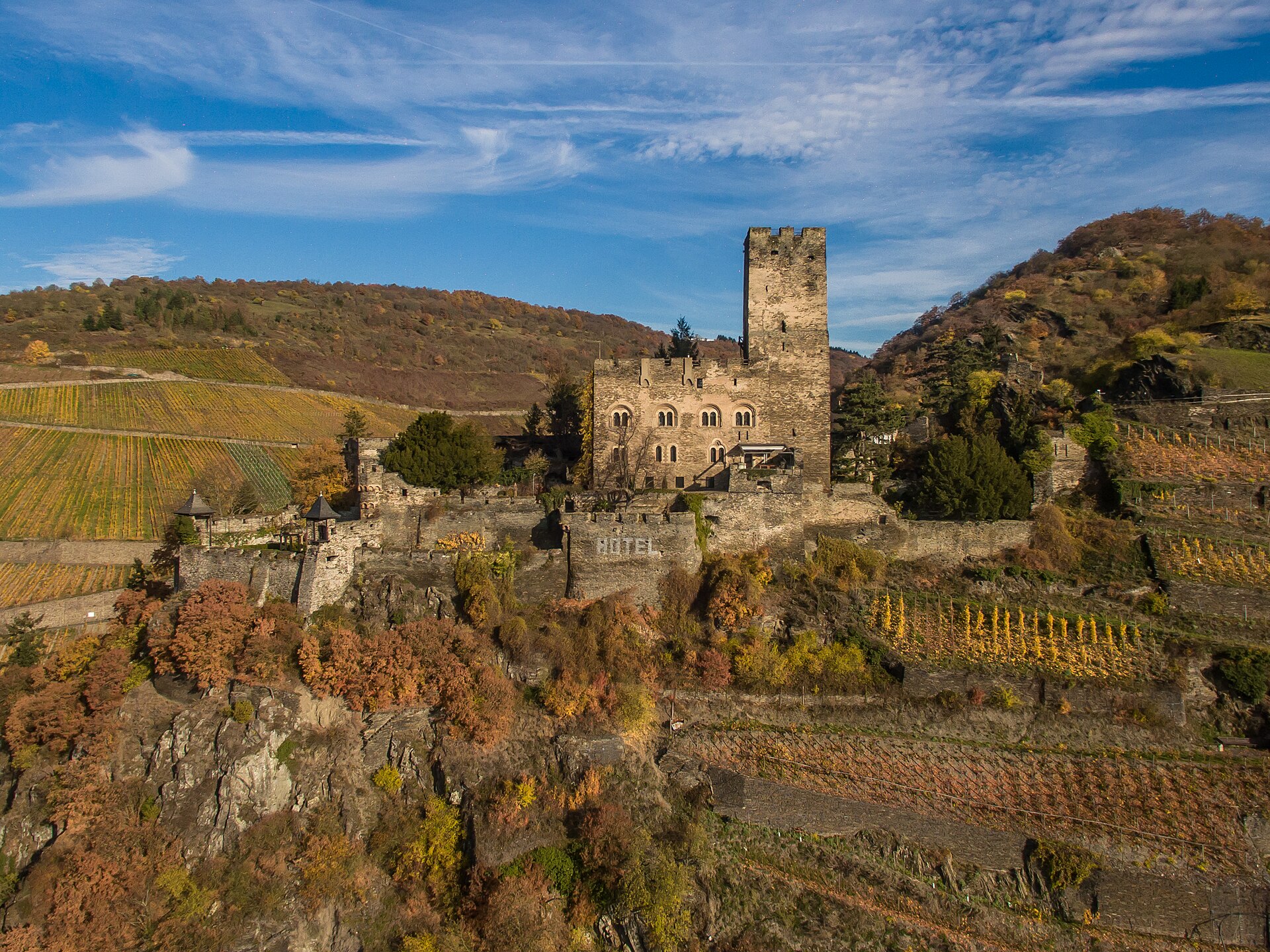
Perched on a rocky outcrop above the Rhine, Gutenfels Castle has watched over the river for nearly eight hundred years. Built in the early thirteenth century, it was part of a network of fortresses that secured trade routes and controlled navigation along one of medieval Europe’s busiest waterways. The Rhine was never just a river—it was a highway for goods, travelers, and news, and castles like Gutenfels served as toll stations, strongholds, and symbols of authority. Though time has worn away much of its former grandeur, the castle’s thick walls, tower, and courtyard still convey a sense of impregnability, as if the centuries have barely touched its stones.
The architecture of Gutenfels is typical of Rhine castles from that era—compact, practical, and unadorned. The keep, or donjon, was the last refuge during sieges, while the thick walls and narrow arrow slits were designed to withstand assaults. Inside, the castle once housed living quarters, storerooms, and a chapel, though little remains of them today beyond the outlines of foundations and vaults. Remarkably, Gutenfels was never completely destroyed, even during the Thirty Years’ War, when many Rhine fortresses were burned or dismantled. Its strategic position likely played a role in its survival: the castle overlooks the valley, shielded on one side by cliffs and on the other by the river.
Like many medieval strongholds, Gutenfels is steeped in local legends. One tells of a knight who fell in love with the burgrave’s daughter and surrendered his castle for her sake, only to be betrayed and killed. Another speaks of a secret underground passage to the Rhine, used to smuggle supplies during sieges. While these stories are impossible to verify, they add to the castle’s mystique, making every stone feel heavy with the past. In the nineteenth century, when the Rhine became a favorite subject for Romantic artists and writers, Gutenfels inspired paintings and poems that captured the spirit of medieval Germany.
Today, the castle is privately owned, and its interiors are closed to the public. However, the exterior and the surrounding slopes are open for exploration, drawing visitors who come to admire the views of the Rhine and the valley below. From this height, the town of Kaub sprawls at the castle’s feet, while the legendary Lorelei Rock looms farther downstream. The scene is especially striking at sunset, when the river glows golden and the castle’s shadow stretches across the hillside. In that light, it’s easy to imagine medieval barges gliding along the water and signal fires flickering from the tower.
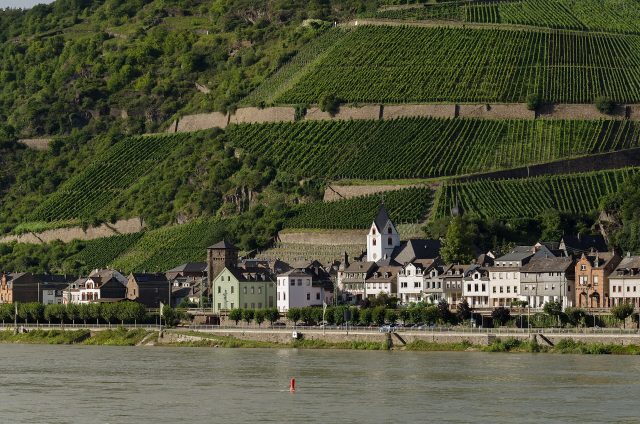
Kaub, the small town beneath Gutenfels, has its own rich history. In the Middle Ages, it was a crucial transshipment point where goods were transferred from ships to wagons to bypass the dangerous rapids of the Rhine. The town also hosted one of the most important toll stations on the river, controlling traffic between Switzerland, southern Germany, and the Netherlands. Today, Kaub retains its old-world charm, with half-timbered houses, narrow streets, and a few small museums dedicated to its past. Yet the castle remains its defining landmark, visible from nearly every corner of the town.
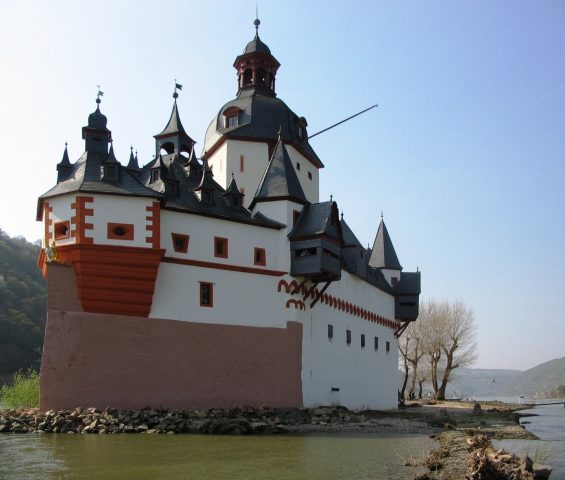
The hike to Gutenfels begins in Kaub, following a steep trail that winds up the hillside. The climb takes about twenty minutes, with each turn offering new perspectives of the valley. On clear days, the view extends to castles on the opposite bank—the Pfalzgrafenstein and Reichenstein—forming a medieval trio that once vied for dominance but now stand as silent neighbors. At the base of the castle, vineyards stretch across the slopes, a reminder that the Rhine Valley is renowned for its wines. Local varieties like Riesling and Pinot Noir can be sampled in Kaub’s cozy cafés.
Gutenfels is more than just an architectural relic; it’s a place where history feels tangible. There are no lavish interiors or curated exhibits here, just the raw authenticity of weathered stone, moss-covered walls, and the quiet broken only by birdsong and the wind. The castle doesn’t try to impress—it simply endures, much as it has for centuries. That unassuming permanence is what draws visitors who seek something deeper than mere sightseeing. In a world that changes at a relentless pace, Gutenfels stands as a reminder that some things outlast time.