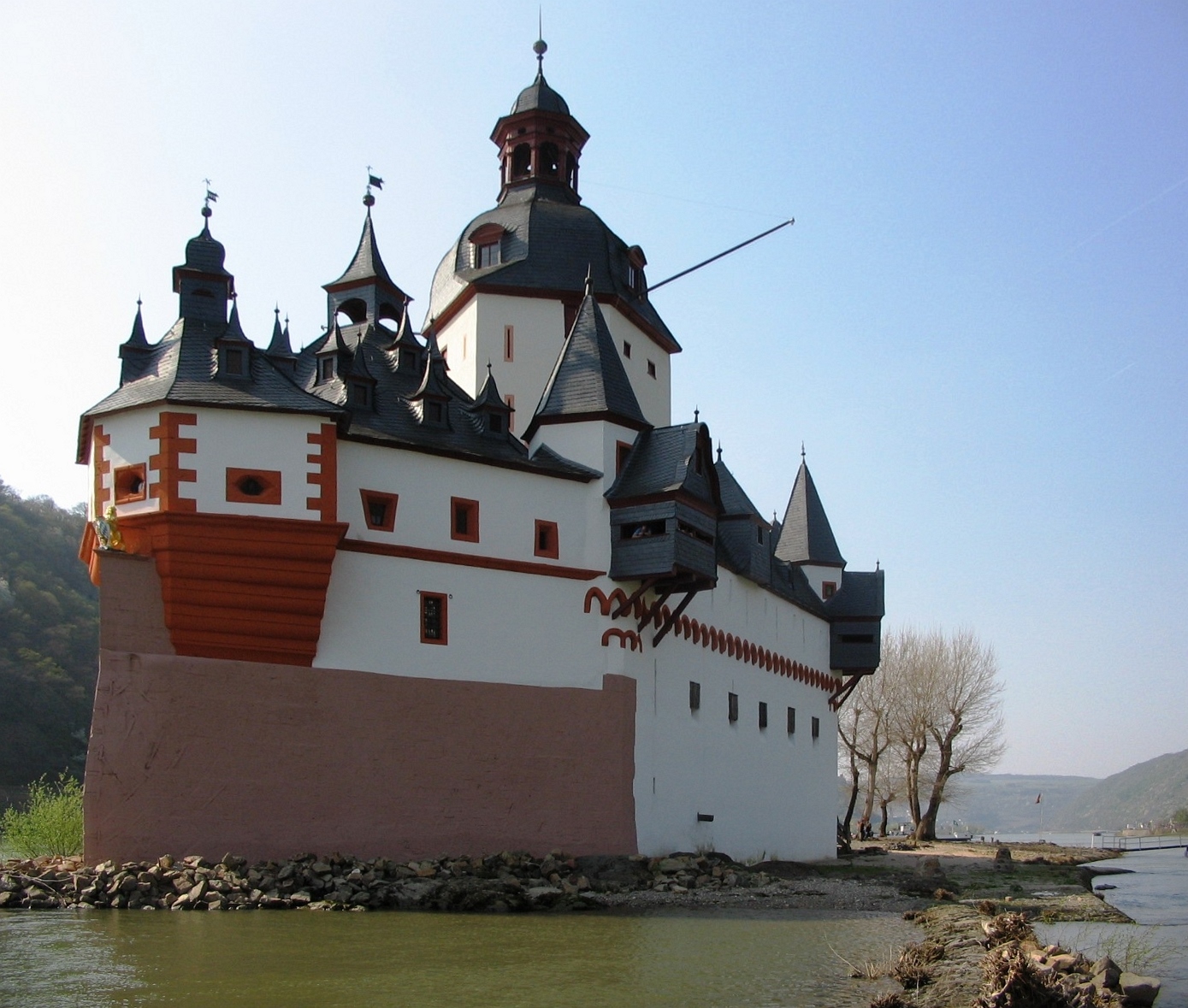
Perched on a tiny island in the middle of the Rhine, Pfalzgrafenstein Castle feels like a relic plucked straight from the pages of a medieval chronicle. Its sharp, pointed tower, crowned with a weather vane shaped like an imperial eagle, rises above the river’s currents, giving the impression that the fortress might drift downstream at any moment. Yet it has stood firmly in place since the 14th century, built not as a noble residence but as a toll station—a strategic stronghold where every passing ship had to pay its due. In an era when the Rhine was one of Europe’s most vital trade routes, laden with wine, grain, and textiles, the castle wasn’t just watching the river; it was controlling it, a tangible symbol of power and wealth for those who ruled these waters.
The architecture of Pfalzgrafenstein is unadorned and purposeful, designed for function rather than grandeur. The main structure is a sturdy, round keep with thick stone walls, encircled by a low defensive perimeter. Inside, the space was once divided into storage rooms, barracks for guards, and offices for the officials who oversaw the collection of tolls. There was no room for gardens or lavish halls—every inch of the island, barely a hundred meters long, was dedicated to one goal: ensuring the safety of those who enforced the law and the security of the revenue they collected. Even the drawbridge leading to the entrance was built to be raised quickly in case of attack, a reminder that this was a place of business, not leisure.
Today, the castle looks much as it did seven centuries ago, though the river around it has changed. The Rhine is no longer the bustling commercial highway it once was, but it still carries cargo, and tourist boats glide past Pfalzgrafenstein just as merchant barges once did. The island itself is so small that the castle dominates it entirely, leaving little space for anything else. In summer, visitors arrive by ferry to climb the tower and take in the view of the Rhine from above. In winter, the fortress feels particularly isolated, as if time has paused and the castle has reverted to its original role—a solitary outpost in an age of knights and traders.
The history of Pfalzgrafenstein is deeply intertwined with that of the Rhine and, by extension, Germany itself. It was commissioned in 1326 by Ludwig the Bavarian, King and Holy Roman Emperor, as a means to tighten control over the river and fill the imperial coffers. At the time, the Rhine was not just a trade route but a contested border between rival principalities, and castles along its banks often became points of conflict. Pfalzgrafenstein changed hands multiple times, besieged, captured, and reclaimed, yet it always remained a key strategic location. Even after tolls on the Rhine were abolished in the 19th century, the castle retained its significance—not as a military post, but as a monument to a bygone era, a reminder of how the river both connected and divided the people who relied on it.
Inside, the castle offers little in the way of opulence, but what remains is enough to transport visitors back in time. Narrow stone staircases wind up through the tower, where guards and officials once lived in cramped quarters. The low-ceilinged rooms, dimly lit by small windows, evoke the daily life of the past: the flicker of torchlight, the scratch of quills on parchment, the creak of ships docking below. Today, the exhibits include medieval coins, documents, and even instruments of torture, but the real draw is the view. From the tower, the Rhine unfolds in all directions—its winding course, the green hills lining its banks, and the other castles perched on distant cliffs. It’s easy to imagine the voices that once filled these walls: merchants haggling over prices, guards calling out from the ramparts, the constant hum of a river that was the lifeblood of the region.
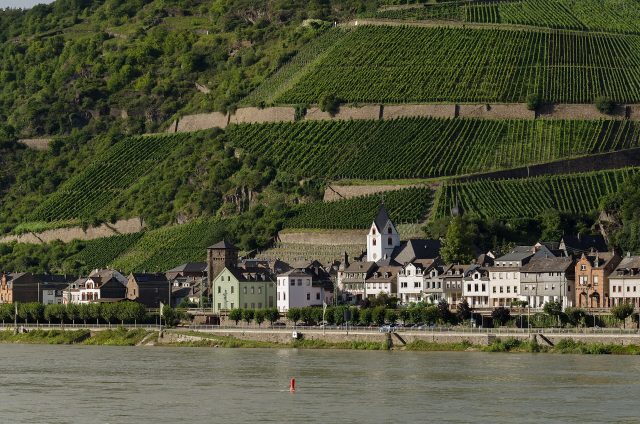
Pfalzgrafenstein is more than just a castle; it’s a piece of a much larger landscape shaped by centuries of history. The Rhine Valley, with its vineyards, forests, and ancient towns, has always been a place where nature and human endeavor intersect. The island on which the castle stands was once part of the mainland, but over time, the river carved it away, creating the perfect site for a fortified outpost. Today, that island feels like a fragment of the past, a place where the Middle Ages linger in the air. There are no modern distractions here—just the river, the sky, and the stone walls that have witnessed countless ships passing by, as if they remember each one.
Visiting Pfalzgrafenstein isn’t just a sightseeing trip; it’s a step back in time. Approaching the castle by ferry, it feels as imposing as it must have centuries ago. The drawbridge, the narrow arrow slits in the walls, the heavy wooden doors—all of it reinforces the sense of entering another era. Inside, there are no grand halls or lavish decorations, and that’s what makes the castle feel so authentic. It doesn’t try to romanticize the past or stage a medieval spectacle; it simply exists as it always has—stark, practical, and quietly mysterious.
The Rhine Valley, with its castles and legends, has long been part of Germany’s cultural heritage. Pfalzgrafenstein is one of those rare places that doesn’t tell a fairy tale but instead offers a glimpse of history as it really was. It was never a royal residence or the setting for grand balls, and that’s precisely why it’s so compelling. Everything here is genuine: the stones laid in the 14th century, the river flowing just as it did then, the silence that settles over the island when the last ferry departs. The castle doesn’t need embellishment—its story speaks for itself.