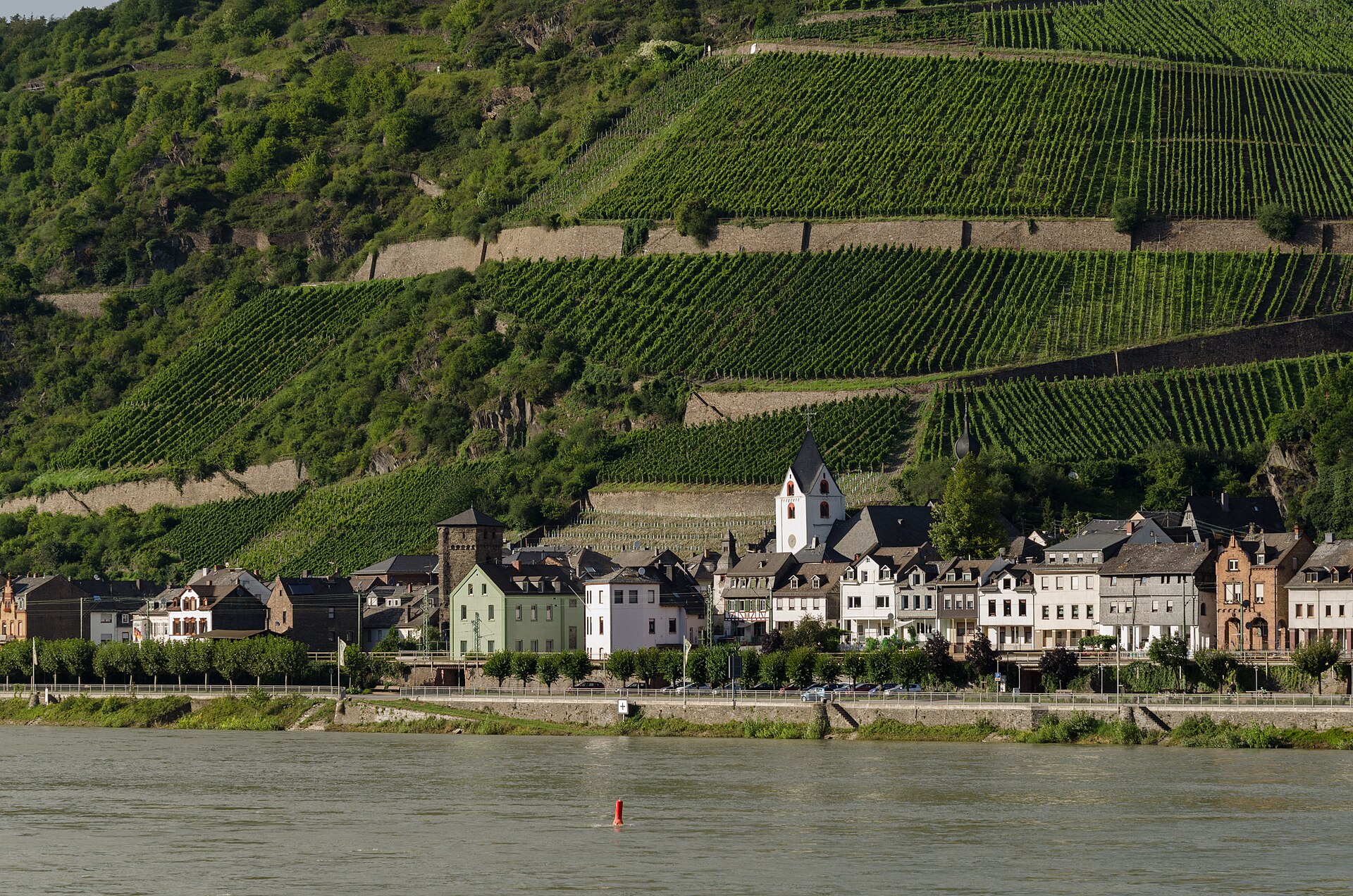
The Rhine promenade in Kaub is one of those places where the river feels less like a waterway and more like a living part of everyday existence. There’s no rush here, no urban clamor—even visitors drawn by the castles and vineyards upstream tend to slow down without realizing it. Kaub itself is a small town, home to just a few thousand people, yet its riverfront carries the weight of centuries. This was once a crossroads for merchants, armies, and pilgrims, a place where trade routes intersected and history unfolded along the water’s edge. The Rhine here is wide and unhurried, its banks lined with vineyards that spill down to the shore. In summer, the promenade comes alive: locals linger on benches with glasses of wine, children play near the water, and barges drift past alongside the occasional sightseeing boat.
The architecture along the riverfront is simple but striking. The buildings are mostly two or three stories tall, their half-timbered facades and red-tiled roofs a classic example of Rhenish style. Many date back to the 18th and 19th centuries, when Kaub was a vital hub for goods moving up and down the Rhine. Back then, the town buzzed with activity—warehouses, taverns, and inns catered to traders and travelers. Today, remnants of that era remain: sturdy stone docks, old-fashioned lampposts, and a handful of historic structures now housing small cafés and wine cellars. One of the most notable is the former customs warehouse, a reminder of the days when the Rhine wasn’t just a route but a border.
A defining feature of the promenade is the ferry crossing. It’s not just a tourist novelty but a working link between Kaub and the opposite bank, carrying locals, cyclists, and the occasional visitor on a regular schedule. Taking the ferry offers a different perspective on the river—its current, its scale, the way it shapes the landscape. On the far side, vineyards stretch up the hills, and if you follow the narrow paths upward, the view back toward Kaub is worth the climb: the red roofs of the town, the silhouette of Pfalzgrafenstein Castle rising from the water on its rocky island.
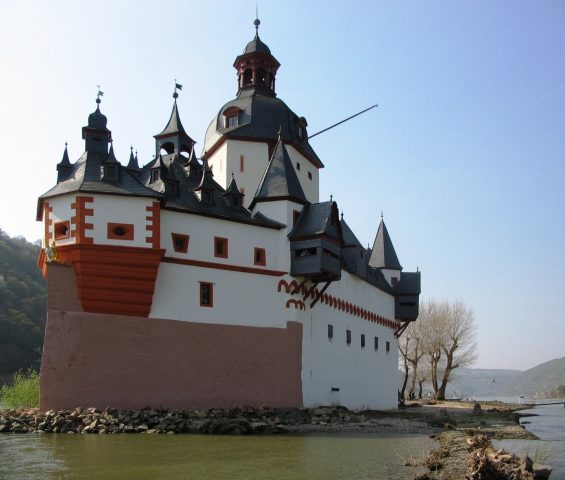
Pfalzgrafenstein Castle is one of the main reasons people make the trip to Kaub. Built in the 14th century as a toll fortress, it once controlled river traffic and collected duties from passing ships. Today, it’s one of the most photogenic castles along the Rhine, accessible by boat from Kaub. Inside, you can explore the old halls, dungeons, and a tower with sweeping views of the river. The castle’s history is intertwined with Kaub’s own—once a symbol of power and wealth, now a quiet monument to how much has changed.
The promenade isn’t just a place to stroll; it’s a starting point for exploring the Rhine. From here, it’s easy to visit nearby towns like Bacharach, with its medieval streets, or Oberwesel, where old city walls still stand. Sankt Goar, home to Rheinstein Castle, is just a short trip away. You can hop on a riverboat and reach Koblenz or Mainz in a few hours, or simply walk along the shore, watching the river’s daily rhythm. Summer is especially beautiful here—the vineyards glow green, the water shimmers in the sunlight, and in the evenings, the old-fashioned streetlamps cast a warm glow over the promenade.
Winter transforms Kaub. The Rhine turns gray and cold, the promenade quiets down, and the castle on its island seems even more remote. Yet there’s a quiet charm to the season. The local cafés stay open, serving mulled wine and hearty Rhenish dishes, and a walk along the river on a crisp day feels strangely peaceful. In December, a small Christmas market sets up along the waterfront, offering handmade gifts and a chance to warm up by a fire.
Kaub isn’t a place for nightlife or big attractions. Everything here moves to the rhythm of the river—its slow current, the changing seasons, the unhurried pace of a small town. The promenade is the heart of Kaub, where history, nature, and daily life intersect. You can sit on a bench and watch the boats go by, or set off on a journey along the Rhine, but either way, Kaub leaves you with the sense of having stumbled upon a quiet corner of Germany where time seems to flow differently. It’s not forgotten, exactly, but it doesn’t demand attention, either. It simply exists, as it has for centuries, shaped by the river that runs through it.