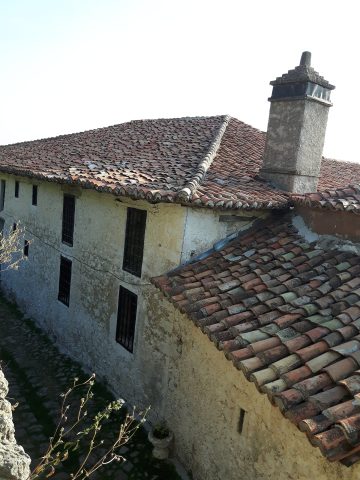
Perched on a rocky hill above the town, Krujë Castle watches over the valley like a silent guardian. From its viewpoint, the landscape unfolds in layers—red-tiled rooftops of the town below, rolling green foothills beyond, and on clear days, the distant shimmer of the Adriatic Sea. This isn’t just a place for sweeping views; it’s where history lingers in the stones, where the echoes of medieval battles and the legacy of Albania’s national hero, Skanderbeg, still feel close.
The castle’s origins stretch far beyond its most famous chapter. Long before it became a symbol of resistance, the hill bore traces of Illyrian settlements, Roman fortifications, and Byzantine walls. But it was in the 15th century, when Albania fought desperately against Ottoman expansion, that Krujë transformed into an unyielding stronghold. Skanderbeg, the Albanian prince, rallied fractured clans and held off vastly superior forces for nearly a quarter of a century. His name still carries weight here, not as a distant legend, but as a presence woven into the very fabric of the place.
The path to the viewpoint winds through the old town’s narrow streets, where whitewashed stone houses lean into each other like old friends. Along the way, artisans sell handcrafted knives, clay pottery, and embroidered scarves—small reminders of traditions that endure. The air is thick with the scent of herbs and woodsmoke from grills where *kukureç*, a flatbread topped with cheese and butter, sizzles over coals. Time moves differently here, as if the modern world has only brushed past without disturbing the rhythm of life.
Inside the castle walls, the site reveals itself as more than just fortifications. A mosque, built after the Ottoman conquest, stands alongside the ruins of a bathhouse, a caravanserai, and even a small prison. The heart of the complex, though, is the Skanderbeg Museum, housed in what was once the rulers’ palace. Its exhibits go beyond the expected swords and banners, offering a glimpse into the daily lives of those who lived through the era—simple tools, personal belongings, and documents that humanize the legend.
The viewpoint itself sits at the highest point, offering a panorama that shifts with the light. To the east, mountains rise in layers of forest and pasture; to the west, the valley stretches out in patches of vineyards and olive groves; to the north, the snow-capped peaks of the Prokletije range loom in the distance. As dusk settles, the town below flickers to life with lights, and the silence up here feels almost sacred, as if the past is just a breath away.
Unlike many tourist sites, Krujë Castle doesn’t feel crowded or commercialized. There are no hawkers pressing souvenirs or guides reciting rehearsed scripts. Instead, it invites a slower kind of exploration—one that lingers over the details. You might arrive in the early morning, when mist still clings to the valley, or stay until evening, when the last sunlight gilds the stones. Either way, leaving feels like an interruption, as if a piece of you stays behind, caught in the wind and the weight of history.
The castle isn’t just a museum; it’s a living space where the past and present intersect. In summer, reenactments of medieval battles fill the courtyard, folk music drifts through the air, and locals in traditional dress dance under the open sky. When winter comes, snow transforms the hill into a fairy-tale fortress, and the town below glows like a holiday postcard. But even on ordinary days, the place retains its magic, a quiet reminder that history isn’t something confined to books—it’s still unfolding, just in different forms.
On the way up, small cafés offer a chance to pause. There’s the thick, aromatic Albanian coffee, brewed in a copper *xhezve*, or a glass of *raki*, the local grape brandy, served with nuts and dried fruit. If you’re lucky, you might meet an elderly local who speaks of Skanderbeg as if he’d known him personally. In places like Krujë, the past isn’t buried; it’s waiting to be rediscovered, one story at a time.