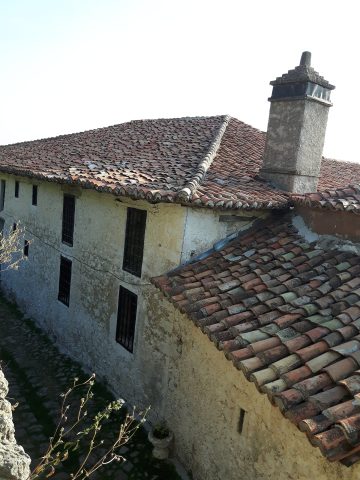
Krujë is one of those rare places where time seems to have settled into the cracks of the stone, where the past isn’t just remembered—it’s still alive. Perched on the slopes of a mountain range in northern Albania, the town spills down the hillsides in a quiet jumble of houses, their red-tiled roofs softened by the haze of woodsmoke drifting from chimneys. The air carries the scent of wild herbs and damp earth, and the narrow streets, worn smooth by centuries of footsteps, wind upward toward the town’s heart: the fortress that has watched over Krujë for more than a thousand years.
The fortress stands on a rocky outcrop, its gray stone walls rising like the spine of some ancient creature. It has seen empires come and go—Byzantine, Ottoman, Venetian—each leaving their mark on its ramparts. But its most famous chapter began in the 15th century, when a man named Gjergj Kastrioti, better known as Skanderbeg, made it the center of Albania’s resistance against the Ottoman Empire. For more than two decades, Skanderbeg held these walls against overwhelming odds, turning Krujë into a symbol of defiance that still resonates in Albania today. The fortress wasn’t just a military stronghold; it was a statement, a place where a small nation refused to be erased.
Inside the walls, the layers of history are visible in the ruins that dot the grounds. A Byzantine basilica, later converted into a mosque, stands as a reminder of the shifting tides of faith and power. Nearby, the remains of Ottoman baths and a caravanserai hint at the daily life that once thrived here—merchants resting on their journeys, soldiers sharpening their blades, families going about their routines under the watchful gaze of the mountains. The stones themselves seem to hold stories, though many of them have faded with time. What remains is the sense of a place that has always been more than just a fortress. It was a home, a refuge, a stage for the dramas of history.
At the center of the fortress, a statue of Skanderbeg on horseback dominates the space. The figure is frozen mid-gesture, sword raised, as if still rallying his troops. It’s a powerful image, one that captures the spirit of a man who became a legend. Beside the statue, a small museum houses artifacts from the era of resistance: rusted weapons, yellowed documents, portraits of men whose names have been forgotten by most of the world. The collection is modest, but it doesn’t need to be grand to convey the weight of what happened here. The real exhibit is the fortress itself, the land around it, the very air that carries the echoes of battles fought and lives lived.
What makes Krujë’s fortress different from so many other historical sites is its quiet persistence. It hasn’t been polished into a tourist attraction, nor has it been left to crumble entirely. Instead, it exists in a kind of in-between state, where the past and present coexist without fanfare. Locals come here to escape the heat under the shade of old trees, or to sit on a bench and watch the light change over the valleys below. In the evenings, the call to prayer from the town’s mosques drifts up the hillside, mingling with the sound of children playing in the streets. The fortress isn’t just a relic; it’s still part of the town’s rhythm.
Below the fortress, the old bazaar sprawls along the base of the hill, a maze of stalls selling handwoven carpets, copper pots, and intricately painted ceramics. The market has been here for centuries, and though the goods have changed over time, the spirit of it hasn’t. It’s a place where you can still feel the pulse of traditional Albanian life—where a potter might pause to chat with a customer, or a weaver might invite you to watch her work. The bazaar isn’t just for tourists; it’s where locals come to buy their daily bread, to haggle over the price of olives, to catch up on gossip. It’s as much a part of Krujë as the fortress itself.
Krujë isn’t a place you visit to check off a list of sights. It’s a place you come to when you want to understand what it means to be Albanian—or at least, to get a glimpse of it. The fortress isn’t just a monument to Skanderbeg or to the battles fought here; it’s a monument to the idea of home, to the stubbornness of a people who refused to let their land be taken from them. That defiance isn’t something you’ll find in guidebooks or plaques. It’s in the way the town clings to the hillside, in the way the old men playing backgammon in the square nod at you as you pass, in the way the fortress still stands, unbroken, after all these centuries.
There’s a humility to Krujë that’s rare in places with such a rich history. It doesn’t try to impress you with grandeur or spectacle. Instead, it offers something quieter, something more enduring: the sense that history isn’t just something that happened long ago, but something that’s still happening, in the way the wind moves through the trees, in the way the light falls on the stones, in the way the past lingers in the present. If you come here, don’t rush. Walk the streets, sit in a café and listen to the murmur of conversation, watch the way the shadows lengthen as the sun sets behind the mountains. Let the place work on you slowly. That’s how you’ll begin to understand why this small town, and this fortress, still matter so much.