
Krujë
Albania · 8 places
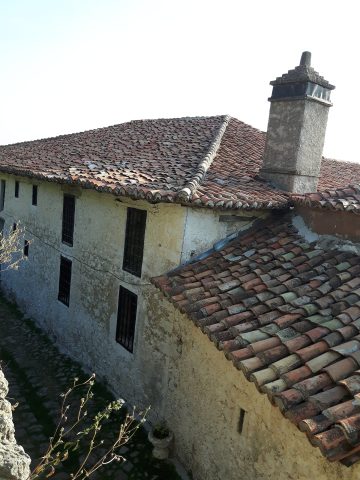
Photo: Arianit, CC BY-SA 4.0
Kruja feels like a place where history hasn’t just been preserved—it’s still alive. Perched on the slopes of Mount Saraz, the town overlooks the valley below, its medieval fortress standing as a quiet sentinel over the landscape. Though it’s small, its role in Albania’s story is outsized. This is where Gjergj Kastrioti, better known as Skanderbeg, rallied his people against Ottoman rule in the 15th century, holding off invaders for a quarter of a century. His legacy lingers everywhere, from the streets named in his honor to the handcrafted souvenirs sold in the bazaar.
The climb to the fortress is the natural starting point for any visit. The path winds through narrow lanes lined with old stone houses, their red-tiled roofs weathered by time. Along the way, artisans display their work—colorful ceramics, intricate embroidery, and the curved blades of *kukri* knives, forged here for generations. The fortress itself, though centuries old, remains remarkably intact. Inside, you’ll find the remnants of mosques, bathhouses, and living quarters, as well as a small museum dedicated to Skanderbeg. From the highest point, the view stretches across the valley, where villages dot the green hills, and on clear days, the Adriatic shimmers in the distance.
Beyond its historical weight, Kruja has a rhythm of its own. The main square hums with life—locals sipping coffee under the shade of plane trees, children darting around the fountain, old men debating the day’s news. Nearby, the Ethnographic Museum offers a glimpse into Albania’s past, with rooms filled with antique furniture, tools, and traditional clothing still worn for festivals. The reconstructed workshops of blacksmiths and potters make the past feel tangible, as if the craftsmen might return at any moment.
Nature is never far away here. The town is nestled among mountains, a gateway to the Kruja-Dajti National Park, where trails lead to waterfalls and viewpoints with sweeping panoramas. Summers are cooler than on the coast, while winters bring snow, drawing skiers to the slopes. Locals often escape to the surrounding forests for picnics, where springs bubble up under the trees. It’s a place where the pace slows, where the air is crisp, and the views make you pause.
What makes Kruja special is its unpretentiousness. Unlike more tourist-heavy destinations, it hasn’t been polished into a theme park. There are no crowds, no pressure—just a town that carries its history lightly. The people here are warm, unhurried, happy to share stories if you ask. As evening falls, the scent of grilled meat and fresh bread fills the air, and the sound of quiet music drifts from the cafés. Kruja doesn’t try to impress. It simply exists, holding onto its past while embracing the present.
See & Do
All of them


Places on the map
Marker colour follows the categoryClimate and weather
Detailed weather: Krujë- Average temperature
- 15 °C
- Precipitation per year
- 1239 mm
- Sunshine hours per day
- 6.9 h
Average air temperature
°C
7
8
10
14
18
22
24
24
21
16
12
8
Jan
Feb
Mar
Apr
May
Jun
Jul
Aug
Sep
Oct
Nov
Dec


