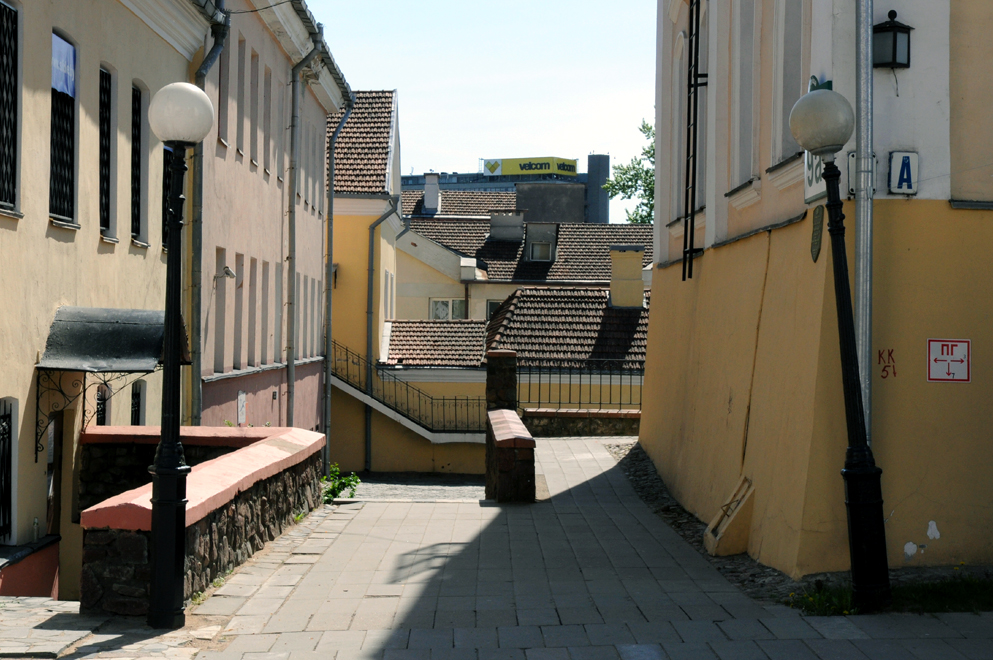
Zaslavl is one of those quiet Belarusian towns where history lingers—not as something distant, but as part of everyday life. The town is ancient, founded over a thousand years ago as a fortress on trade routes between Polotsk and Kyiv. Its streets still carry that past: crumbling earthen ramparts, old churches with thick stone walls, and wooden houses that seem untouched by time.
The square dedicated to Yanka Kupala is where this blend of past and present feels closest. It’s simple. No grand monuments, no elaborate landscaping—just paved walkways, a few benches, and trees that shade the area in summer. At its center stands a bronze statue of Kupala, seated on a bench with a book in his hands. He looks thoughtful, his gaze directed beyond the square. The statue doesn’t demand attention; it invites you to sit beside him. Locals often leave flowers on the bench, a small gesture that shows how much his work still matters.
Yanka Kupala shaped Belarusian identity in the early 20th century. His verses, written in Belarusian when the language was marginalized, celebrated the land and its people. Many of his poems became folk songs, passed down through generations. His words are still recited at gatherings, sung at festivals, and taught in schools. The square in Zaslavl keeps that legacy alive—not through grand ceremonies, but through the quiet visits of those who remember.
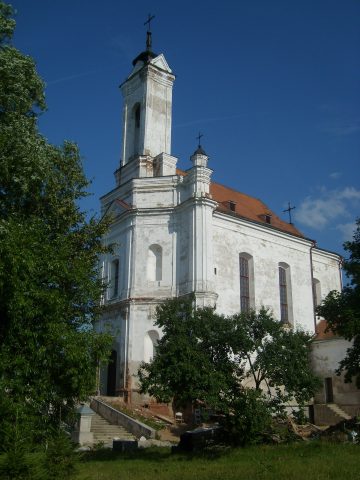
The town itself is worth exploring. Nearby are the remnants of the old fortress, where earthen walls rise above modern streets, and the Transfiguration Church, its whitewashed facade standing out against the greenery. The square isn’t far from the town’s main streets. It’s easy to imagine it as a market square centuries ago, then a meeting place, and now a spot where people pause. No signs or guided tours are needed; the history is in the stones underfoot.
What makes the square special is its lack of pretense. No crowds, no souvenir stalls, no tour groups. Instead, you hear children playing on the nearby playground, the clatter of bicycles, and the murmur of old men chatting on benches. In winter, snow softens the edges of the place. In spring, the trees burst into leaf. Summer brings shade and the hum of insects. Autumn turns the leaves gold. Each season changes the mood, but the quiet remains.
If you know Kupala’s work, the square feels like a natural extension of his poetry. His verses spoke of the Belarusian countryside, its fields, and the people who worked the land. It’s fitting that this memorial isn’t in a grand capital but in a small town where life moves with the seasons. You can sit here, watch the world go by, and feel the same connection to the land that Kupala wrote about.
The square isn’t just for literature lovers or history buffs. It’s for anyone who wants a moment of stillness. Whether you’re a local stopping by after work or a traveler passing through, it offers a chance to slow down. No agenda, no must-see attractions—just the quiet understanding that some places exist to be experienced, not consumed. That’s what small Belarusian towns still offer: time measured not in hours, but in stories and seasons.