Church of the Nativity of the Blessed Virgin Mary in Zaslavl
Zaslavl is a quiet Belarusian town travelers often overlook on their way to Minsk. It holds a charm that feels untouched by time. The Church of the Nativity of the Blessed Virgin Mary stands on a quiet street, a reminder of the past. This small church invites you to pause and listen—to history in its walls, to the stories of people who walked through its doors over centuries.
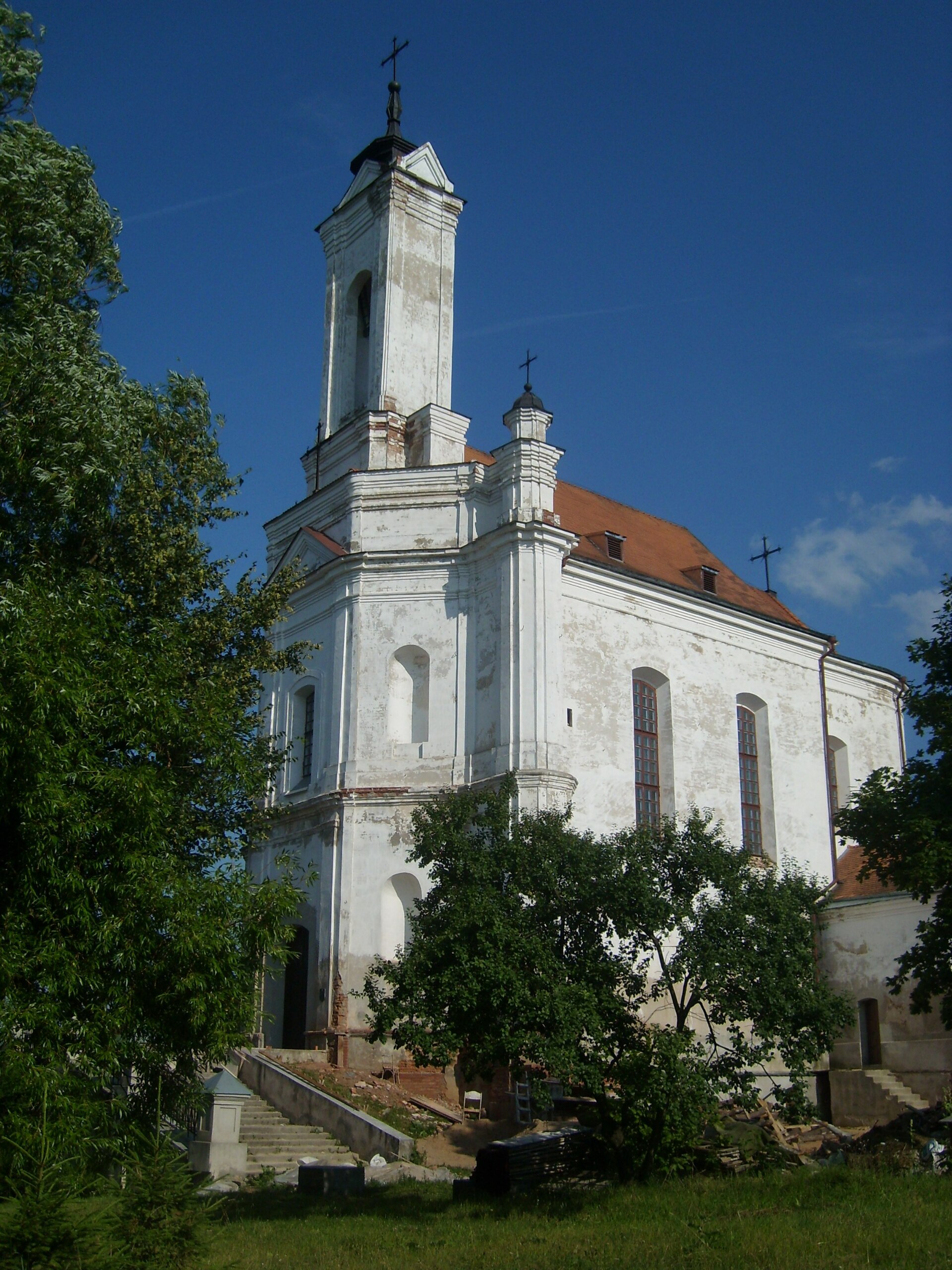
The church was built in the early 18th century when Zaslavl was under the influence of the Sapieha family, a prominent noble dynasty in the region. Catholicism shaped the town’s identity, and the church became both a spiritual hub and a symbol of the family’s prestige. The Sapiehas chose the Baroque style of the era. The result was a structure with high vaulted ceilings and stucco work. Inside, the original frescoes and decorative details have faded, but the main altar remains striking—dark wood and gilded accents catch the light through the stained glass, creating a glow.
For centuries, life in Zaslavl revolved around this church. The town was a crossroads for merchants traveling between Vilnius and Polotsk. The church became a gathering place for traders, craftsmen, and travelers. It witnessed baptisms, weddings, and funerals. When Belarus came under Russian rule in the 19th century, the church faced challenges as authorities sought to curb Catholic influence. It was closed, reopened, and closed again. Even when faith was suppressed, the church endured.
The architecture blends grandeur and intimacy. The Baroque facade has twin towers and tall windows. The proportions are modest, almost welcoming. Inside, the space feels open. The old wooden pews, confessionals, and side altars hold icons donated by generations of parishioners. The organ, installed later, fits the church’s acoustics, its music filling the space.
The church has survived wars. During Napoleon’s invasion, French soldiers passed through Zaslavl. In World War II, the town was nearly leveled, yet the church remained standing. After the war, it was repurposed as a warehouse and later abandoned. In the late 1980s, locals fought to restore it. It was returned to the faithful, its walls repaired, and its doors reopened. Today, services are held here again, though the congregation is smaller.
Visiting the church is about stepping into a place where time moves differently. On weekdays, it’s often empty. You can take in the details—the cracks in the walls, the darkened icons, the patterns carved into the wood. In summer, the thick walls keep the interior cool. In winter, the warmth of candles spreads through the space. If you’re lucky, you might hear the organ.
This isn’t a place that overwhelms you. It doesn’t have the imposing presence of Europe’s great cathedrals. Instead, it offers stillness. The light through the stained glass, the quiet hum of the town outside—it all encourages you to slow down.
Zaslavl is worth exploring. The streets around the church are lined with old wooden houses. Nearby, the ruins of Zaslavl Castle stand as a reminder of the fortress that once guarded the region. But even if you only come for the church, don’t rush away. Sit on a bench outside. Watch the locals—elderly women crossing the street, children playing in the square.
The Church of the Nativity of the Blessed Virgin Mary is a living place where history and the present coexist. It may not be the most famous site in Belarus, but that’s part of its appeal. Here, you’re not just a visitor—you’re a guest in a space shaped by faith, time, and ordinary lives.