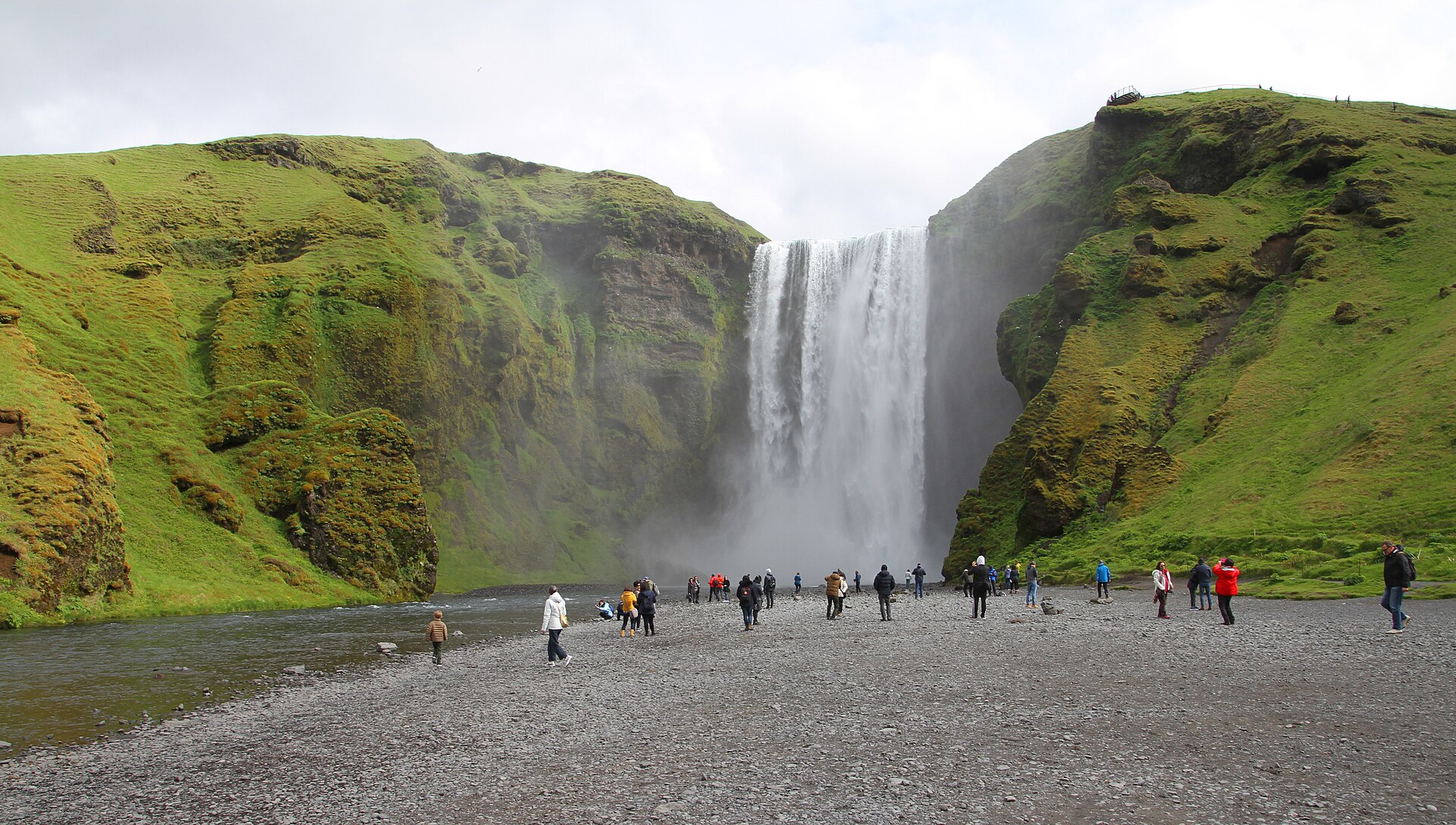
Skógafoss is one of those places where the raw power of nature isn’t just visible—it’s something you feel long before you see it. Standing at the edge of Iceland’s southern coast, this waterfall drops sixty meters in a single, thunderous curtain of water, its force shaking the ground beneath your feet. On clear days, sunlight catches the mist, painting rainbows in the air like a fleeting promise. The locals say a settler once hid a chest of treasure behind the falls, though no one’s ever found it. Whether the story’s true or not, there’s something undeniably magnetic about the place, as if the land itself is holding its breath.
The waterfall formed where an ancient sea cliff once marked the edge of Iceland’s coastline. Over thousands of years, glaciers retreated, and the Skógá River—fed by meltwater from Eyjafjallajökull—carved its way through layers of volcanic rock and hardened lava. What remains is a natural monument that’s as much a part of the region’s history as it is a spectacle. Centuries ago, travelers and traders followed a path near the falls, using it as a route between the south and east coasts. The land here remembers those footsteps, even if the modern world has mostly forgotten them.
There’s no grand architecture at Skógafoss, just the quiet majesty of stone and water. The cliffs framing the falls are made of dark basalt, their surfaces softened by moss and lichen that cling to the rock like old memories. When the light is right, the water shifts between milky white and deep blue, its color changing with the angle of the sun and the sediment swirling in the current. On windy days, the spray rises high enough to blur the edges of the scene, turning the air itself into something tangible. It’s easy to stand there and forget, just for a moment, that the world is anything but wild.
For those who want more than just the view from below, a steep staircase climbs the cliffside to the top of the falls. The ascent isn’t gentle—each step is a reminder of how small you are against the scale of the landscape—but the reward is worth it. From above, the river looks like a silver thread winding through the valley, and on a clear day, the distant outline of Mýrdalsjökull glacier looms on the horizon. If you time it right, the sunset turns the water and rocks into something golden, as if the whole scene has been dipped in light.
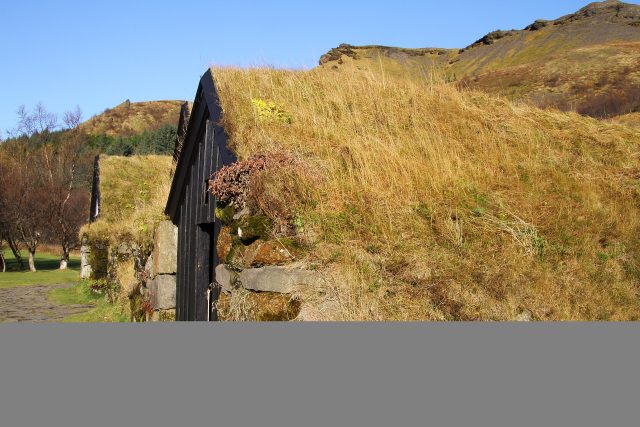
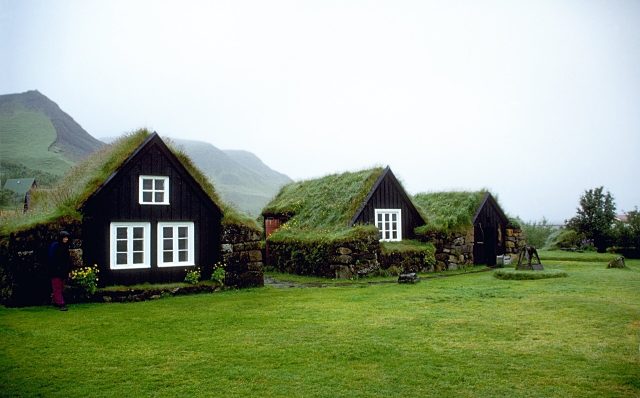
Skógafoss is tied to Iceland’s past in ways that go beyond its natural beauty. Nearby, the ruins of old farms and churches hint at the struggles of the first settlers, who carved out a life in this harsh land. In the 19th century, a small school was built close to the falls, where the children of local farmers learned to read and write. Today, that same building houses a museum, its exhibits filled with tools, household items, and photographs that tell the story of a way of life that’s almost vanished. It’s a quiet reminder that this place has always been more than just a view.
The waterfall changes with the seasons, each one offering something different. Summer brings crowds, with visitors gathering to watch the rainbows and snap photos. In autumn, the water grows wilder, and the surrounding hills turn shades of gold and rust. Winter transforms the falls into a frozen sculpture, its edges lined with ice, while the long nights make it one of the best places in the region to see the northern lights, if the weather cooperates. By spring, the meltwater swells the river, and Skógafoss roars louder than ever, a reminder of the forces that shaped this land.
Despite its popularity, the waterfall never feels overrun. There’s space here to stand at the base, close your eyes, and listen to the water crashing against the rocks. The mist cools your face, and for a moment, it’s just you and the sound of something far older than any of us. The locals treat Skógafoss with a kind of reverence—it’s not just a tourist stop, but a place that demands respect. Maybe that’s why it lingers in your mind long after you’ve left.
If you have the time, don’t rush away after seeing the falls. The area around Skógafoss is full of quieter paths that lead to hidden waterfalls and valleys. One trail takes you to Kvernufoss, a lesser-known cascade tucked into a narrow gorge, its waters framed by green hills. Another route leads to an abandoned farm, where the crumbling buildings offer a glimpse into how Icelanders lived a century ago. These places don’t have the same fame as Skógafoss, but they carry the same sense of timelessness. In the end, it’s not just the waterfall that stays with you—it’s the feeling of standing in a landscape that hasn’t forgotten its own history.