Skógar Church stands quietly at the foot of Skógafoss, one of Iceland’s most famous waterfalls, where the land slopes gently toward the sea. It’s a place that feels both timeless and deeply rooted in the everyday life of this island. The building itself is unassuming—a white wooden structure with a red roof, its simplicity mirroring the practical spirit of Icelandic rural life. There’s no grandeur here, just a sense of steadiness, as if the church has always been part of the landscape, weathering storms and seasons with the same quiet resilience as the people who built it.
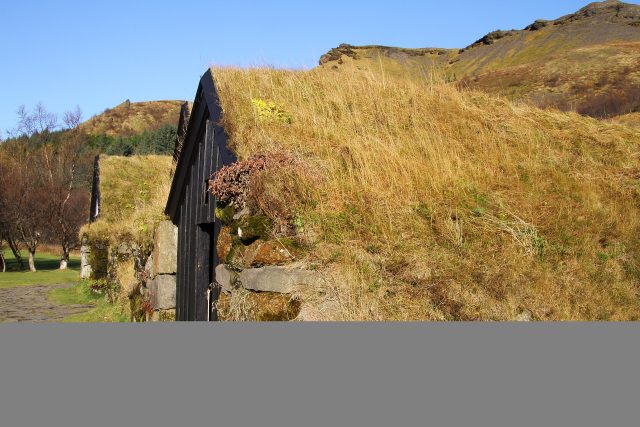
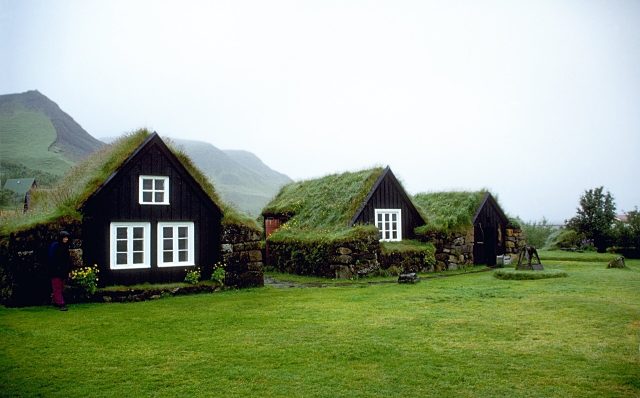
The first church in Skógar appeared in the 11th century, not long after Christianity took hold in Iceland. Back then, it would have been a turf church, its walls made of earth and stone, blending almost seamlessly into the surroundings. These early churches were temporary by necessity, often rebuilt after harsh winters or volcanic eruptions, but they were perfectly suited to the climate. The current building, constructed in 1990, was designed to echo that tradition. While modern in some ways, it still carries the essence of those older structures, using wood and stone to keep the connection to the past alive.
Inside, the church is modest but warm. The wooden pews, simple stained glass, and unadorned altar create a space that feels more like a gathering place than a monument. The walls hold traces of the community’s history—carved wooden pieces, embroidered textiles, and old photographs that hint at the lives of those who came before. One of the most striking features is the church bell, cast in the 19th century. It wasn’t just for calling people to prayer; in a place where nature could turn dangerous in an instant, the bell also served as a warning during volcanic eruptions or storms.
Skógar has always been a small settlement, and the church was its heart. It wasn’t just a place for worship but a center for everything that mattered—celebrations, mourning, and the quiet rhythms of daily life. In winter, when the nights stretched long and dark, people would gather here to read sagas, sing, and share news. Even now, when Iceland has changed in so many ways, the church remains a symbol of continuity. Some still come on Sundays, while others visit just to sit in the quiet, to think, or to catch up with neighbors over coffee after the service.
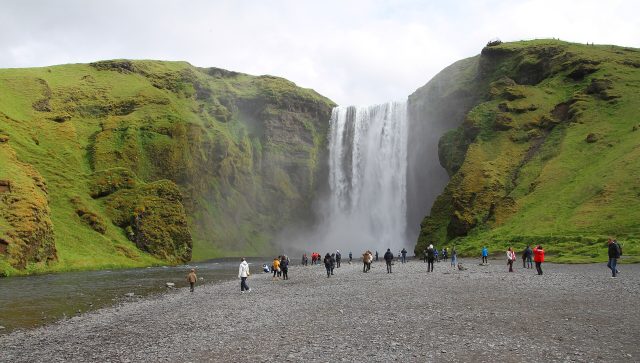
The land around the church is vast and open. On one side, Skógafoss roars down from a height of sixty meters, its mist often catching the light in rainbows. On the other, the black sand beaches stretch toward the Atlantic, where waves crash against the rocks. In summer, the fields turn green, dotted with wildflowers, while winter transforms everything into a soft, white expanse. On clear days, you can see the faint outline of the Westman Islands far out in the ocean. It’s a landscape that makes you feel small in the best way, reminding you of how fragile and fleeting human life can be in a place like this.
This church is more than just a building; it’s a living piece of Iceland’s history. Its walls hold the echoes of centuries—from the early days of settlement to the modern era. Nearby, the Skógar Museum offers a glimpse into that past, with exhibits of farming tools, traditional clothing, and even old fishing boats. Together, they paint a picture of a way of life that was shaped by the land and the sea, where every object had a purpose and every tradition carried meaning.
For many travelers, Skógar Church is just a quick stop along Iceland’s Ring Road, a place to stretch their legs and take a photo by the waterfall. But those who linger notice something different—a sense of stillness, or maybe the way the light filters through the windows in the late afternoon. There’s a quiet magic here, the kind that doesn’t announce itself but lingers in the memory long after you’ve left. It might be the way the wind sounds as it moves through the grass, or the way the church seems to glow against the darkening sky.
What makes Skógar Church special isn’t its size or its age, but the way it fits into the world around it. It doesn’t try to impress; it simply exists, as it always has, as part of the land and the lives of the people who call this place home. In a country where nature is both beautiful and unforgiving, where history is never far from the surface, this little church stands as a reminder of what endures. For some, it’s just a brief pause in a journey. For others, it becomes a place they carry with them, a quiet corner of the world where time moves differently, where the past is never really gone.