Soweto Market isn’t just a place to buy things—it’s where the rhythm of one of Johannesburg’s most storied townships still beats strongest. Unlike the sterile order of shopping malls, with their fixed hours and polished floors, this market thrives on spontaneity. Stalls spill into walkways, voices rise and fall in a dozen languages, and the air hums with the kind of energy that only comes from people who’ve built something out of necessity, not design. Every vendor has a story, every transaction a history. You might haggle over the price of mangoes with a woman who’s been selling here since the 1980s, or watch a teenager carefully arranging hand-carved wooden figures, their hands moving with the same practiced ease as their grandparents once did.
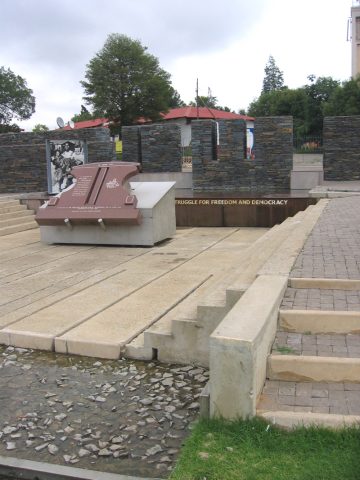
Soweto itself was born from struggle. In the decades of apartheid, it was a place of forced removals and resistance, a sprawling settlement where Black South Africans were pushed to the margins of the city. The market emerged as a lifeline—a place where people could trade what they had, share what they knew, and keep their communities alive despite the state’s attempts to break them. It wasn’t just about commerce; it was a quiet act of defiance. Under the watchful eyes of the authorities, conversations about politics and protest would weave between discussions of prices and produce. Today, the urgency of those times has faded, but the market’s role as a gathering place hasn’t. It’s still where neighbors catch up, where news travels faster than any newspaper, and where a cup of tea with a familiar vendor can turn into an hour-long conversation.
The market’s layout is as organic as its history. There’s no grand plan, no uniform design—just a patchwork of stalls that have grown over the years, some little more than a tarp stretched over a few poles, others sturdy enough to have stood for decades. The goods reflect the same diversity. You’ll find piles of fresh vegetables—spinach, pumpkins, sweet potatoes—stacked beside sacks of spices with names like *peri-peri* and *ras el hanout*. Traditional healers sell bundles of dried herbs, their scents sharp and earthy, while artisans display beaded jewelry, their colors as vivid as the stories behind them. There’s no single aesthetic here, just the accumulated layers of a place that has absorbed influences from across the continent.
Food is where the market’s soul reveals itself most clearly. The dishes are unpretentious but deeply flavorful, rooted in the traditions of the townships. A pot of *pap en vleis*—maize porridge with spiced meat—bubbles away on a stove, its aroma mingling with the smoky scent of grilled *boerewors*. Samosas, crisp and golden, are filled with minced beef or lentils, their spice levels adjusted to suit the customer. For those feeling adventurous, there’s *mopane worm* stew or crocodile kebabs, though most locals stick to the familiar: chicken feet, tripe, or a simple plate of *chakalaka*—a spicy vegetable relish that’s a staple in many homes. Drinks are just as important. You might sip on *umqombothi*, a traditional sorghum beer with a tangy kick, or *amahewu*, a fermented maize drink that’s both refreshing and slightly sour. The food isn’t just sustenance; it’s a connection to the past, a way of keeping old recipes alive in a place that’s always changing.
The artisans at Soweto Market don’t just sell crafts—they preserve them. Woodcarvers shape masks and figurines from indigenous hardwoods, their tools worn smooth from years of use. The patterns on their work aren’t just decorative; they tell stories of ancestors, of spiritual beliefs, of the land itself. Potters mold clay into bowls and jugs, their surfaces etched with geometric designs that echo the art of the Ndebele people. Even the beaded jewelry carries meaning—each color, each stitch, represents something, whether it’s a stage of life, a family lineage, or a political statement. Many of these crafts are made on the spot, the artisans happy to explain the process if you ask. It’s not about mass production; it’s about keeping traditions alive in a world that often forgets them.
What makes the market truly special, though, are the people. There’s no clear divide between sellers and buyers—just a community where everyone knows each other’s names, where a purchase is as likely to lead to a conversation as it is to a receipt. You’ll see women in brightly patterned *doeks* arranging their wares, their laughter cutting through the noise of the crowd. Men cluster around the butchers’ stalls, debating the best cuts of meat for a braai. Children dart between the aisles, helping their parents or playing games of their own. The market isn’t just a place to shop; it’s a place to belong. Some vendors have been here for generations, their stalls passed down like heirlooms. Others started with nothing more than a blanket and a few items to sell, their businesses growing alongside the township itself.
Weekends are when the market comes alive in full force. The narrow pathways fill with people—locals doing their weekly shopping, tourists curious to see a side of Soweto that isn’t in the guidebooks, musicians setting up impromptu performances. The air thrums with the sound of drums, the call-and-response of gospel singers, the occasional burst of laughter from a group sharing a joke. It’s not a performance for outsiders; it’s just life, unfolding as it always has. Sometimes, a group of dancers will take over a corner of the square, their movements sharp and precise, a reminder of the cultural traditions that have survived despite everything. If you’re lucky, you might even stumble upon a *shebeen* tucked away in the back, where the beer flows freely and the stories get taller with each round.
Visiting Soweto Market isn’t like visiting a museum or a curated tourist attraction. There are no signs explaining what you’re supposed to see, no guided tours with scripted anecdotes. It’s messy, unpredictable, and deeply human. If you want to understand what makes Soweto tick, this is where you’ll find it—not in the grand narratives of history books, but in the small, everyday moments. Buy a bag of roasted peanuts from a vendor who remembers your face. Sit at one of the makeshift tables and watch the world go by. Strike up a conversation with someone whose stall has been in their family for decades. The market doesn’t just sell goods; it sells connections, and those are the things that linger long after you’ve left. Just don’t expect it to stand still. Like Soweto itself, the market is always evolving, always adapting—because that’s what survival looks like.