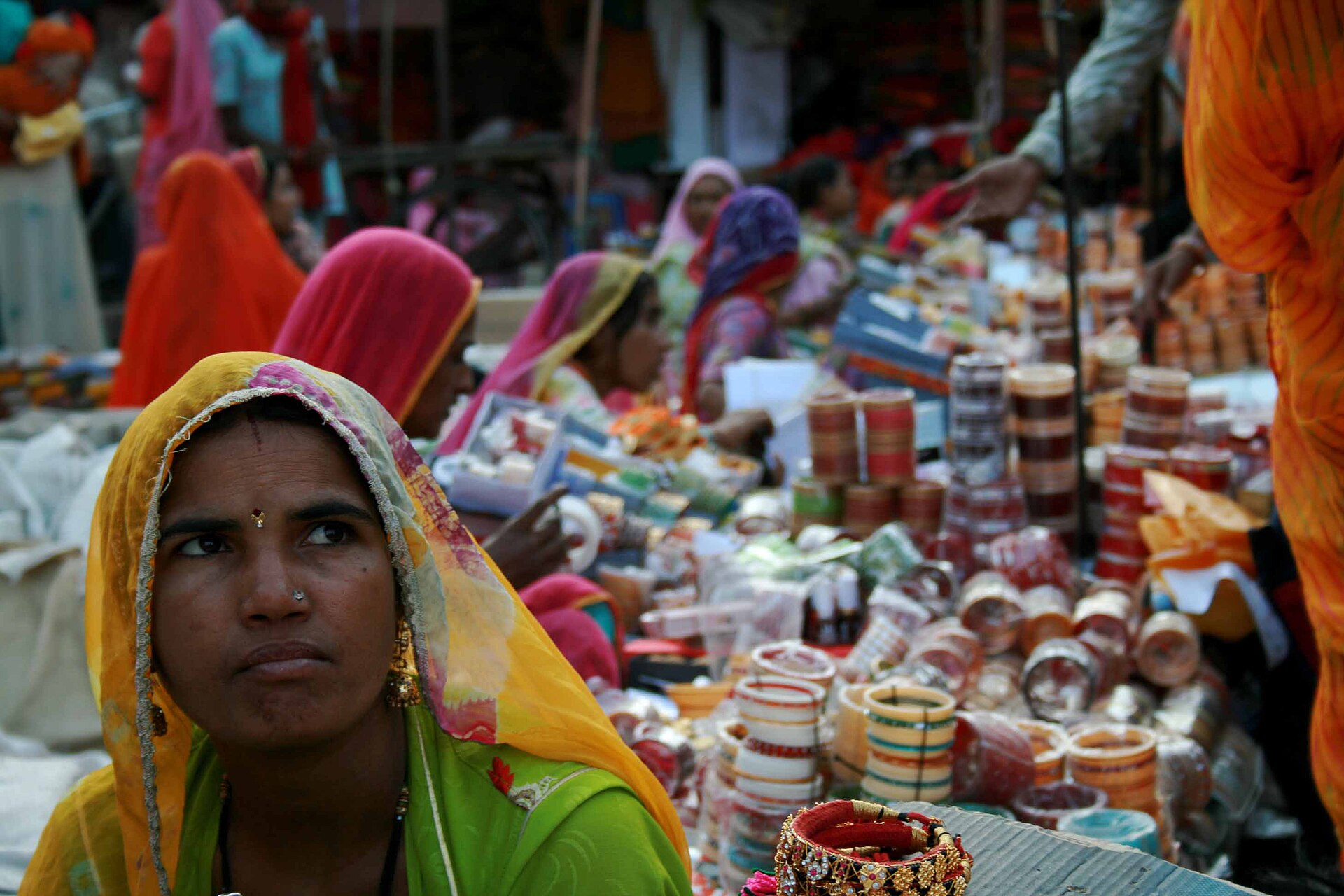
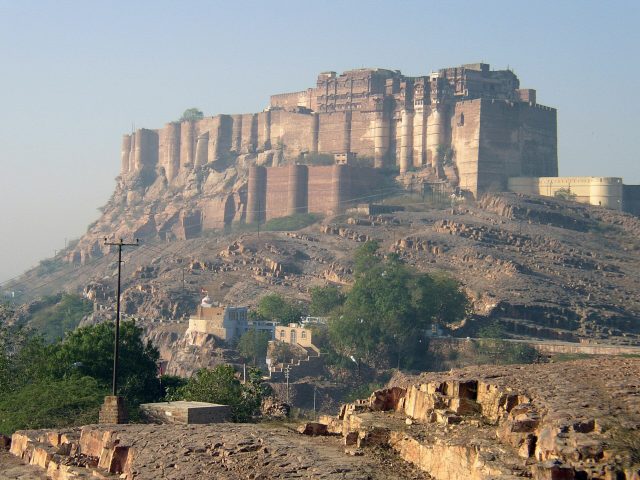
Sardar Market is where Jodhpur reveals itself in its most unfiltered form—a place where the city’s daily rhythm unfolds in a whirl of color, sound, and movement. Nestled at the foot of the towering Mehrangarh Fort, the market feels like an extension of the fortress’s ancient walls, though here the stones give way to the pulse of life itself. The air hums with the calls of vendors, the clatter of bangles, the rustle of fabrics, and the rich, earthy scent of spices. This isn’t just a place to shop; it’s the beating heart of the old city, where every narrow lane holds a story and every stall carries the weight of generations.
The market took shape in the mid-19th century, during a period of growth under Maharaja Takht Singh. As Jodhpur flourished, Sardar became its commercial hub, drawing goods from across the region and beyond. It was named after Sardar Singh, a ruler who helped shape its development. Back then, traders from distant parts of India, Persia, and Central Asia would converge here, their camels laden with silks, silver, and gemstones. Even now, walking through its labyrinthine alleys, it’s easy to imagine the scene—merchants haggling over bolts of cloth, the jingle of coins, the slow, deliberate pace of commerce as it was practiced for centuries.
Today, Sardar is a maze of tight passageways where every turn reveals something unexpected. The main thoroughfare, Nai Sarak, stretches from the gates of Mehrangarh to the City Palace, lined on both sides with shops selling everything from traditional Rajput turbans and hand-embroidered shawls to intricately hammered copper pots and brightly painted wooden toys. The jewelry workshops are particularly fascinating—artisans still work using age-old techniques, shaping silver and semiprecious stones into delicate bracelets and rings. Customers often sit on low stools, watching as raw metal is transformed into something beautiful, the process as much a part of the experience as the final piece.
Yet Sardar is about more than just goods; it’s the atmosphere that lingers long after you leave. Mornings start slowly, with shopkeepers lifting shutters, arranging their wares, and brewing the first cups of chai. By midday, the market is alive with activity—shoppers bargaining, children darting between stalls, crows swooping overhead to snatch scraps of food. The spice vendors are impossible to miss, their displays a riot of yellows, reds, and browns, each pile of turmeric, cumin, or chili powder offering a different scent and flavor. Nearby, sellers of dried fruits and nuts invite passersby to sample almonds, cashews, or dates from the Thar Desert, the sweetness of the fruit contrasting with the sharp tang of the spices.
Food is one of the market’s great pleasures, with small eateries and street stalls serving dishes that have been part of Jodhpur’s culinary tradition for generations. Mirchi bada—spicy peppers stuffed with a fragrant potato filling and fried in batter—is a must-try, even for those wary of heat. Then there’s makhaniya lassi, a thick, creamy yogurt drink infused with saffron and nuts, served in clay cups and meant to be savored slowly. As evening falls and the temperature cools, the scent of frying samosas and pakoras fills the air, drawing crowds to the street-side carts.
Sardar has a rhythm all its own, and it’s easy to lose yourself in its flow. There are no pushy guides here, no crowds rushing from one attraction to the next—just the steady, unhurried pace of daily life. Women in vivid saris shop for vegetables, old men play chess outside shops, and boys help their fathers unload deliveries. The market feels timeless, as if little has changed in a hundred years. Yet it’s also a place where the old and new coexist. A shop selling hand-embroidered textiles might stand next to a store with trendy clothes, while a café with free Wi-Fi sits just around the corner. Young people come here not just to shop but to meet friends, sip tea, or simply sit on the steps near the fort, watching the sunset.
Evenings bring a different kind of energy. As the sun dips behind the fort’s walls, soft lights flicker on, casting a warm glow over the market. Vendors begin packing up, but the life of the place doesn’t fade—it shifts. Musicians appear, playing traditional instruments, while the scent of incense and roasted peanuts drifts through the air. Locals gather not just to shop but to linger, chat, and listen to the music. In these moments, Sardar feels like a neighborhood living room, a place where everyone knows one another and the boundaries between public and private blur.
More than a shopping destination, Sardar Market is a living piece of Jodhpur’s history. It’s where the city’s past and present intersect, where the weight of tradition meets the energy of the everyday. You might come for a souvenir, but you’ll stay for the way the market pulls you into its world—the way the sounds, smells, and sights weave together into something unforgettable. It’s a place where time moves differently, where every corner holds a memory, and where the spirit of Jodhpur is most alive. That’s why, for locals and visitors alike, Sardar remains one of the city’s most cherished spaces.