Byblos is one of the oldest continuously inhabited cities in the world, and its market, known locally as the souk, feels like a place where time has settled into a slower rhythm. Unlike the bustling bazaars of other Middle Eastern cities, with their loud vendors and mountains of spices, the souk here is quieter, more understated—but no less captivating. The narrow stone-paved streets of the old city lead to small shops where the goods on display have been part of daily life for generations: olive oil, handmade soap, pottery, dried herbs, and spices. These aren’t just items for tourists; they’re things people have bought here for years, just as their parents and grandparents did before them.
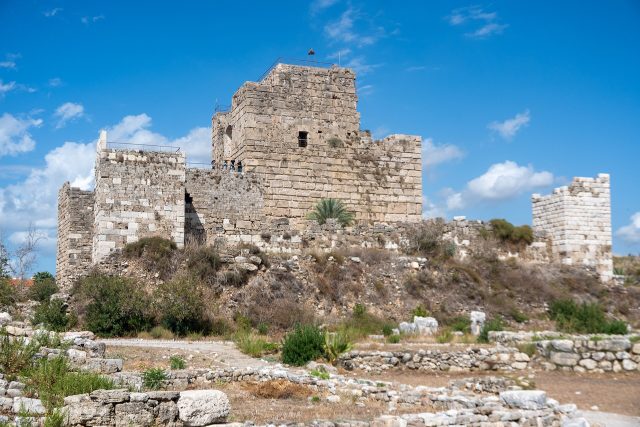
The souk isn’t merely a place to shop—it’s a living piece of the city’s history. Tucked within the heart of the old town, it sits among the remnants of Phoenician, Roman, and Crusader structures. Centuries ago, caravans passed through here, carrying goods from the Mediterranean deep into the continent. Today, the market still serves the same purpose: a place of exchange, conversation, and community. Many of the shops have been in the same families for generations, and vendors often know their customers by name. There’s no rush, no pressure to buy—just the quiet hum of daily life, with shopkeepers sipping coffee or tea as they wait for the next visitor to wander in.
The architecture of the souk is simple and practical, built to serve its purpose rather than impress. The buildings are made of local sandstone, weathered over time into a warm golden hue. The narrow alleys between the shops provide shade from the midday sun, while the vaulted ceilings in some of the older spaces hint at a time when goods were stored here for long journeys. There’s no unnecessary ornamentation—just functional design, with hand-painted signs in Arabic and French, reflecting Lebanon’s layered past.
What you’ll find here isn’t the mass-produced fare of modern stores. Instead, there’s olive oil soap made according to ancient recipes, pottery adorned with Phoenician motifs, and jars of olives marinated in lemon and herbs. Locals come for fresh za’atar, the traditional Lebanese spice blend, or for *za’hariyeh*, sweets made from sesame and honey. These aren’t souvenirs; they’re everyday items, part of a way of life that has endured for millennia.
The atmosphere in the souk is unhurried and welcoming. In the early morning, the market is quiet, with only the occasional murmur of vendors catching up on the day’s news. By midday, it comes alive—women shopping for groceries, men stopping by for coffee in one of the tiny cafés, and the rare tourist browsing the stalls. Even at its busiest, there’s no sense of haste. Time moves slowly here, as it does in old cities where every stone seems to remember the past.
This isn’t a place staged for visitors. There’s no forced exoticism, no performance of tradition. What you experience is real: the scent of fresh bread from the nearby bakery, the sound of footsteps on the worn stone, the mix of Arabic and French in the air. The souk isn’t just a relic of history—it’s where the past lives alongside the present, in the way a shopkeeper wraps a purchase or the way a spice blend sits on a shelf, unchanged for generations.
If you wander beyond the market, you’ll eventually reach the harbor, where fishing boats once docked and now yachts often moor. But the souk remains the place where the city feels most like itself. There’s no luxury here, but there is authenticity—something far more valuable. You could spend an hour here or an entire day, watching life unfold at its own pace, untouched by the rush of the outside world.
In Byblos, as in much of Lebanon, history doesn’t fade into the background—it’s still very much alive. The souk is one of those places where that continuity is most evident. It hasn’t changed over the centuries because there was never a need to change it. Everything here exists for the people who use it, not for the sake of trends or tourism. That’s why the souk isn’t just a landmark—it’s the living heart of the city, a place where the past and present coexist effortlessly.