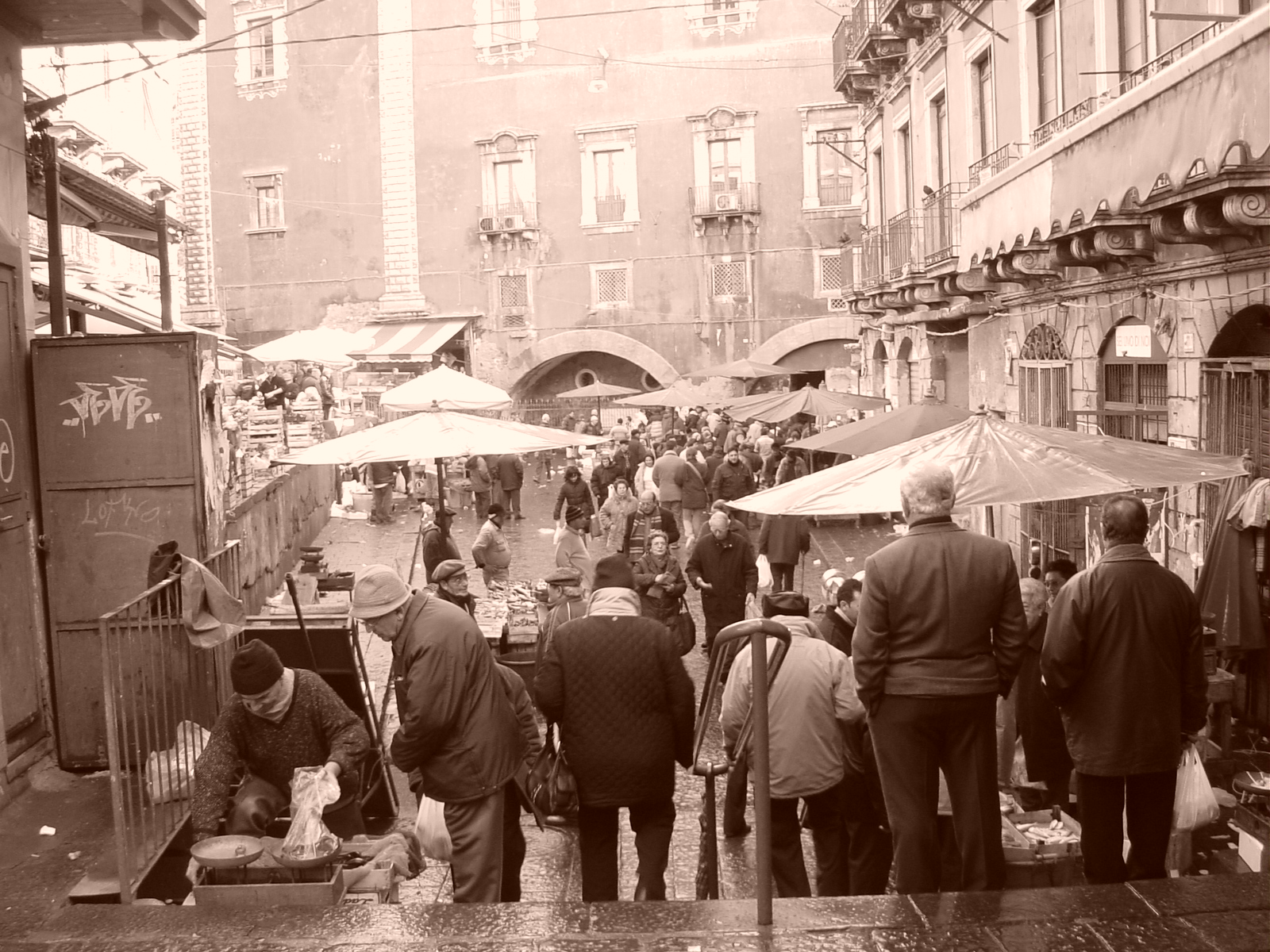
La Pescheria is where Catania reveals itself in its rawest, most unfiltered form. The air hums with the shouts of vendors, the briny tang of fresh seafood, and the rhythmic clatter of crates being unloaded. This isn’t a place for polished tourist experiences—it’s where the city’s pulse beats strongest, a living stage where the daily drama of Sicilian life unfolds in real time.
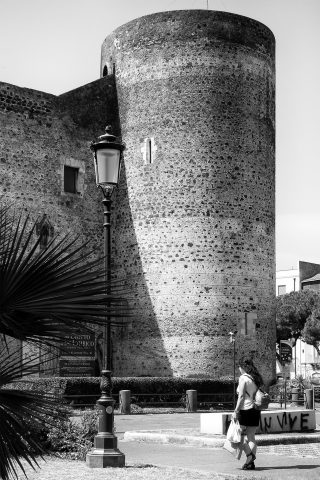
Tucked into the historic center, just steps from the waterfront and the imposing Castello Ursino, the market’s name harks back to its origins as a fish market, though today its stalls overflow with far more. While seafood still dominates—glistening sardines, plump mussels, octopus curled like question marks—you’ll also find pyramids of ripe tomatoes, wheels of aged pecorino, and bundles of wild herbs. The market’s roots stretch deep into Catania’s past, back to when the city was a bustling medieval port where trade spilled into the streets. Over centuries, it settled into its current home, yet somehow never lost its unvarnished charm.
The best time to visit is at dawn, when the day’s catch arrives in a flurry of activity. Fishermen haul their nets onto the stone slabs, sorting silver anchovies from spiny sea urchins while vendors call out prices in rapid-fire Sicilian. The old stone counters, worn smooth by generations of hands, bear silent witness to this ritual. Some still show faint traces of faded murals or inscriptions, remnants of a time when the market was even more central to the city’s life. By the 19th century, as Catania grew into a commercial hub, La Pescheria became a crossroads for merchants from across Italy and beyond, its reputation drawing crowds eager for the freshest catch.
The market’s architecture is unassuming but unmistakably Catanese. Low-slung buildings with arched doorways line narrow lanes paved in dark volcanic basalt, their rough texture a reminder of the city’s volcanic past. The contrast is striking—medieval facades rub shoulders with modern storefronts, while the looming bulk of Castello Ursino keeps watch over the scene. There’s no grand design here, just the organic evolution of a place that has served the same purpose for centuries.
But La Pescheria is more than just a market. It’s a social hub where the city’s rhythms play out in full view. Regulars haggle over prices, neighbors swap gossip, and chefs from nearby restaurants inspect the day’s offerings with a critical eye. Mornings are the liveliest, as housewives stock up for the day’s meals and tourists wander wide-eyed through the chaos. By midday, the crowds thin, the stalls empty, and the market slips into a quieter lull—until the next morning’s performance begins.
To understand Catania, you have to experience this place. There’s no pretense, no curated charm, just the messy, vibrant reality of daily life. You could spend an hour simply watching the ebb and flow of activity, or dive in yourself—buy a loaf of crusty bread, a wedge of sharp pecorino, and a bottle of local wine, then head to the waterfront for an impromptu picnic. Or duck into one of the tiny trattorias tucked into the surrounding alleys, where the day’s catch might end up in a steaming plate of pasta alle vongole.
The market also offers a crash course in Sicilian cuisine’s deep connection to the sea. Here, fish isn’t just food; it’s a way of life. Sardines are fried whole, tuna is grilled over open flames, and swordfish steaks are sliced thick for the evening’s dinner. Many of the city’s restaurants source their ingredients here, and if you’re lucky, you might spot a chef negotiating with a vendor over the perfect cut. The early hours are the most revealing, when the fishermen’s boats dock and the day’s haul is sorted, weighed, and sold in a whirlwind of activity.
La Pescheria isn’t a place for quiet contemplation. It’s loud, crowded, and occasionally overwhelming—but that’s precisely what makes it special. This is Catania stripped of artifice, where the city’s contradictions and beauty coexist in plain sight. It’s a place that changes with the seasons, the tides, and the whims of the market, yet somehow remains constant. More than just a market, it’s a living piece of the city’s soul, a bridge between its past and its present.