Caesarea’s Roman Theatre is one of those places where history doesn’t just linger in stone—it feels alive. Built in the first century AD under the orders of King Herod the Great, it was the first permanent theatre in what is now Israel. Herod wanted Caesarea to match the grandeur of Rome. The theatre was a statement of power and culture, showing Rome’s influence over its eastern provinces.
The design is classic Roman: a semicircular amphitheatre with tiered stone seating rising from the orchestra, the central stage where actors once performed. It could hold around four thousand spectators. Over the centuries, the theatre changed, but its core structure remained. Today, the weathered steps and arches still hint at the voices that once filled the air—tragedies by Sophocles, comedies by Plautus—while audiences watched under the open sky.
In its prime, Caesarea was a vital port and the administrative heart of Judea. The theatre hosted plays, political gatherings, public speeches, and legal proceedings. When the Crusaders took control, they dismantled parts of it, using the stones for new fortifications. Archaeologists began uncovering its remains in the mid-20th century, restoring it piece by piece.
Now, it’s one of the most evocative spots in Caesarea. The rows of stone seats lead your gaze to the stage, where the backdrop is the Mediterranean. On clear days, the sea meets the horizon, and you can almost see time standing still. In summer, the theatre hosts concerts and performances—modern artists on the same stage where ancient tragedies once played out. The acoustics carry voices and music just as they did two thousand years ago.
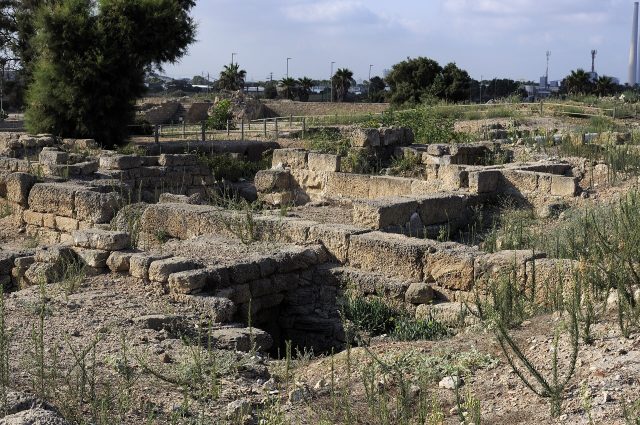
What makes this theatre stand out is how it reveals daily life in the Roman era. Beneath the stage, archaeologists found a drainage system designed to channel rainwater away. The theatre was used year-round. Fragments of marble cladding and columns, once part of the stage’s facade, show the luxury that defined the space.
A small open-air museum nearby displays artifacts from the excavations—coins, pottery, and fragments of sculptures. Clay lamps that lit evening performances and bronze figurines, possibly gifts for the elite, tell more of Caesarea’s story.
Caesarea today is a modern city with beaches, restaurants, and a marina. Yet the Roman theatre remains its heart. Walking through its ruins, you leave the 21st century behind. Here, time moves differently. The theatre doesn’t just preserve history—it lets you step inside it.