Kuldīga’s Town Hall Square is one of those rare places where the past doesn’t just linger—it breathes. There’s no rush here, no crowds jostling for the perfect photo, no hum of modern life drowning out the quiet stories embedded in the cobblestones. Instead, the square unfolds like a living postcard, its low-slung buildings and uneven pavement holding centuries of small, everyday moments. It’s compact, almost intimate, the kind of space that invites you to slow down, take a seat on one of the benches, and watch the day unfold at its own unhurried pace. The nearby Venta River, with its gentle current, seems to set the rhythm for everything here.
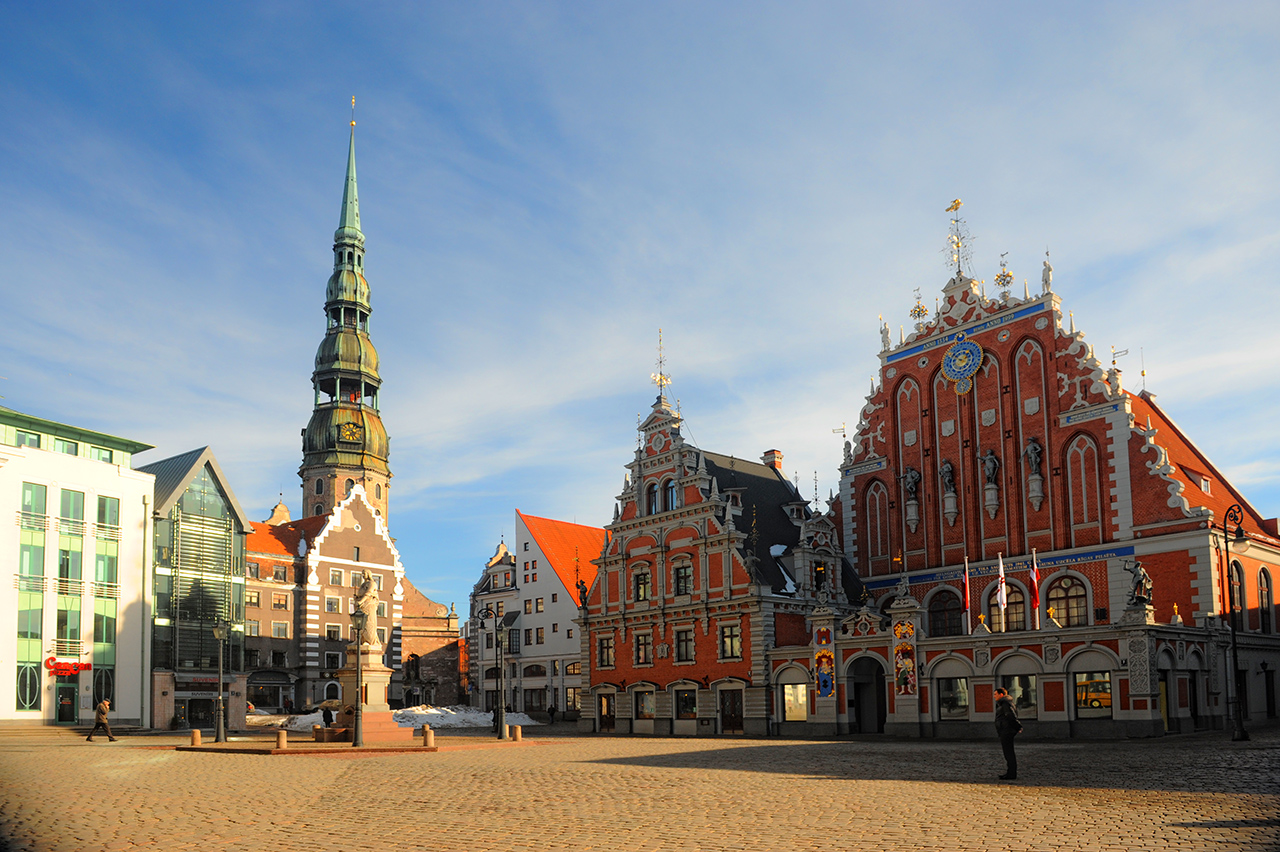
The square’s history is woven into the fabric of Kuldīga itself, a town first mentioned in written records as far back as the 13th century. Back then, Kuldīga was a vital hub in the region of Courland, a place where merchants traded, officials made decisions, and the community gathered for fairs and public announcements. The square was the heart of it all, the stage where the town’s daily life played out. The Town Hall itself, which gives the square its name, wasn’t built until the 17th century, when Kuldīga was part of the Duchy of Courland and Semigallia. Its Dutch Mannerist design—tall, narrow windows, a clock tower, and a sense of quiet authority—still stands as a reminder of the time when it was the center of local governance.
Walking around the square feels like flipping through the pages of a history book, each building a different chapter. There are medieval structures with thick walls and tiny windows, their doors heavy with age, standing beside later additions in neoclassical or Art Nouveau styles. One of the most striking is the so-called Craftsmen’s House, its facade adorned with intricate carvings and decorative details that hint at the skilled hands that shaped it. Some buildings still bear Latin inscriptions or coats of arms, silent witnesses to the families who once lived and worked here. Together, they create a sense of continuity, as if the square has always been here, evolving slowly alongside the town.
At the center of it all is the fountain with the statue of *Ventas rumba*, a boy reaching for a fish leaping from the water. It’s a simple scene, but one that captures something essential about Kuldīga: its deep connection to the Venta River. For centuries, the river was the town’s lifeline—transport route, food source, and gathering place. The fountain is a popular spot, especially in warmer months, when the square transforms into an open-air living room. Children play near the water, elderly men set up chessboards on the benches, and groups of friends linger over coffee at the nearby cafés. The statue itself has become a kind of landmark, a quiet symbol of the town’s identity.
Though Kuldīga is small, the square remains its social and cultural core. Throughout the year, it hosts events that draw people from across Latvia—festivals, concerts, and markets that turn the cobblestones into a stage. The Christmas market is particularly beloved, when strings of lights and ornaments transform the square into a winter wonderland, and the scent of mulled wine and fresh pastries fills the air. In summer, open-air concerts bring music to the evenings, from classical performances to modern bands, the sound drifting across the square as the sun sets. These events aren’t just for tourists; they’re a reminder that the square is still very much a part of daily life.
What makes the square truly special, though, is its atmosphere. There’s a stillness here, a sense of time moving differently. Even visitors find themselves slowing down, wandering without purpose, pausing to examine the details of a centuries-old doorway or stepping into a small shop selling handmade ceramics and local honey. The square doesn’t demand attention; it simply offers itself, a place to sit, to watch, to let the hours slip by unnoticed. In moments like these, it’s easy to imagine the generations who have walked these same stones, their lives unfolding in much the same way.
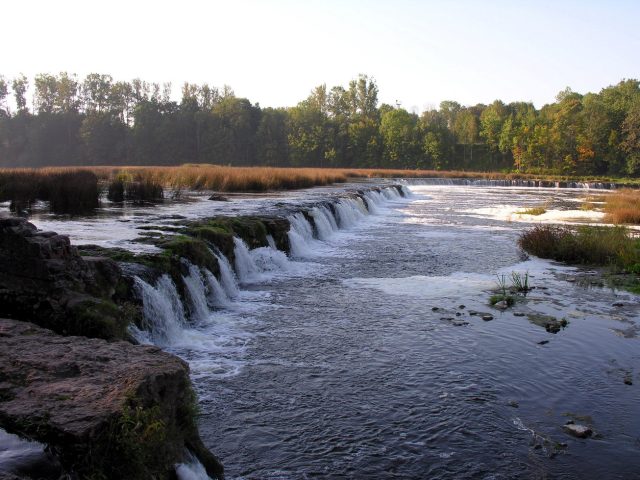
Kuldīga is often called the jewel of Courland, and the Town Hall Square is the thread that ties its attractions together. From here, it’s just a short walk to the old bridge over the Venta, the Kuldīga Museum of History and Art, or the famous Venta Rapid, one of the widest waterfalls in Europe. But even if you never leave the square, there’s plenty to discover. The narrow streets branching off it are full of hidden gems—a 18th-century pharmacy still in operation, a café serving homemade cakes, a small park where locals escape the afternoon sun. Every corner seems to hold a piece of the town’s past, waiting to be noticed.
More than just a physical space, the square feels like a living archive, a place where history isn’t just preserved but actively lived. It’s where the past and present meet, where the stories of those who came before are still visible in the worn steps of the Town Hall or the faded paint on a shopfront. Standing here, it’s impossible not to feel connected to something larger than the moment—to the town’s enduring rhythm, to the quiet resilience of a place that has seen centuries come and go. And perhaps that’s why leaving the square always feels like saying goodbye to an old friend, one you know you’ll return to someday.