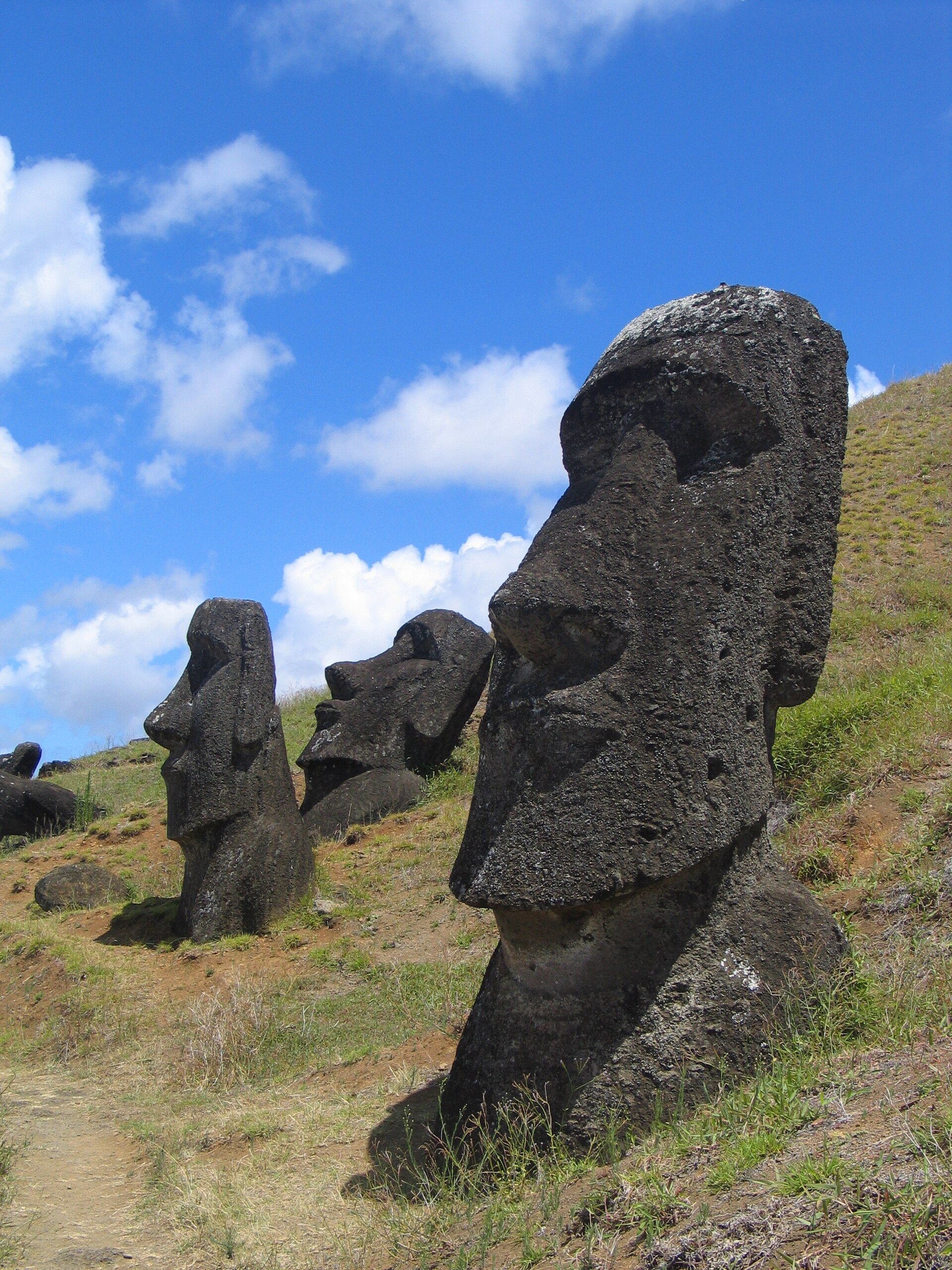
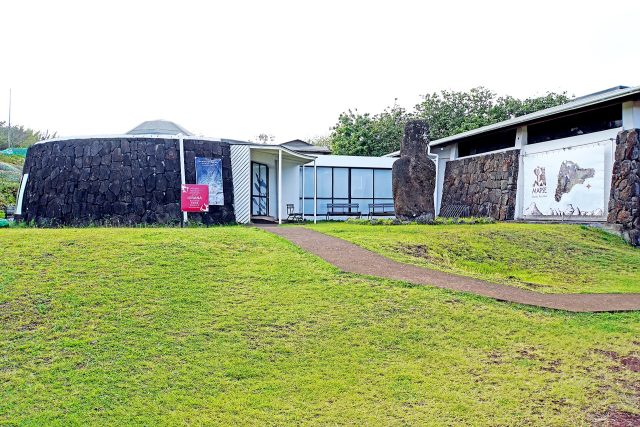
Rano Raraku is one of those rare places where the past doesn’t just feel distant—it feels alive. Tucked away on Easter Island, this extinct volcano isn’t just a geological formation; it’s the birthplace of the island’s most iconic creations. Hundreds of years ago, the slopes of Rano Raraku echoed with the sounds of chisels and labor as the Rapa Nui people carved the massive moai statues that would later become symbols of their civilization. Today, the site feels like a workshop frozen in time, with dozens of unfinished figures scattered across the crater’s floor and slopes, as if the workers had simply walked away one day and never returned.
The volcano itself formed around three million years ago, but its significance lies in what happened much later. The soft volcanic tuff found here was the perfect material for carving the moai, and the Rapa Nui people quarried it extensively. Some statues were fully shaped but never moved, while others remain partially attached to the rock, their forms only hinted at by rough outlines. The largest unfinished moai stretches over twenty meters in length—a staggering sight even by modern standards. It’s hard not to wonder how such a massive project was ever conceived, let alone executed with the tools available at the time.
Walking through Rano Raraku is like stepping into a story that hasn’t quite ended. The path winds up the slope, passing moai half-buried in the earth, their empty eye sockets staring blankly into the distance. Some lean at odd angles, others lie on their sides, as if toppled by an earthquake or human hands. The silence here is profound, broken only by the wind rustling through the grass and the occasional cry of a bird. It’s easy to imagine the voices of the carvers who once worked here, their tools striking rhythmically against the stone.
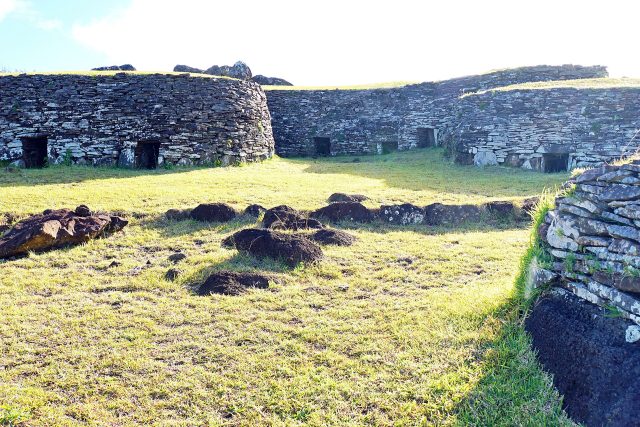
At the heart of the crater lies a small lake, its surface murky and green-tinged, reflecting the sky above. The water is still, surrounded by reeds that sway gently in the breeze. For the Rapa Nui, this lake was sacred, and the reeds were used for everything from building canoes to constructing homes. Today, it remains one of the few sources of fresh water on the island, though it’s not safe to drink. Around the lake’s edges, you can still see traces of the settlements where the carvers lived, their homes long since abandoned but their presence lingering in the landscape.
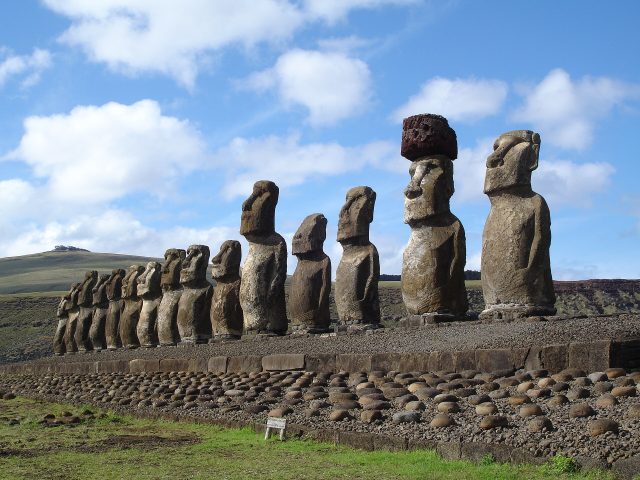
Rano Raraku isn’t just an open-air museum; it’s a place where history feels tangible. Every step reminds you of the sheer effort required to create these stone giants. The Rapa Nui had no wheels, no metal tools, and yet they managed to carve, transport, and erect hundreds of statues, some weighing dozens of tons. How they did it remains a subject of debate among historians and archaeologists, but the moai themselves stand as proof of a culture that was far more advanced than many give it credit for.
Today, Rano Raraku is one of the most visited sites on Easter Island, drawing travelers who want to see the moai up close and experience the atmosphere of the place. But it’s also a site that demands respect. The statues are fragile, and their preservation depends on how visitors behave. Climbing on them or touching them is strictly prohibited, and the paths are carefully designed to minimize damage to the environment. It’s a reminder that this isn’t just a tourist attraction—it’s a piece of living history.
What makes Rano Raraku so compelling is the way it blends history and nature into something greater than the sum of its parts. The moai aren’t just relics; they’re part of the landscape, shaped by the same forces that formed the volcano itself. Spend a few hours here, and you’ll find yourself lost in the details—the way the light catches the curves of a half-finished statue, the way the wind carries the weight of centuries. It’s a place that invites quiet reflection, where the past isn’t just remembered but felt.
Rano Raraku isn’t just a destination; it’s an experience. It’s a place where the mysteries of the Rapa Nui culture are still written in stone, waiting to be discovered by those who take the time to look. Whether you’re drawn by the history, the archaeology, or simply the sheer beauty of the site, it leaves an impression that lingers long after you’ve left. In a world where so much has been explained, Rano Raraku remains a reminder of how much we still don’t know—and how much there is left to wonder about.