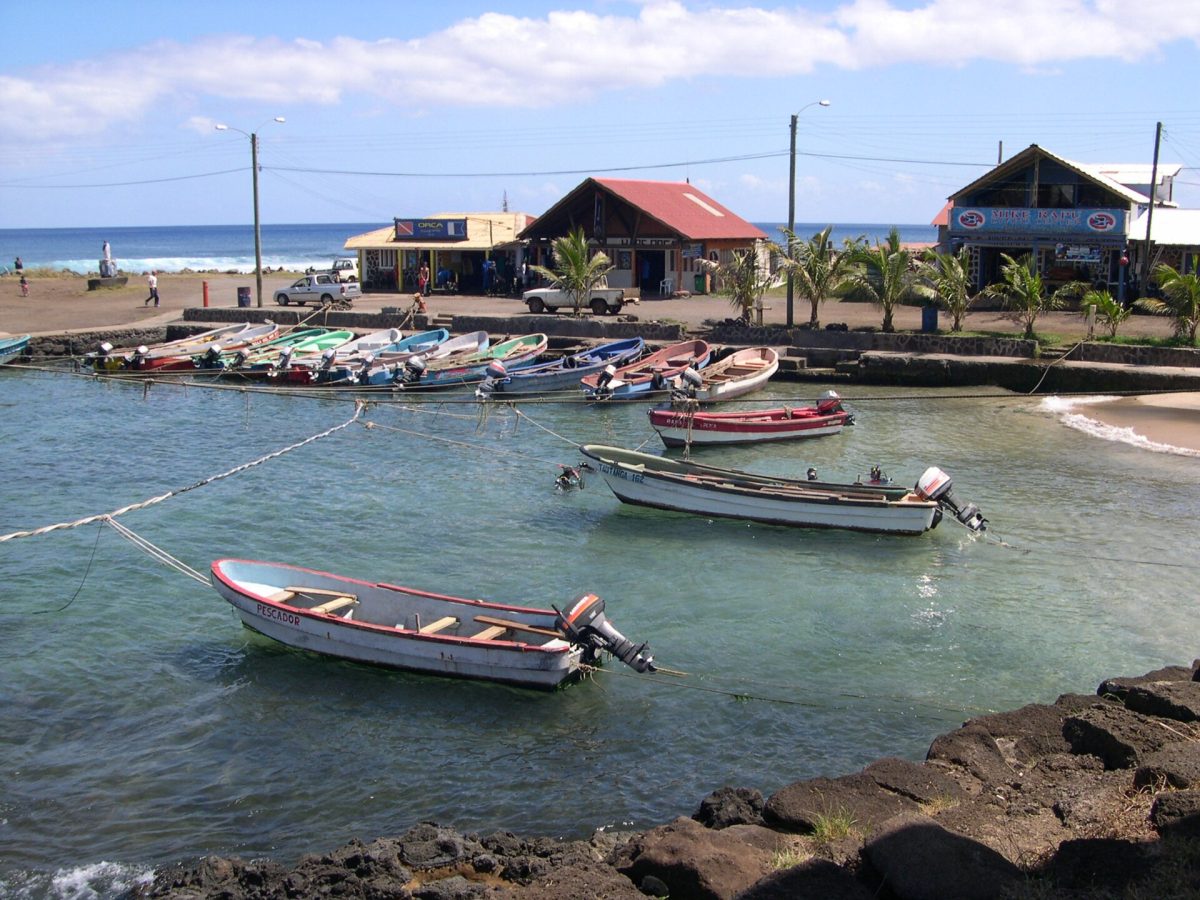
Anga Roa
Chile · 7 places
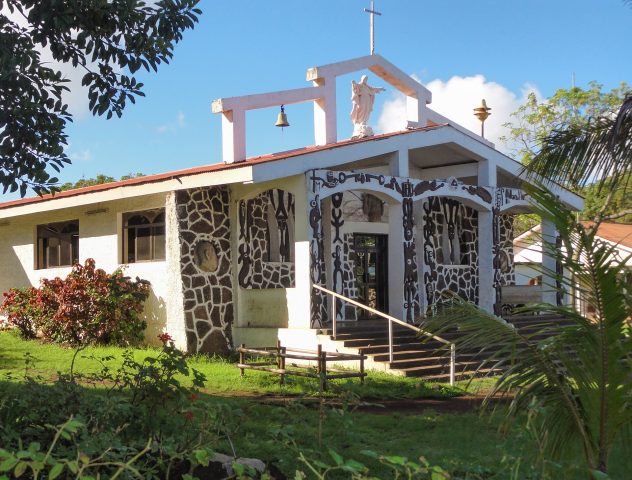
Photo: XLR8TION at English Wikipedia, Public domain
Anga Roa is the only town on Easter Island, a speck of Chile adrift in the vast Pacific. It’s a place where time moves differently—where the ocean’s rhythm dictates the pace of life, and the slow sway of palm trees feels like the island’s own quiet heartbeat. The town is small enough to explore on foot in an afternoon, its streets lined with low-slung houses and the occasional open-air market. There are no towering hotels or crowded boulevards, just a handful of guesthouses, a few restaurants serving fresh catch from the sea, and the easy familiarity of a place where everyone seems to know each other.
Life here unfolds at the speed of the tides. Mornings begin with the scent of *po’e*, a slightly sweet taro bread baked in local ovens, while fishermen return with the day’s haul—tuna, lobster, sea urchins—displayed on wooden tables by the shore. By midday, the town settles into a lazy quiet, the kind that makes an afternoon nap feel like the most natural thing in the world. Evenings are for gathering at the waterfront, where the last light of the sun spills across the black sand and the sound of laughter drifts from open-air bars. There’s no rush, no agenda, just the steady pulse of the ocean and the unspoken understanding that some moments are meant to be savored.
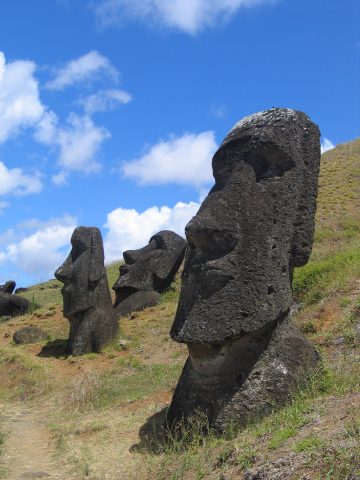
Anga Roa is the starting point for the island’s greatest mysteries. Just beyond the town, the landscape shifts into something ancient and surreal—rows of moai standing sentinel over the land, their stoic faces carved centuries ago by the Rapa Nui people. The quarry at Rano Raraku, where the statues were hewn from volcanic rock, lies a short drive away, its slopes littered with unfinished figures half-buried in the earth. Nearby, Ahu Tongariki’s fifteen moai stand in perfect alignment, their backs to the sea as if watching over the island. But Easter Island isn’t just a museum of the past. There are wild beaches like Anakena, where white coral sand meets turquoise water, and volcanic craters filled with emerald lakes. Local guides, many of them descendants of the island’s original inhabitants, share stories passed down through generations—tales of survival, ingenuity, and the deep connection between the Rapa Nui and their land.
What makes Anga Roa special isn’t just its remoteness, but the way it makes you feel at ease. There’s no pressure to do or see everything at once; the island invites you to slow down, to linger. Travelers often find themselves staying longer than planned, lulled by the gentle pace of life. You can spend a morning cycling along the coast, the wind carrying the scent of salt and wild grass, or an afternoon sitting on the shore, watching the waves roll in. The people here are warm and unhurried, quick to offer a smile or a story over a cup of coffee. There’s a sense that time isn’t something to be spent, but something to be lived—one unhurried moment at a time. Whether it’s the first light of dawn over the ocean or the quiet hum of conversation at dusk, Anga Roa has a way of making the ordinary feel extraordinary.
See & Do
All of them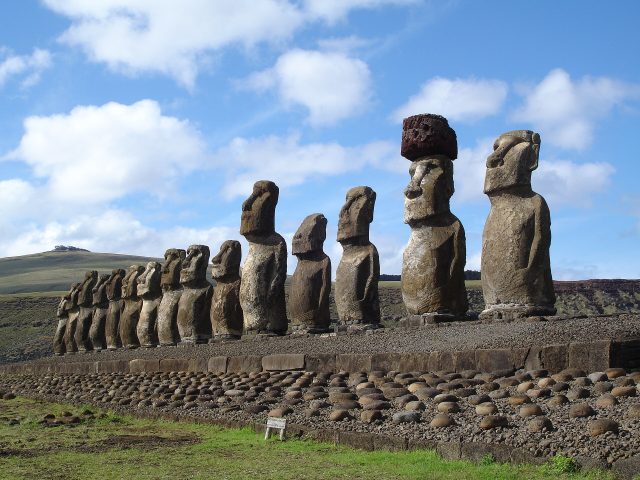
Places on the map
Marker colour follows the categoryClimate and weather
Detailed weather: Anga Roa- Average temperature
- 21 °C
- Precipitation per year
- 788 mm
- Sunshine hours per day
- 5.3 h
Average air temperature
°C
23
24
23
22
21
19
18
18
18
19
21
22
Jan
Feb
Mar
Apr
May
Jun
Jul
Aug
Sep
Oct
Nov
Dec


