Wenceslas Square isn’t just another street in Prague—it’s where the city’s past and present collide in the most ordinary, unscripted way. Stretching nearly seven hundred meters from the grand steps of the National Museum down to the edge of the Old Town, it’s a place that refuses to stand still. Tourists gather around the equestrian statue of Saint Wenceslas, locals weave through the crowds with coffee in hand, and by evening, the air hums with the sounds of street musicians and the murmur of conversations. This isn’t a stage set for visitors; it’s where Prague breathes, where history isn’t just remembered but lived.
The square takes its name from Saint Wenceslas, the patron saint of Bohemia, whose statue dominates the upper end. Erected in the early 20th century, the monument has become one of the city’s most recognizable symbols. Wenceslas sits astride his horse, flanked by other Czech saints, while beneath the horse’s hooves, a stone inscription speaks of national unity. Over the decades, this spot has been a gathering place for moments that shaped the country—protests, celebrations, and revolutions. Even now, it remains a natural meeting point, a place where the weight of history feels tangible without being overbearing.
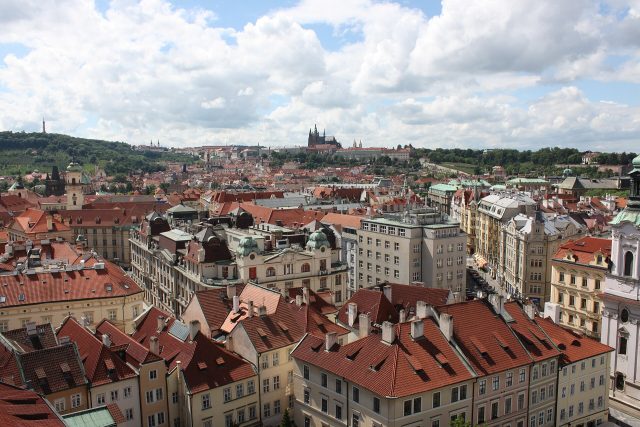
The architecture here is a patchwork of styles, each building telling its own story. The National Museum, with its imposing neoclassical facade, anchors the square’s upper end, its columns and sculptures a nod to Prague’s long tradition of scholarship and art. Nearby, the arcaded buildings house shops, hotels, and cafés, some of which still retain their early 20th-century interiors. Walking beneath their vaulted ceilings feels like stepping into another era, where the details—ornate moldings, vintage signage—hint at the square’s layered past. Elsewhere, Art Nouveau facades and functionalist structures stand side by side, a reminder that this place has never been frozen in time.
Wenceslas Square has witnessed some of the most pivotal moments in Czech history. In the 19th century, it was a stage for nationalist rallies that fueled the country’s cultural awakening. The 20th century brought darker chapters: in 1968, Soviet tanks rolled through here during the invasion that crushed the Prague Spring, and in 1989, the square became the heart of the Velvet Revolution, where crowds gathered to demand an end to communist rule. Today, subtle memorial plaques embedded in the pavement mark these events, their understated presence a quiet counterpoint to the square’s bustling energy.
The rhythm of life here changes with the hours. By day, the square is a practical place—people duck into bookshops, browse souvenir stalls, or linger in cafés over trdelník pastries. As evening falls, the atmosphere shifts. Neon signs flicker to life, musicians set up in the shadows of the arcades, and the bars fill with those looking to extend the night. On holidays, the square transforms entirely, hosting open-air concerts and markets that spill into the surrounding streets. Yet even on ordinary days, there’s always something to see, whether it’s a street performer drawing a crowd or a vendor selling handmade crafts.
Despite its popularity, Wenceslas Square rarely feels overwhelming. Its length gives it a sense of openness, and the constant flow of people means there’s always space to move. A good way to experience it is to start at the top, near the museum, where the view stretches down the entire length of the square. From there, it’s easy to wander at a leisurely pace, pausing to admire the architecture or watch the world go by. Along the way, you’ll pass flower sellers, stalls offering traditional Czech candies, and artists sketching portraits—small moments that add to the square’s charm.
The seasons bring their own magic. In winter, the square becomes a hub for one of Prague’s most famous Christmas markets. Wooden stalls sell mulled wine and roasted chestnuts, strings of lights crisscross overhead, and the scent of cinnamon fills the air. The towering Christmas tree near the National Museum draws crowds, its decorations a beacon of holiday cheer. Summer, by contrast, turns the square into a sunlit promenade, where the shade of the trees offers respite from the heat. No matter the time of year, there’s always a corner where it’s pleasant to sit and watch the city unfold.
More than just a tourist attraction, Wenceslas Square is woven into the fabric of daily life in Prague. It’s where trams and buses intersect, where friends arrange to meet, where walks through the city begin and end. For many locals, the square is tied to personal memories—childhood visits, milestone celebrations, or simply the comfort of a familiar place. It’s a space that never quite settles into predictability, always offering something new to those who pay attention.
Walking down Wenceslas Square is like flipping through the pages of a history book, each section revealing a different era. Near the museum, the grand 19th-century buildings evoke the square’s early days, while further down, the Art Nouveau facades and mid-century structures hint at the turbulence and creativity of the 20th century. There’s no single style or period that defines it, and that’s what makes it special. It doesn’t try to be a museum piece; it’s a living, breathing part of the city, where the past and present coexist without fuss. Whether you spend an hour here or a whole day, it’s a place that rewards those who take the time to look a little closer.