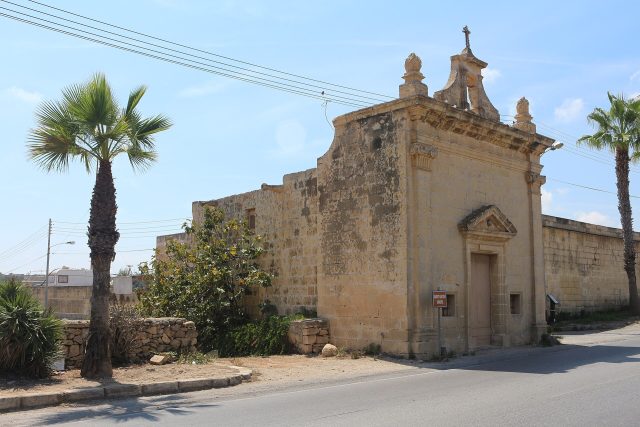
St. Cajetan Square in Fgura is one of those places that doesn’t announce itself at first glance. Tucked away in the heart of a quiet Maltese town, just a short drive from Valletta, it serves as the natural gathering point for locals rather than tourists. There are no crowds here, no souvenir stalls pushing trinkets—just the unhurried rhythm of everyday life, where the past lingers in the worn stones underfoot and the stories told over generations.
The architecture is simple, much like the rest of Malta—low buildings with brightly painted wooden balconies framing the open space, their colors softened by time. At the center stands the Church of St. Cajetan, modest in appearance but deeply woven into the fabric of the community. Its facade doesn’t demand attention, yet inside, the warmth of a parish church is unmistakable. Built in the mid-20th century, when Fgura was expanding from a small village into a proper town, the church has since become a cornerstone of local life, hosting everything from Sunday masses to village festivals.
Fgura itself is no tourist hub. It’s a working town where people go about their routines, and St. Cajetan Square is where those routines intersect. In the mornings, vendors set up stalls with fresh produce, crusty bread, and the occasional jar of homemade preserves. Children kick footballs after school, while older residents sit on benches, watching the world go by. On feast days, the square transforms—strings of lights crisscross overhead, a stage appears for live music, and the scent of *ftira* and *kannoli* fills the air. But most days, it’s just a place where neighbors stop to chat, where the pace of life slows to match the island’s own.
The history of Fgura mirrors Malta’s mid-century growth. What was once a sleepy village swelled into a town as the population expanded and new neighborhoods took shape. St. Cajetan Square became a symbol of that change, the site of the first shops, cafes, and community gatherings. Today, it retains the feel of old Malta, untouched by the gloss of mass tourism. Walk the surrounding streets, and you’ll see how the past and present coexist—narrow alleys lined with traditional *gallariji* (wooden balconies) give way to modern apartment blocks, while hidden courtyards offer quiet respites from the sun.
Unlike the well-trodden paths of Valletta or Mdina, there’s no scripted itinerary here. The square doesn’t operate on a schedule; it simply adapts to the day’s needs. Mornings bring the market, afternoons settle into stillness, and evenings see families strolling or catching up over coffee. Occasionally, a small concert or festival spills into the space, but more often, it’s just a backdrop for the unremarkable yet essential moments of life—children playing, old friends debating politics, the clink of glasses at a nearby *pastizzi* stand.
St. Cajetan Square won’t compete with Malta’s grand cathedrals or ancient ruins, and that’s precisely its charm. It doesn’t exist to impress; it exists to serve. A place where you can sit on a bench with a coffee, watch a group of boys race toy cars across the pavement, or simply soak in the quiet that’s so rare in the island’s busier corners. There are no postcard-perfect views here, just the honest, unfiltered pulse of a community.
Fgura isn’t a place you visit for Instagram shots. It’s where you go to see Malta as it really is—not the postcard version, but the one that wakes up early to open shops, argues over football at the bar, and gathers in the square when the sun dips low. St. Cajetan Square is one of countless such spaces across the island, but here, the rhythm of Maltese life is laid bare. It’s not an attraction; it’s an immersion. And sometimes, the quietest places leave the deepest impression.