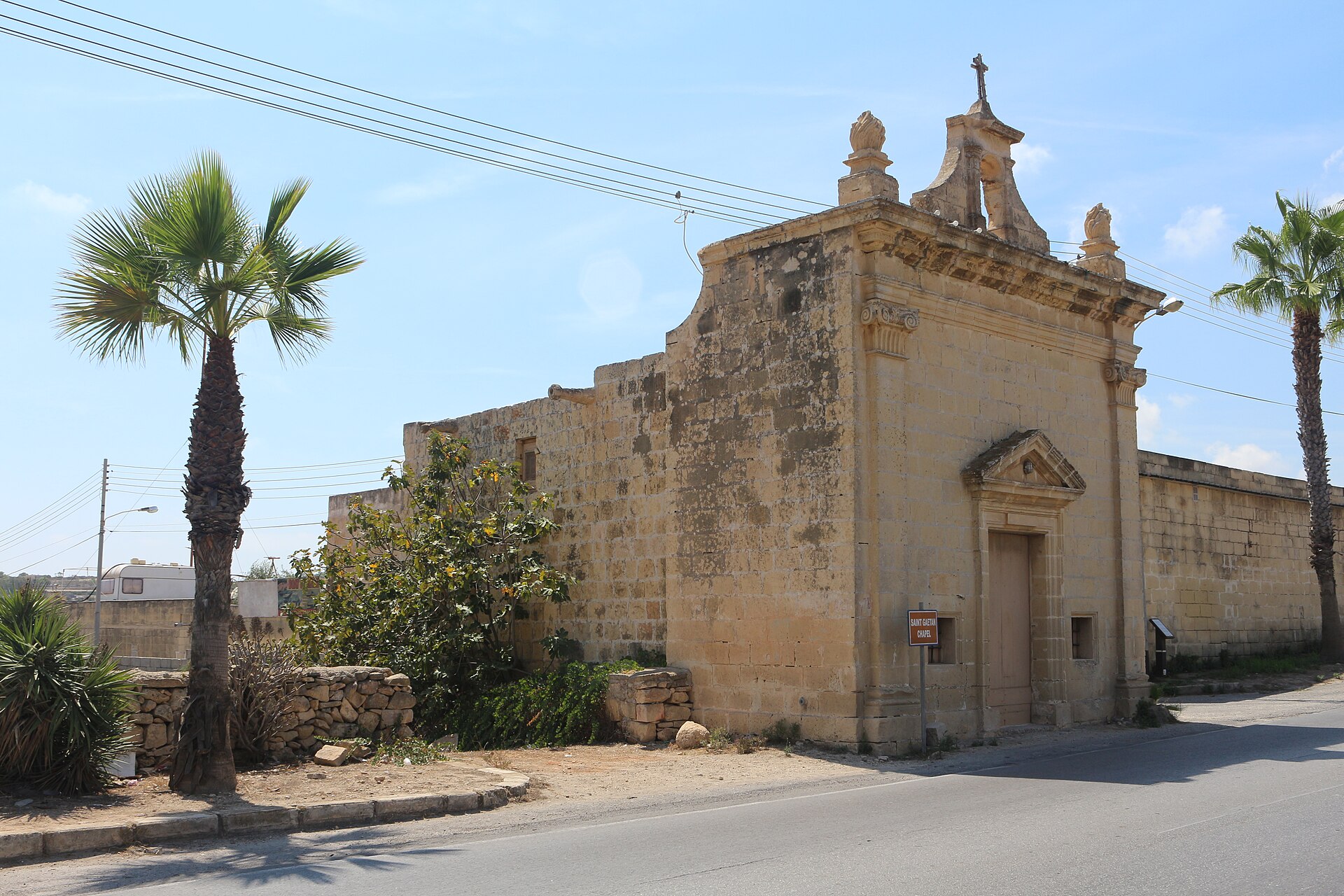
St. Cajetan’s Church in Fgura is the kind of place that doesn’t demand attention but lingers in memory long after you’ve left. Tucked away on a quiet square in the heart of this unassuming Maltese town, it sits among low-rise houses with their traditional wooden balconies and narrow streets where life moves at its own unhurried pace. Unlike the grand cathedrals of Valletta or Mdina, it doesn’t draw crowds of tourists, and that’s precisely what makes it special. The church feels like a natural part of daily life here, a place where faith and community intersect without fanfare.
Fgura itself has a history that mirrors the broader changes Malta underwent in the 20th century. Once a small rural settlement, the town began to grow rapidly during the post-war economic boom, transforming into a bustling residential area. St. Cajetan’s Church was built in the 1960s, a time when many Maltese towns and villages were establishing their own parish churches to serve expanding populations. Its construction marked a new chapter for Fgura, symbolizing both the town’s growth and the strengthening of its identity. The church wasn’t just a place of worship; it became a focal point for the community, a physical reminder of its evolving character.
The architecture of St. Cajetan’s is understated yet striking, reflecting the neoclassical style that was popular in Malta during the mid-20th century. The façade features a portico with columns supporting a triangular pediment, a design that gives the building a sense of quiet dignity. Above the entrance, a modest bell tower rises, blending seamlessly with the rest of the structure. Inside, the church feels spacious and airy, with high ceilings and large windows that flood the space with natural light. The minimalist décor—clean lines, uncluttered surfaces—creates an atmosphere of calm, inviting reflection rather than distraction. The main altar, dedicated to St. Cajetan, is crafted from marble and incorporates traditional Maltese elements, grounding the church in local craftsmanship and heritage.
St. Cajetan may not be one of the most widely venerated saints in Malta, but his legacy resonates deeply with the values of the community. An Italian priest from the 16th century, he founded the Theatine Order and was known for his devotion to the poor, establishing hospitals and shelters for those in need. On Malta, his name is synonymous with charity and compassion, and St. Cajetan’s Church continues this tradition. The parish is actively involved in outreach programs, organizing food drives, fundraising events, and support for the less fortunate. In this way, the church remains true to the spirit of its patron saint, serving as a living extension of his work.
While Fgura might not be a tourist hotspot, it has a vibrant life of its own, and St. Cajetan’s Church is at the heart of it. Beyond its religious function, the church is a hub of social activity. On Sundays, the square in front of the church comes alive after Mass, as locals gather to chat, catch up with neighbors, or enjoy a coffee at the nearby café. During festivals and feast days, the church becomes the center of celebrations, hosting concerts of sacred music, traditional Maltese processions, and communal gatherings. These events are less about spectacle and more about connection, reinforcing the bonds that tie the community together.
The interior of the church, though modest compared to Malta’s grander cathedrals, holds a few subtle treasures. The stained-glass windows, depicting scenes from St. Cajetan’s life, were crafted by local artisans and feature soft, muted tones that bathe the space in a gentle glow. The walls are adorned with frescoes illustrating key moments in Maltese history—from the shipwreck of St. Paul on the island to the Great Siege of 1565. These images serve as more than decoration; they’re a visual narrative, linking the parish to the broader story of Malta and the Mediterranean. For those who take the time to look, they offer a quiet reminder of how deeply this small island is woven into the fabric of history.
What makes St. Cajetan’s Church truly special is its authenticity. It doesn’t try to impress with grandeur or opulence, and that’s where its strength lies. There’s no tourist hustle here, no sense of being a spectacle for outsiders. Instead, the church feels like a place where time slows down, where the rhythms of daily life and faith intertwine. For visitors seeking to understand Malta beyond its beaches and resorts, this church offers a glimpse into the island’s soul—a place where tradition and modernity coexist, and where community is still very much alive.
If you find yourself in Fgura, the church is worth a visit, not just for its architecture or history, but for the atmosphere. You might be lucky enough to attend a service, where the sound of the choir blends with the scent of incense, and the congregation prays with quiet sincerity. Or perhaps you’ll simply sit on one of the benches outside, watching children play in the square while elderly locals share stories over a game of cards. In moments like these, it becomes clear why churches hold such a central place in Maltese life. They’re not just buildings; they’re the heart of the community, a place where faith, history, and everyday life come together in a way that feels both timeless and deeply human.