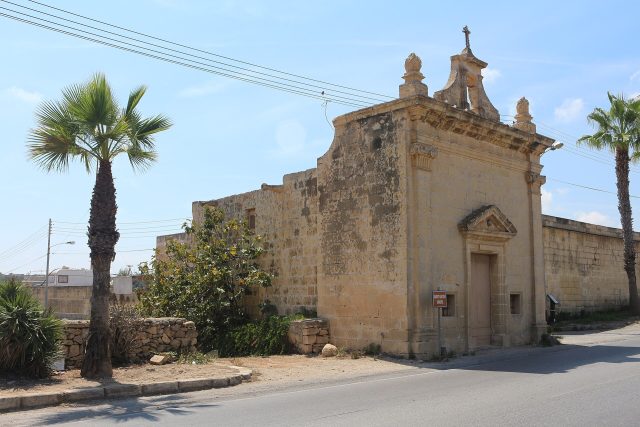
The Church of the Holy Spirit in Fgura is one of those quiet places in Malta that doesn’t demand attention but lingers in the memory long after you’ve left. Tucked away in the heart of this small town, just a few kilometers from Valletta, it stands as a subtle yet enduring part of local life. Fgura isn’t on the usual tourist trail, and the church itself lacks the grandeur of Malta’s more famous cathedrals or the ancient mystique of its historic temples. There are no towering facades or marble columns here, but something far more elusive—a sense of stillness, of time moving at its own unhurried pace, and an authenticity that feels rare in a world of curated experiences.
Construction began in the mid-18th century, when Fgura was little more than a village of fishermen and farmers. For years, the community pooled their modest resources to build the church, and in 1764, it was finally consecrated. The architecture is unassuming, reflecting the style of many Maltese churches from that era—clean lines, restrained decoration, yet a quiet harmony in its proportions. The facade is Baroque, though without the extravagance found in Valletta or Mdina. There are no gilded flourishes or intricate carvings, just a simple elegance that blends seamlessly with the surrounding streets, as if the church grew naturally from the town itself.
Inside, the space is small but thoughtfully arranged. The main altar features the traditional depiction of the Holy Spirit as a dove surrounded by rays of light, a motif deeply rooted in Catholic iconography. The walls are adorned with frescoes illustrating scenes from the lives of Christ and the saints, though these are the work of local artisans rather than renowned masters. One of the most cherished pieces is a wooden statue of the Virgin Mary, kept in a side chapel. According to local tradition, it was brought to Malta in the 17th century and has been venerated as miraculous ever since. Each May, during the Feast of the Ascension, the statue is carried through Fgura’s streets in a solemn procession, transforming the quiet town into a vibrant celebration of music, flowers, and devotion.
This church has been woven into the fabric of Fgura’s community for centuries. Generations of families have marked their most important moments here—baptisms, weddings, funerals—under its vaulted ceilings. Even as the town grew in the 20th century, expanding into a bustling suburb of Valletta, the Church of the Holy Spirit remained a constant. Today, the area around it has changed dramatically, with modern buildings, shops, and busy roads replacing the old village lanes. Yet stepping inside feels like entering another world. The hush of the interior, the soft glow of stained glass, and the scent of burning candles create a sense of peace that’s hard to find in the rush of urban life.
The church hasn’t always looked as it does today. In the 19th century, it underwent several renovations, including the addition of side chapels and a bell tower. The most recent restoration took place in the early 2000s, when the structure was reinforced, the roof repaired, and the frescoes carefully preserved. Despite these changes, the church has retained its original character—modest, unpretentious, yet deeply meaningful. Perhaps that’s its greatest strength: it doesn’t exist to impress visitors but to serve those who call Fgura home.
For travelers who make the short trip from Valletta, the Church of the Holy Spirit offers a glimpse into a side of Malta that’s often overlooked. There are no crowds, no souvenir stalls, no guided tours—just a quiet corner where the outside world fades away. If you’re lucky, you might arrive during a service or a choir rehearsal. Maltese choral music has a rich tradition, and the acoustics of the old church give the voices an almost ethereal quality. Even if you’re not religious, sitting on one of the wooden pews, watching locals light candles or pause in prayer, can be a strangely moving experience. It’s a reminder of the rhythms of life in a small Maltese town, where faith and community are still deeply intertwined.
Fgura itself isn’t a place people visit for its landmarks. It’s an ordinary town, one of many on the island, with narrow streets, corner cafés, and squares where elderly men play cards while children race by on bicycles. But it’s in these unassuming places that you often find the real Malta—the one that exists beyond postcards and guidebooks. Here, traditions are kept alive not for tourists, but because they matter to the people who live here. The Church of the Holy Spirit is one of those threads connecting past and present, a place where the stories of generations are quietly preserved.
To the locals, this church is more than just a building. It’s where their ancestors were baptized, where their parents were married, where they’ve turned in times of joy and sorrow. It’s a place where the weight of history feels tangible, yet not overwhelming. For visitors, it offers something rare: a moment of stillness in a country that’s often bustling with activity. You won’t find grand monuments or dramatic vistas here, but you might just find something far more valuable—a sense of belonging, however fleeting, to a place that has been loved and cared for by generations.