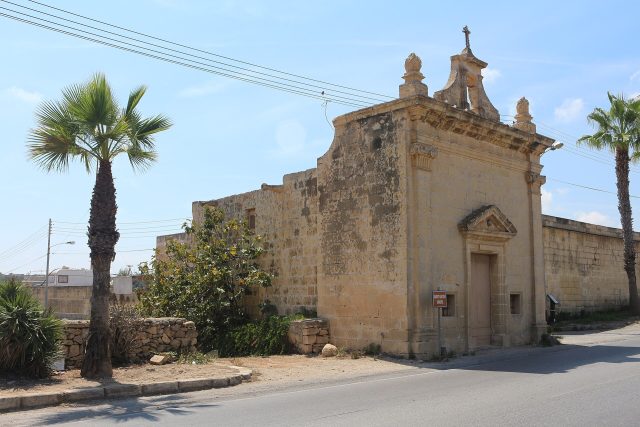
Figura is one of those quiet Maltese towns that rarely appears on tourist maps. Tucked away in the island’s southern reaches, it lacks the grand fortresses or ancient ruins that draw crowds elsewhere. Yet it’s in places like this—unassuming and lived-in—that you sense what Malta is like beyond the postcards. At its heart stands the Parish Church of Our Lady of Mount Carmel, a building that has shaped the town’s identity for over a century.
The church’s story begins in the late 1800s, when Figura was a scattering of homes tied to Tarxien. Most residents were farmers or fishermen, traveling to Tarxien’s parish for Mass. As the community grew, they needed their own place. In 1890, plans were drawn up, and by 1895, the church was consecrated. It became a gathering point, marking Figura’s emergence as a town.
The church is a classic example of late 19th-century Maltese ecclesiastical design. Its neoclassical façade, with clean lines and a triangular pediment, gives it a dignified presence. Inside, high vaulted ceilings and large windows create an airy space. The decor is simple, with the main altar dedicated to Our Lady of Mount Carmel, framed by candles and flowers.
In the mid-20th century, the church’s role in Figura’s life grew. It became more than a place for Sunday services—it hosted festivals, charity drives, and neighborly conversations. Even now, as Figura has become a modern suburb, the church remains a constant. People come to pray, reflect, or chat with someone they haven’t seen in a while.
Every July, Figura celebrates the feast of Our Lady of Mount Carmel. The town comes alive with music, processions, and the scent of traditional Maltese food. The church is at the center, its steps lined with stalls, its bells ringing over the crowds. Fireworks light up the night sky, and for a few days, the town feels like one big family.
Inside, small details reveal the church’s history. Stained-glass windows depict scenes from the Virgin Mary’s life, their colors still vivid. The wooden pews, worn smooth by generations, date back to the church’s earliest days. Plaques on the walls list parishioners who contributed to its upkeep. A small museum houses religious artifacts, though it’s not always open.
What makes the church special is its authenticity. It doesn’t have the splendor of Valletta’s cathedrals or the mystique of Mdina’s churches. Instead, it feels alive, part of the town’s daily rhythm. For visitors stepping off the beaten path, it offers a glimpse of Malta as locals experience it—where faith, history, and community intersect.
The church is open most days, though the schedule varies. Weekdays are quiet, with a handful of people coming and going. Sundays are livelier, with families filling the pews and hymns drifting through the doors. If you’re lucky, you might hear the parish choir. Outside, a small garden offers a shady spot to sit.
There’s nothing flashy about this corner of Malta. No dramatic views or famous attractions. But that’s what makes it worth a visit. Here, you can wander the streets, step into the church, and feel the quiet pulse of a town content to be itself.