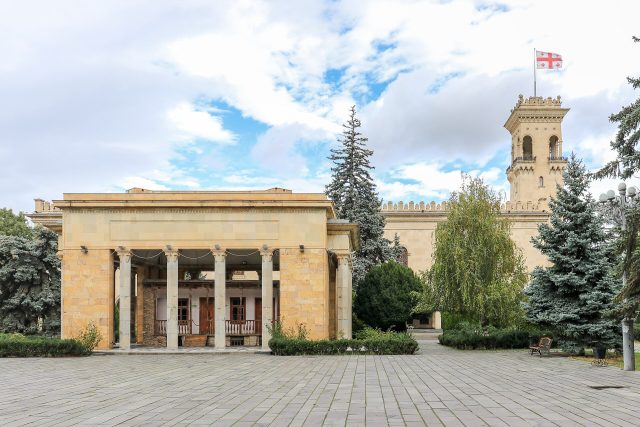
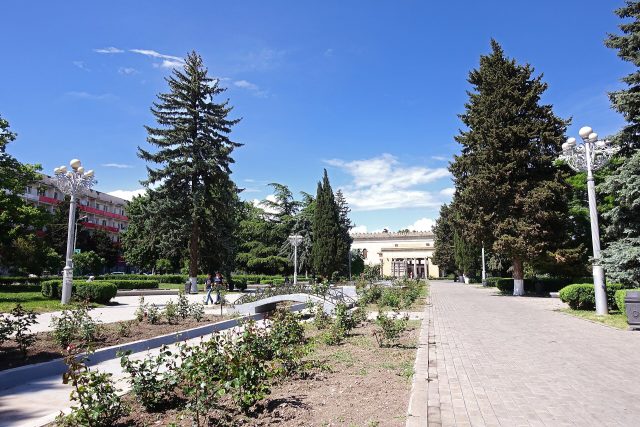
Stalin Square in Gori is one of those places where history isn’t just remembered—it’s felt. Tucked in the heart of the city, it carries a name that officially belongs to someone else, yet for locals and visitors alike, it remains inseparable from Joseph Stalin. The square itself is small, but its presence looms large, shaped by buildings that seem frozen in time. The architecture here is unmistakably Soviet: solid, imposing, and built to last. The city administration building dominates the space with its heavy columns and high ceilings, while the surrounding apartment blocks, adorned with ornate balconies and wrought-iron railings, add a touch of faded grandeur. Walking across the square, you can almost hear the echoes of another era, when Gori wasn’t just another provincial town but a place of significance in the Soviet narrative.
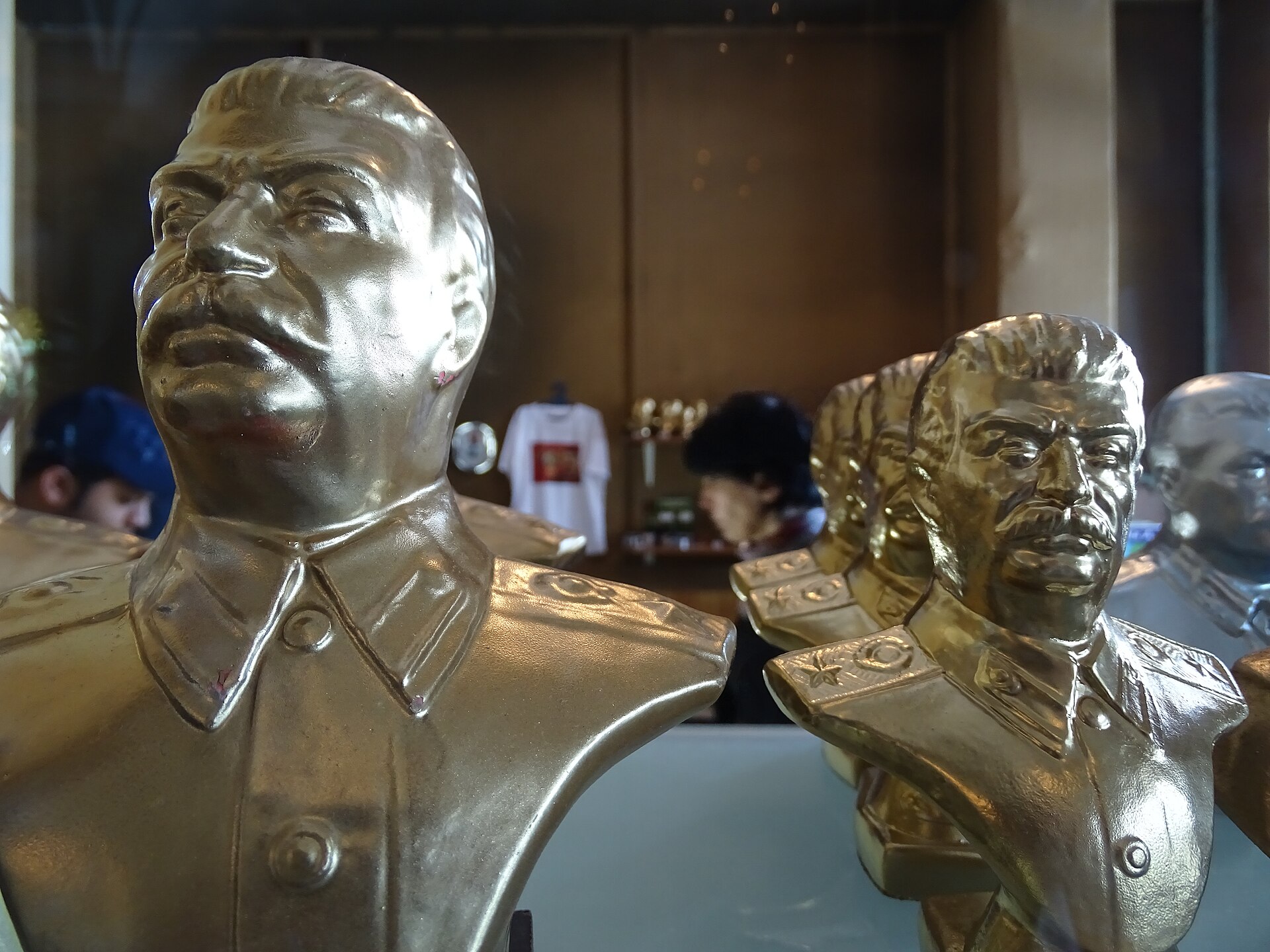
At the center of it all stands the statue of Stalin, erected in 1952. The bronze figure, dressed in his signature tunic, is one of the few that survived the wave of removals that followed the dismantling of the Soviet cult of personality. Today, it’s less a monument to reverence and more a historical artifact, a silent witness to the complexities of memory. Tourists pause to take photos, some with curiosity, others with unease, while locals pass by without a second glance. The statue has become part of the city’s fabric, a fixture that sparks debate but remains firmly in place.
Just a short walk away is the Stalin Museum, housed in the modest cottage where he was born. The museum has been a site of pilgrimage since Stalin’s lifetime, and today it holds a collection of personal belongings, documents, and photographs that trace his early years. The exhibits are a mix of the mundane and the monumental—childhood toys, school reports, and later, the trappings of power. The museum is a place of contradictions: for some, it’s a vital piece of history; for others, a painful reminder of a dark chapter. Yet regardless of perspective, it’s impossible to separate Gori from Stalin’s legacy, and the museum remains a key part of the city’s identity.
The square changes with the hours. In the early morning, it’s quiet, the air still cool as a few vendors set up their stalls nearby. By midday, the space fills with the hum of conversation—tourists snapping photos, schoolchildren on their way home, the occasional car rumbling past. As evening falls, the square takes on a different mood. The streetlights cast a warm glow over the cobblestones, and the shadows of the trees stretch long across the pavement. Locals gather on benches, playing backgammon or chatting, while the scent of grilled meat drifts from nearby cafes. There’s a sense of timelessness here, as if the square exists slightly outside the rush of the modern world.
Gori itself is a city of layers, and Stalin Square is where those layers intersect. It’s a place where pre-Soviet Georgia, the Soviet era, and the present day coexist, sometimes uneasily. For some, the square is a site of memory, a physical link to a past that still shapes the present. For others, it’s simply the heart of the city—a place to meet friends, grab a coffee, or browse the market for fresh produce. But even those who aren’t drawn to history can’t help but feel the weight of the place. There’s something about the square that lingers, a quiet intensity that makes it more than just another public space.
The relationship between Georgia and its Soviet past is complicated, and Stalin Square embodies that tension. After the USSR collapsed, many Soviet monuments were removed, but in Gori, little changed. Perhaps it’s because the city’s connection to Stalin is too deep to erase, or because locals have grown accustomed to the statue’s presence. Whatever the reason, the square remains as it was, a relic of a time that some would rather forget and others refuse to let go. It’s a reminder that history isn’t just about facts—it’s about how people live with them, how they choose to remember or move on.
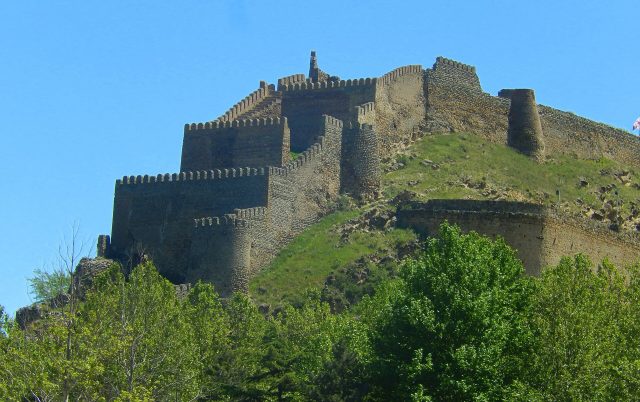
Today, Gori is slowly opening up to visitors, and Stalin Square is often the first stop. From here, it’s easy to explore the rest of the city—the narrow streets lined with old houses, the small shops selling local crafts, the fortress perched on a hill overlooking the town. There are cafes where you can try khachapuri or sip strong Georgian coffee, and restaurants serving hearty meals that have been cooked the same way for generations. The city has a way of drawing you in, not just with its history, but with its warmth and resilience.
Stalin Square isn’t just a tourist attraction; it’s a place that makes you think. It forces you to grapple with questions that don’t have easy answers: How do you separate a man from his legacy? How does the past shape the present? Why do some places become symbols, even when they’re steeped in controversy? There’s no single way to view the square—it’s a mirror, reflecting different perspectives depending on who’s looking. And perhaps that’s its greatest value. It doesn’t offer conclusions, but it invites you to consider history from all sides, to see it not as a fixed narrative, but as something alive, something that continues to evolve.