Gori is a quiet town in the heart of Georgia, best known as the birthplace of Joseph Stalin. The small city sits along the banks of the Mtkvari River, surrounded by rolling hills and the distant silhouette of the Caucasus Mountains. Its streets are lined with low-rise buildings, and life here moves at an unhurried pace, far removed from the political storms that once swirled around its most famous son. Yet the past lingers in the air, most visibly at the museum dedicated to Stalin’s life, a place where history feels both personal and unsettling.
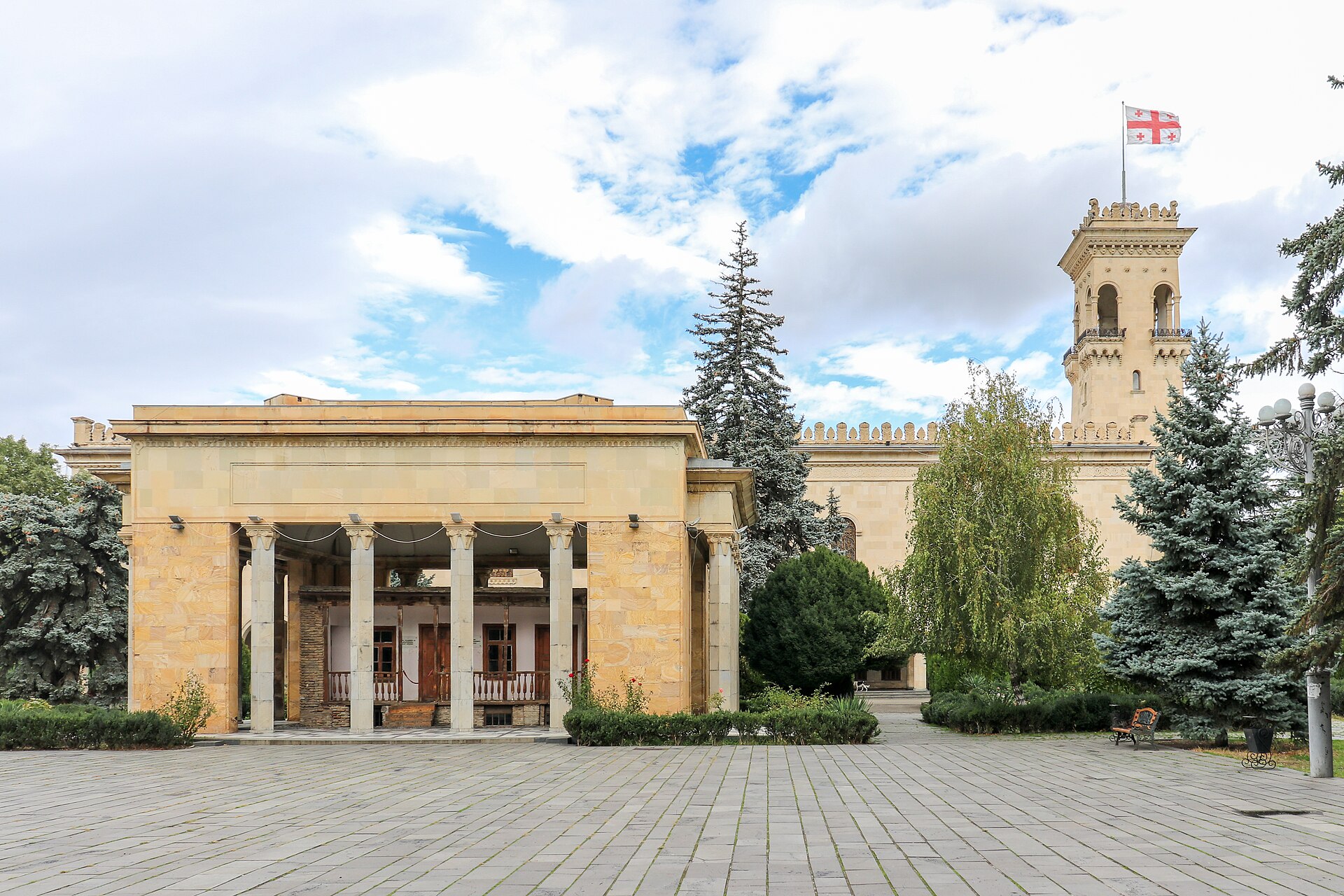
The museum complex consists of two distinct parts. The first is the humble house where Stalin was born in 1878—a small, single-story cottage with a wooden veranda, preserved almost exactly as it was in the late 19th century. Inside, the two rooms hold simple furnishings: a wooden bed, a cast-iron stove, a few chairs, and basic household items. The space is cramped, the walls thin, and it’s hard to imagine that a man who would shape the course of the 20th century spent his earliest years here. A metal canopy now shelters the house from the elements, a practical measure that also underscores its status as a relic. Nearby stands a bronze bust of Stalin, a reminder that for some, his legacy is still a point of pride.
The second part of the museum is a much larger, more imposing structure built in 1957, years after Stalin’s death. Its architecture is unmistakably Soviet—grand, symmetrical, and austere, with high ceilings and wide corridors designed to impress. The exhibits inside trace Stalin’s life in chronological order, from his childhood in Gori to his rise as a revolutionary, his role in the Russian Civil War, and his leadership during World War II. Personal artifacts are on display: his death mask, military uniforms, letters, and photographs. There are also detailed dioramas of key battles, maps of Soviet expansion, and propaganda posters celebrating industrial achievements. The narrative is straightforward, even reverent, presenting Stalin as a decisive leader who steered the country through triumph and turmoil.
What the museum doesn’t do is grapple with the darker aspects of his rule. There’s no mention of the purges, the gulags, or the millions who suffered under his regime. Instead, the exhibits focus on victory—over fascism, over poverty, over backwardness. For some visitors, this one-sided portrayal feels like a missed opportunity; for others, it’s a reflection of how history is often remembered differently depending on who tells the story. The museum doesn’t force a particular interpretation, but it doesn’t challenge the official Soviet version either. That ambiguity is part of what makes it intriguing.
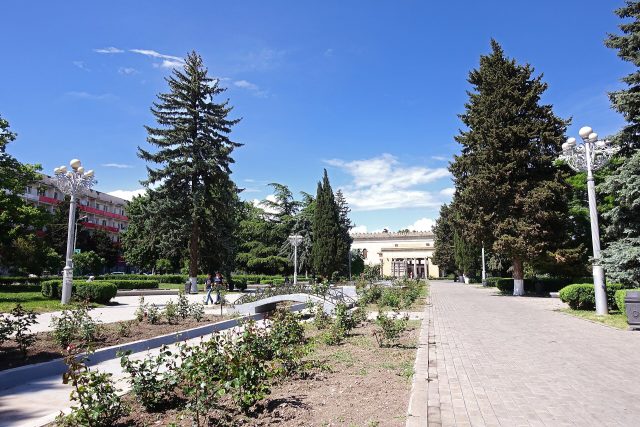
Gori itself is a town of contradictions. On the one hand, Stalin’s presence is still felt. His name appears on street signs, and in some local restaurants, toasts are occasionally raised in his honor. Yet the city doesn’t feel like a shrine. The central square, where the museum stands, is a typical Georgian public space—vendors sell fresh fruit and churchkhela, children chase each other around the fountain, and old men play backgammon under the shade of plane trees. The past and present coexist here, not in tension, but in a kind of uneasy truce.
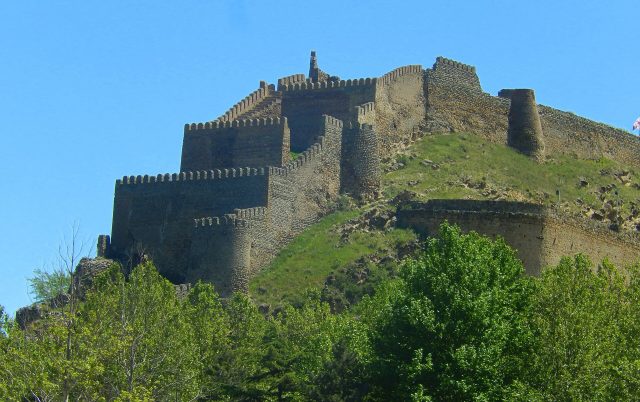
A visit to the museum takes a couple of hours, but to really understand its significance, it’s worth exploring the rest of Gori. The town is compact, and its streets are easy to navigate on foot. Just outside the center, the ancient Gori Fortress perches on a hill, offering sweeping views of the surrounding countryside. The fortress dates back to the Middle Ages and has witnessed countless conflicts, a reminder that this region has always been a crossroads of empires. Down below, in the town’s small restaurants, the food is hearty and unpretentious—khachapuri oozing with cheese, juicy khinkali dumplings, and rich lobio stew. The wine, too, is excellent, poured generously by hosts who take pride in their hospitality.
For Georgians, Stalin is a complicated figure. He was born here, spoke Georgian as his first language, and is still seen by some as a son of the land. Yet his legacy is inseparable from the suffering his policies inflicted, not just on the Soviet Union, but on Georgia itself. The museum doesn’t resolve these contradictions; instead, it preserves them, offering visitors a glimpse into how history is remembered—or sometimes, how it’s selectively forgotten. There are no easy answers here, only the weight of the past pressing against the present.
What makes the museum worth visiting isn’t just its collection of artifacts, but the questions it raises. How do societies reconcile with difficult chapters of their history? What does it mean to honor someone whose actions caused so much pain? And how does a place like Gori, with its layers of memory, move forward without erasing what came before? The museum doesn’t provide a neat conclusion, but it doesn’t need to. Sometimes, the most powerful thing a place can do is make you think.