Gori is a town many associate first and foremost with Stalin, and it’s here, on a gentle rise above the Liakhvi River, that you’ll find a park bearing his name. Unlike formal memorials or museums, this place feels woven into the fabric of the town itself, a quiet corner where history lingers in the shade of old trees and the murmur of everyday life.
The park took shape in the mid-20th century, when Stalin’s cult of personality was at its height. A bronze statue of him once stood here, one of countless monuments erected across the Soviet Union. It depicted him in full military dress, overcoat draped over his shoulders, one hand raised in a gesture that seemed to address the masses. When the cult was dismantled, the statue was removed, but the park remained, its name and atmosphere carrying echoes of that era.
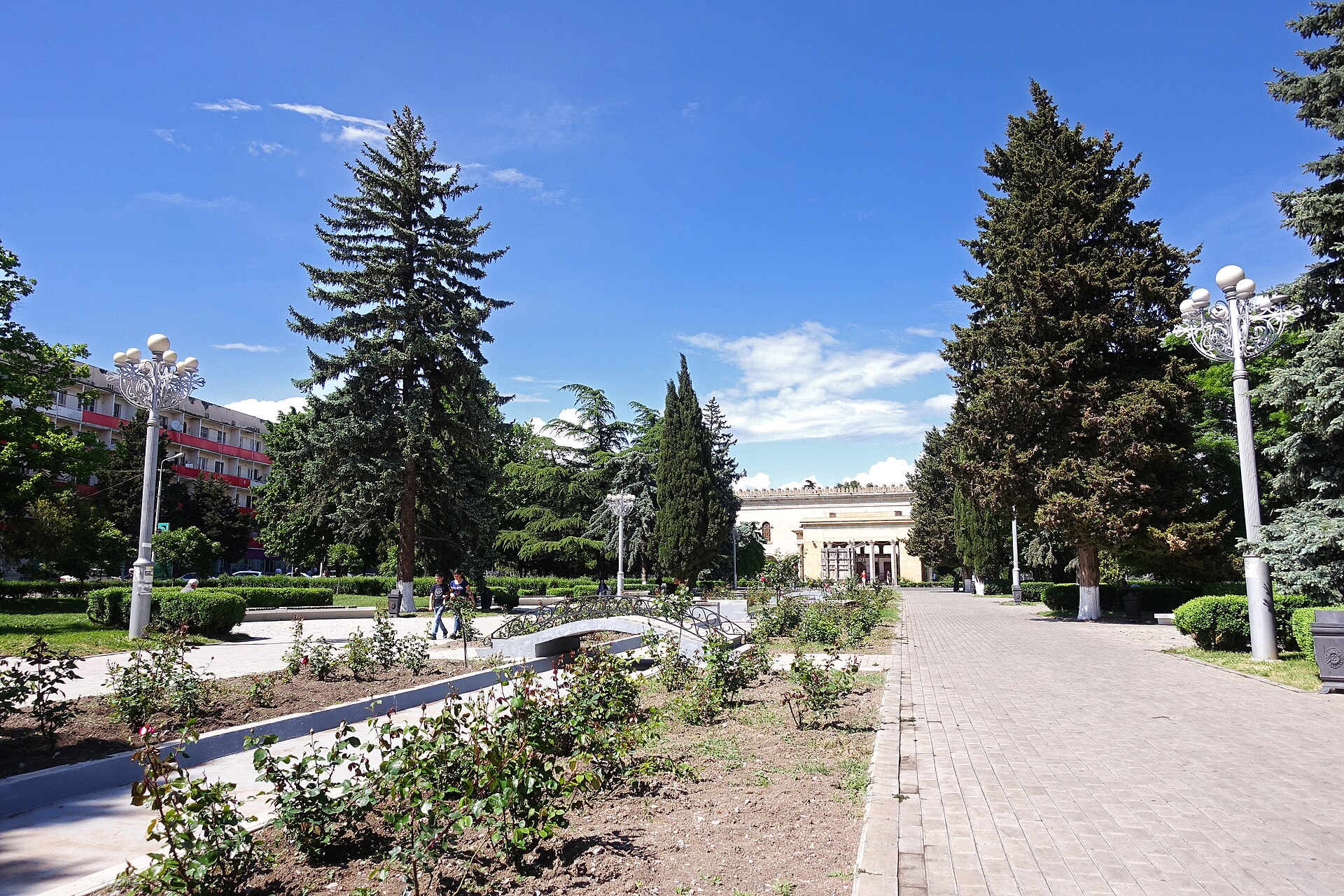
Today, it’s a peaceful spot where locals stroll and the occasional visitor wanders in. The paths are paved with simple tiles, lined with benches that invite rest. In the center, a modest fountain draws children who splash in its shallow basin on warm days. There’s no grandeur here, no sense of forced reverence—just the quiet rhythm of a place where time moves slowly, as it does in old city parks everywhere.
What’s striking is how little the park serves as a pilgrimage site for Stalin’s admirers, though they do exist in Georgia. Instead, it feels like a natural part of Gori’s landscape, a place where the past isn’t debated but simply acknowledged. There are no plaques explaining its significance, no signs directing attention to its history. It’s as if the park itself suggests that some things don’t need explaining—they just are.
The design is unassuming, almost utilitarian. Paths radiate from a central square where the statue once stood. A few old lampposts, their design harking back to the Soviet period, still line the walkways, alongside stone benches with carved backs. The trees—plane and chestnut—were planted when the park was first laid out, their broad canopies offering shade that deepens as the day wears on. In the late afternoon, sunlight filters through the leaves, casting shifting patterns on the ground.
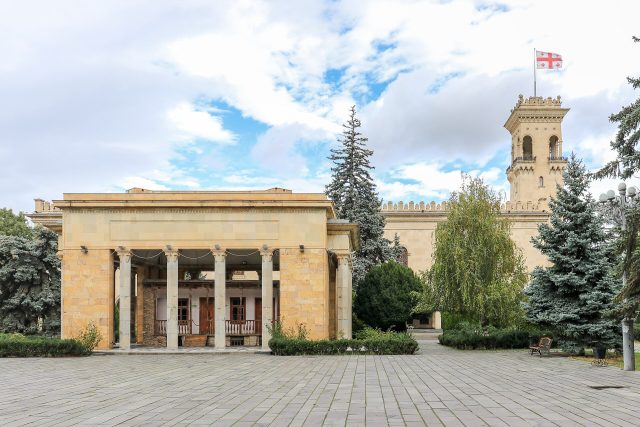
Gori is a small town, and the Stalin Park isn’t the only place here tied to his legacy. A short walk away stands the house where he spent his childhood, now a museum. But the park is different. It isn’t curated or staged. There are no guides reciting facts, no glass cases preserving artifacts. Here, history isn’t confined to displays—it’s alive in the way people use the space, in the way the town has absorbed it over decades.
In recent years, the park has seen subtle changes. New playground equipment has appeared, and some of the paths have been repaved. Yet these updates haven’t altered its essential character. It remains a place where past and present coexist without tension, perhaps because it doesn’t demand anything from those who visit. Unlike other Stalin-related sites that spark controversy, this one feels neutral, almost ordinary.
Walking through the park, it’s hard not to reflect on how perspectives shift over time. What was once a symbol of power and ideology has become just another town square, a place where people come to sit, chat, or let their children play. That’s its quiet power—it doesn’t argue or persuade. It simply exists, a reminder that even the most contentious chapters of history eventually settle into the landscape, becoming part of the scenery rather than the story.