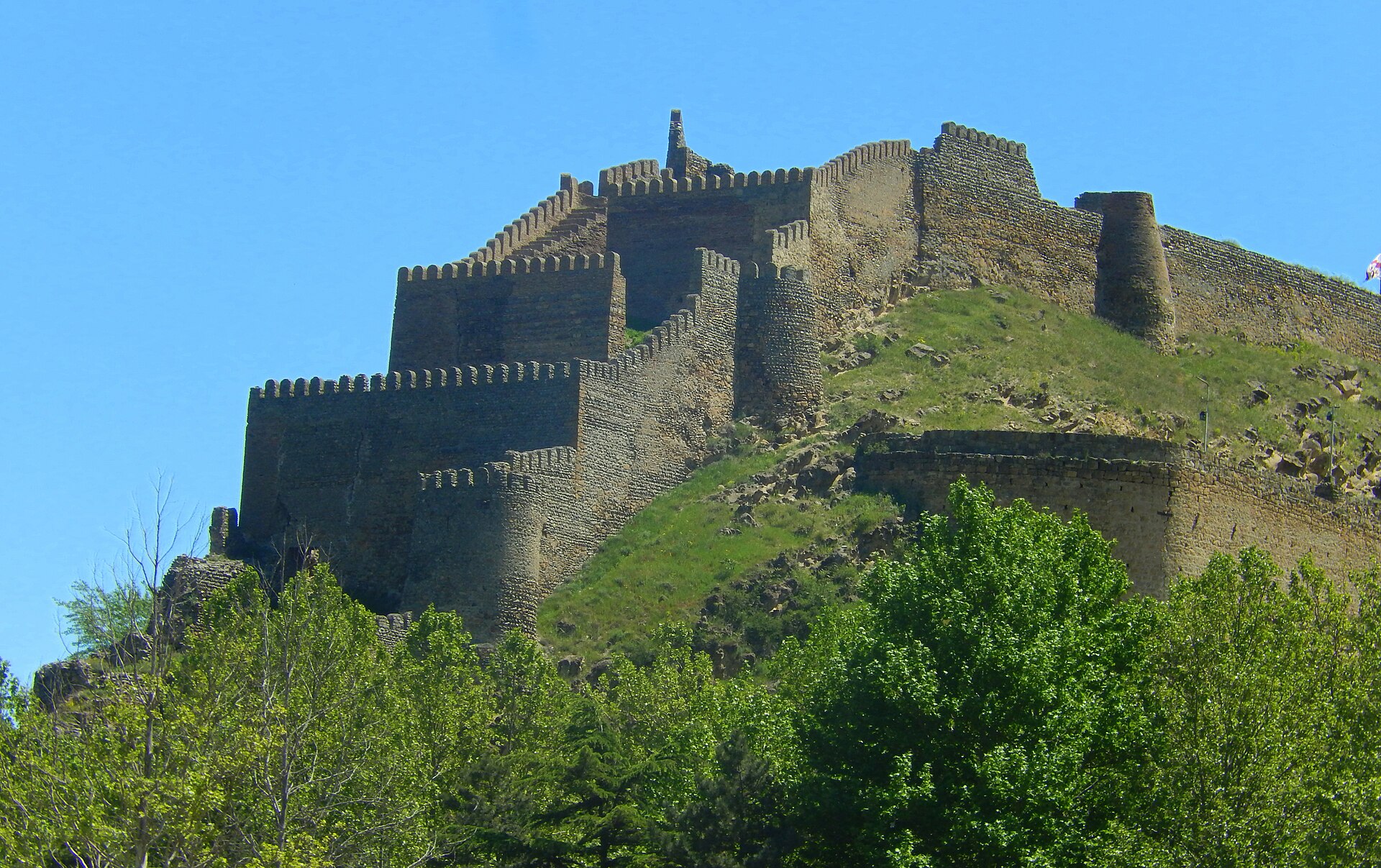
Perched on a rocky hill overlooking the city of Gori, the fortress of Goristsikhe feels like a silent guardian of Georgia’s turbulent past. Its weathered walls rise above the Kura River valley, offering sweeping views of the surrounding mountains and the town below. This isn’t just a relic of stone and mortar—it’s a place where history lingers in the air, where every corner whispers of the kings, conquerors, and ordinary people who once walked these grounds. Over the centuries, Goristsikhe has seen Persian invaders, Ottoman governors, and Russian soldiers pass through its gates, each leaving their mark on its battered but enduring structure.
The earliest records of Goristsikhe date back to the 7th century, though the fortifications we see today were largely built between the 13th and 17th centuries. During the Middle Ages, the fortress played a crucial role in defending the region, standing guard over trade routes that connected eastern Georgia with the west and the North Caucasus. Its strategic position made it indispensable during the reign of King David the Builder, when Gori became a key stronghold of a unified Georgian state. Later, in the 16th century, the fortress withstood multiple sieges, including the brutal campaigns of Shah Abbas I, who sought to bring Georgia under Safavid rule. These conflicts left their scars on the walls, but the fortress never fell entirely into enemy hands.
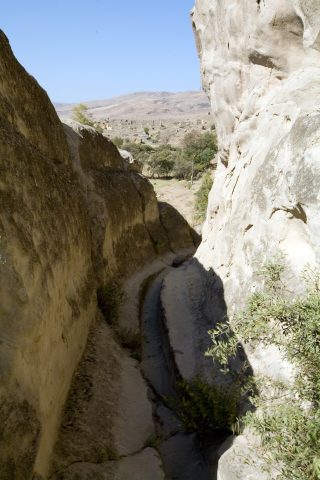
The architecture of Goristsikhe follows the classic design of Georgian fortresses from that era: thick stone and brick walls, defensive towers with narrow arrow slits, and labyrinthine passageways that once confused invaders. Inside, the remains of living quarters, storage rooms, and water cisterns hint at the self-sufficient life that thrived here during sieges. One of the most intriguing features is the underground tunnel leading to the river, a lifeline for smuggling supplies when the fortress was cut off from the outside world. Though much of Goristsikhe now lies in ruins, its silhouette remains striking, especially at sunset when the fading light bathes the stones in warm hues.
Goristsikhe is deeply intertwined with the history of Gori itself, which grew up at its feet. By the 18th century, the fortress had lost its military importance but retained its symbolic power, serving as a seat for local rulers of the Kartli-Kakheti kingdom and later for Russian governors. After Georgia was absorbed into the Russian Empire in the 19th century, the fortress gradually fell into disrepair, though it never lost its hold on the imagination of the townspeople. Even today, locals share stories about its past—tales of battles, betrayals, and hidden treasures passed down through generations.
Nowadays, Goristsikhe is a place where both visitors and residents of Gori come to wander among the ruins. The fortress has become a natural part of the city’s landscape, its crumbling walls blending seamlessly with the modern streets below. Walking along the ramparts, it’s easy to imagine the bustle of life that once filled these courtyards—soldiers on patrol, merchants haggling over goods, and rulers making decisions that shaped the fate of the region. For those who prefer a quieter experience, there are benches where you can sit and take in the view, watching the city stretch out beneath you. Recent efforts to preserve the site have focused on stabilization, but for now, Goristsikhe remains open and accessible to anyone willing to climb the hill.
What makes Goristsikhe special is its atmosphere. Unlike more famous fortresses in Georgia, it doesn’t draw large crowds, which means you can explore its ruins in peace. The wind sweeps through the empty courtyards, birds nest in the cracks of the walls, and the sounds of the city drift up from below. There’s a sense of timelessness here, as if the fortress is holding its breath, waiting for the next chapter in its long story. It’s a place that invites reflection, where the weight of history feels tangible in the quiet rustle of the trees and the rough texture of the stones underfoot.
For anyone interested in Georgia’s past, Goristsikhe is a must-visit. It offers a glimpse into medieval life—how people defended their homes, how rulers navigated the shifting tides of power, and how a single fortress could shape the destiny of a region. But even if history isn’t your main reason for coming, the climb is worth it for the view alone. From up here, Gori looks different, less like a modern town and more like a place where the past and present coexist. The fortress doesn’t try to impress with grandeur or opulence; it simply stands as it always has, a testament to endurance.
There’s a certain rugged simplicity to Goristsikhe, much like the Georgian landscape itself. It doesn’t need ornate carvings or towering spires to tell its story—every stone, every weathered wall speaks for itself. If you listen closely, you might catch the faint echoes of the past: the clatter of hooves on cobblestones, the murmur of prayers in a chapel long gone, or the distant shouts of soldiers preparing for battle. The fortress doesn’t offer easy answers or dramatic revelations, but it doesn’t need to. Its power lies in its quiet persistence, a reminder that some stories are best told in silence.