Council Square in Brașov is one of those places where the city unfolds at its own unhurried pace, like the pages of a well-worn book. The moment you step onto the cobblestones, the weight of history settles around you—not as something distant or abstract, but as a living presence in the faded facades, the narrow lanes leading to the square, and the mountains looming in the distance like silent guardians. This isn’t just the heart of old Brașov; it’s where the city’s past and present intersect, where every stone seems to remember the merchants, craftsmen, and printers who once shaped its identity.
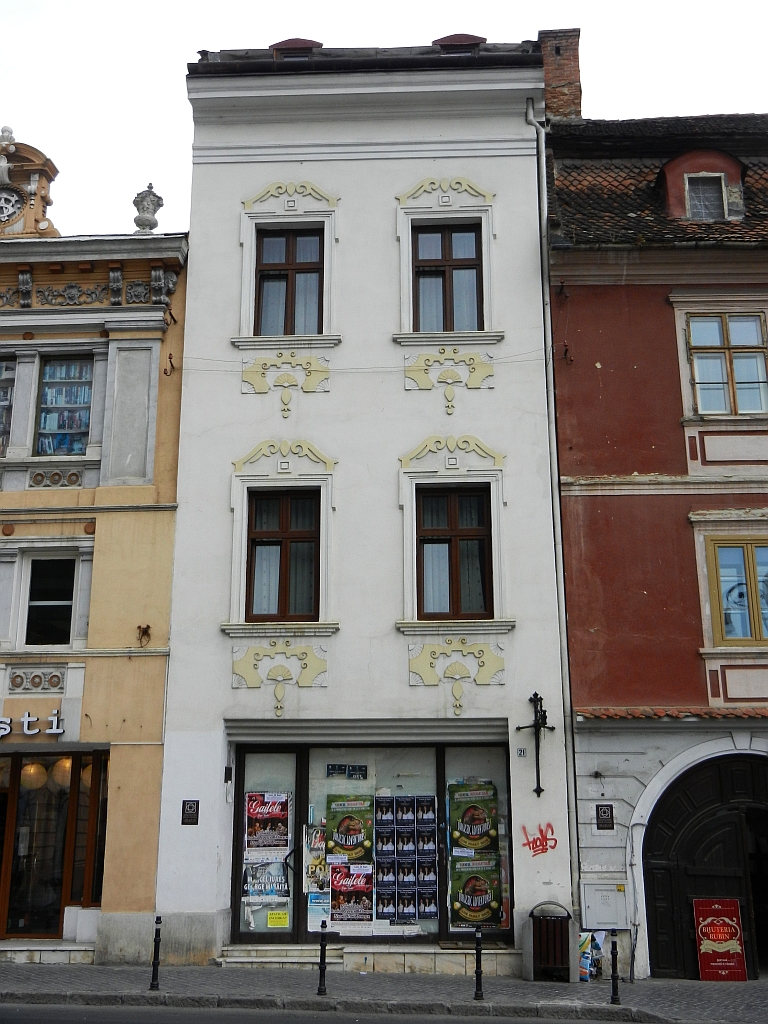
The architecture here is a patchwork of styles, each layer telling a different story. The most striking structure is the Old Town Hall, built in the late 15th century, its clock tower crowned with a weather vane in the shape of a dragon—a symbol now inseparable from Brașov itself. Around it, buildings with arched ground floors once housed workshops and stalls, their facades a mix of Gothic severity and Baroque flourishes. Some walls still bear faded murals or intricate stucco work, while others have retained their original medieval proportions. Together, they create a sense of timelessness, as if the square exists slightly out of step with the modern world.
For centuries, Council Square has been a gathering place. In the Middle Ages, it hosted bustling fairs where traders sold everything from spices and textiles to books printed in one of Transylvania’s earliest presses. By the 19th century, the square had become a stage for political upheaval, as Brașov emerged as a center of Romanian national awakening. Today, it remains a social hub, though the rhythms have shifted. In summer, cafes spill onto the pavement; in winter, the square transforms into a festive market with one of Romania’s tallest Christmas trees. Year-round, locals and visitors wander the cobblestones, pausing to listen to street musicians or browse the windows of small shops.
What makes the square truly unique is its setting. Brașov is cradled by mountains, and their presence is felt everywhere here. To the south rises Tâmpa, its slopes accessible by cable car or foot, offering sweeping views of the city below. To the north, the peaks of Poiana Brașov beckon, their ski resorts a draw in winter. Even on overcast days, when the mountains vanish behind mist, their silhouette lingers in the square’s atmosphere, grounding the space in something larger than itself. It’s this interplay of nature and architecture that gives Council Square its quiet magic.
Winter turns the square into something out of a storybook. The Christmas market here is one of the most atmospheric in Romania, with the scent of roasted chestnuts and mulled wine mingling with the crisp air. Strings of lights reflect off the cobblestones, and the towering tree becomes a beacon for those seeking warmth and cheer. Locals gather to sip hot chocolate or browse handmade crafts, while visitors rediscover the square’s charm under a dusting of snow. There’s a particular stillness to the place in winter, as if the cold has slowed time just enough to let you appreciate its details—the way the light catches the frost on the rooftops, or the sound of laughter echoing under the arches.
In summer, the square takes on a different energy. Cafes set up tables beneath the town hall’s arches, where you can linger over coffee or a glass of local wine while watching the world go by. On warm evenings, musicians often play, their melodies drifting across the square. Occasionally, small festivals or open-air concerts draw crowds, turning the space into a communal living room. It’s easy to while away an afternoon here, whether you’re people-watching from a café chair or wandering the side streets that branch off from the square, each one leading to hidden courtyards or artisan workshops where traditional crafts are still practiced.
Council Square isn’t just a place to pass through—it’s the perfect starting point for exploring Brașov. From here, you can easily reach the Black Church, one of the region’s most impressive Gothic landmarks, or stroll down Republicii Street, lined with shops and cafes. Nearby, Catherine’s Gate stands as a remnant of the city’s medieval fortifications. The narrow lanes radiating from the square are full of surprises: tucked-away museums, quiet courtyards, and workshops where craftsmen still use age-old techniques. It’s a place that rewards curiosity, where every turn reveals another layer of the city’s history.
Despite Brașov’s popularity with tourists, Council Square has managed to retain its authenticity. There are no pushy vendors or generic souvenir shops here. Instead, you’ll find small boutiques selling handmade goods, antique stores with quirky finds, and cafes serving traditional dishes. Even in peak season, the square never feels crowded in the way that other tourist hotspots do. It’s a place where you can sit on a bench and watch the day unfold, or get lost in the maze of streets that wind deeper into the old town, each one offering a glimpse of a different era.
More than just a landmark, Council Square is a living part of Brașov, one that evolves with the city while holding onto its past. It has witnessed medieval fairs, political rallies, and countless everyday moments—winter festivals, summer evenings, the quiet mornings when the cobblestones are still damp with dew. Whether you’re drawn by the history etched into its buildings, the way the light plays on the facades, or simply the chance to pause and soak in the atmosphere, the square has a way of making you feel connected to the place. That, perhaps, is its greatest charm: it doesn’t just show you Brașov—it lets you experience it.