Praça da República in Coimbra is one of those places where the city unfolds at its own unhurried pace, like a well-worn book left open to a favorite page. It doesn’t demand attention the way tourist hotspots do, even though it sits at the heart of the city, just steps from the university and the old quarter’s winding streets. Instead, it feels more like a quiet living room where locals come and go out of habit—students with backpacks slung over their shoulders, elderly couples sharing a bench, children kicking a ball near the fountain. There’s nothing performative about it, which is precisely why it feels so genuine. The square exists for itself, not for visitors, and that’s what makes it so easy to linger in.
The architecture here tells a story of gradual evolution, much like Coimbra itself. The centerpiece is the Faculty of Sciences and Technology building, constructed in the early 20th century in what’s often called Portuguese modernism. Its tall windows and symmetrical towers give it a stern, academic air, but it doesn’t overwhelm the space. Instead, it serves as a reminder that Coimbra has always been a city of learning. Flanking it are smaller, older houses with terracotta roofs and wrought-iron balconies, where laundry dries in the sun and pots of geraniums add splashes of color. These buildings date back to the 19th century, when the square was first taking shape as a public space, and they carry the marks of time in their weathered facades.
Before the 19th century, the site of Praça da República was home to the Convent of São Francisco, one of many religious houses in Coimbra. When Portugal dissolved its religious orders in the 1830s, the convent was demolished, clearing the way for a new kind of urban space—one meant to embody the ideals of progress, secularism, and education. The square was designed to be a symbol of change, and in 1911, the university’s new science faculty opened here, positioning itself as a showcase for republican values. Yet change came slowly. For years, remnants of the old convent lingered—a well, fragments of walls—worn smooth by the footsteps of locals who still navigated the space as if the past were still present.
Today, the square is a place where different eras overlap. On one hand, it carries the spirit of the early 20th century, when Coimbra was experiencing a cultural renaissance. New faculties opened, students flocked from across the country, and cafés buzzed with debates about poetry and politics. On the other, it holds echoes of an even older Coimbra, when the convent’s bells rang over the city and carts rattled through the streets on their way to market. This layering of history isn’t unusual in Portugal, where the past rarely disappears completely. Instead, it accumulates, like the peeling plaster on an old wall, each era leaving its mark.
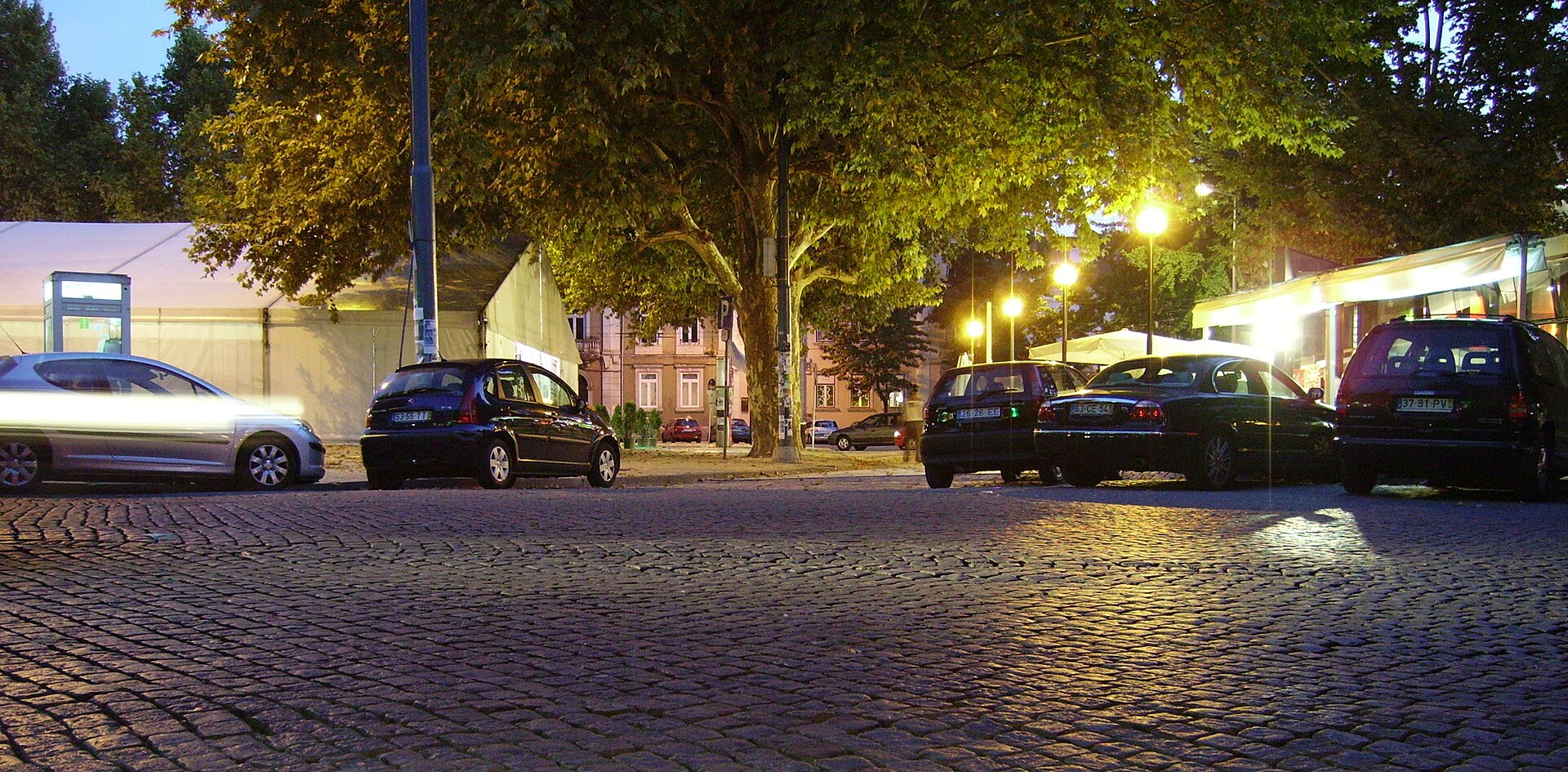
The square feels most alive in the evenings, when the crowds thin and the streetlights cast long shadows across the cobblestones. Time seems to slow here, as if the city has paused to catch its breath. Students on their way back from the library stop by the fountain to chat, their voices mingling with the sound of water. Sometimes, someone pulls out a guitar and plays a few notes of fado, the music soft and melancholic, the way all truly Portuguese melodies seem to be. In moments like these, the square becomes a kind of communal living room, where everyone—even the occasional tourist—feels like they belong. It’s the kind of place where people stay longer than they intended, just to sit on a bench and listen to the city breathe.
Winter transforms the square into something even more intimate. Rain is common in Coimbra, and the cobblestones darken quickly under its touch, while the air fills with the scent of damp earth and coffee drifting from nearby cafés. In December, a small Christmas tree appears, its lights twinkling against the gray sky, and locals gather to sip mulled wine and exchange holiday greetings. Summer brings a different energy—student festivals, open-air concerts, impromptu markets where artisans sell their wares. Yet even on the busiest days, the square retains a sense of quiet familiarity, as if all the activity is just an extension of someone’s everyday life.
What’s striking about Praça da República is how unassuming it is. There are no grand monuments, no plaques commemorating historic events, no stages for speeches. Instead, it remains a space for the ordinary—meeting friends, walking the dog, reading a book on a bench. That might be why locals love it so much. It doesn’t try to be anything more than it is. Coimbra has plenty of places that wear their history proudly, but this square is different. It doesn’t compete with the past; it simply exists alongside it, content to play a supporting role.
From here, it’s easy to wander in any direction and find something worth exploring. A short walk toward the university leads to the old botanical garden, where students study under the shade of ancient trees. Head the other way, and you’ll find yourself in the labyrinth of the old town, where every building seems to have a story. But no matter where you go, returning to the square always feels a little like coming home. There’s nothing particularly grand about it, and that’s exactly what makes it special. Not every meaningful place needs to be monumental. Sometimes, all it takes is a quiet corner where you can pause, look around, and realize that a city isn’t just a dot on a map—it’s a living thing, with its own rhythms, memories, and breath.