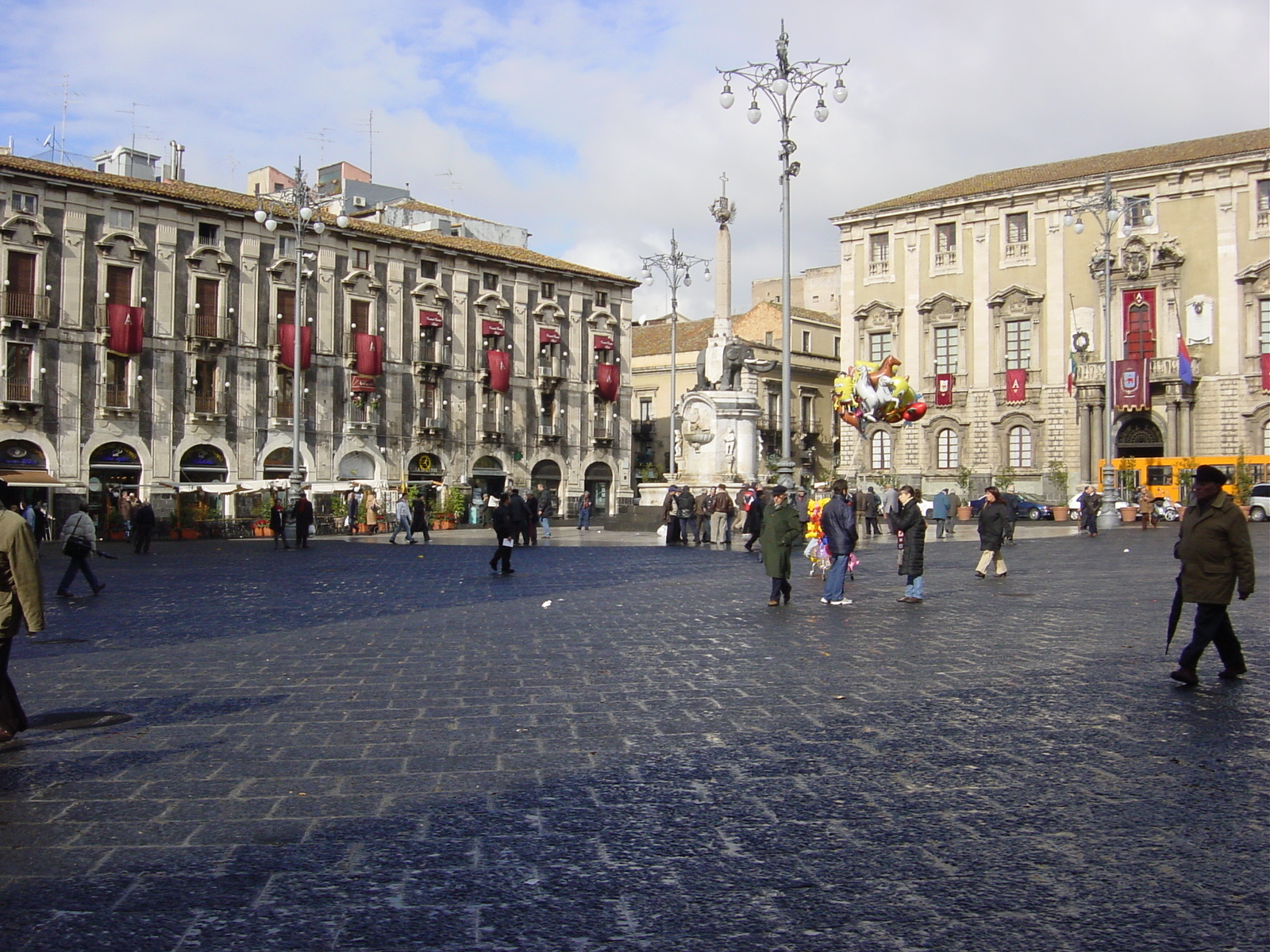
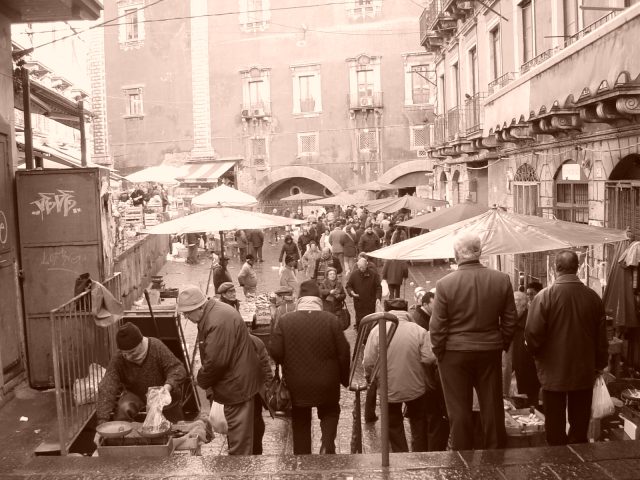
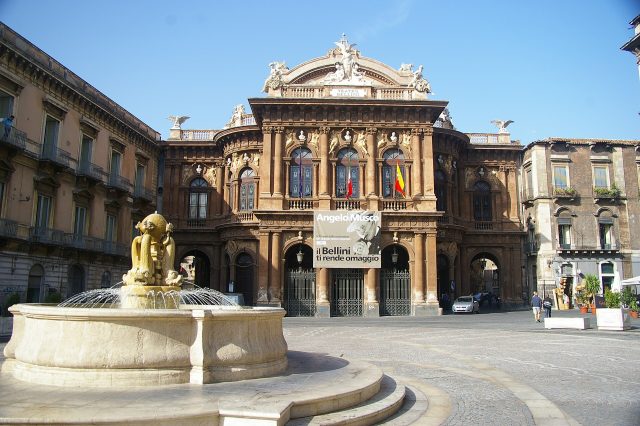
Piazza del Duomo in Catania isn’t just the city’s central square—it’s where the past and present collide in the most ordinary, unscripted way. This is where Catania breathes. The square sits at the heart of the old town, a natural starting point for anyone exploring the city. Around it, the streets hum with life: cafés spill onto the pavement, markets buzz with vendors, and the city’s most important landmarks stand within easy reach. Yet for all its history, the piazza never feels like a museum. It’s a place where locals go about their day, where tourists pause to take photos, and where the rhythm of Sicilian life unfolds without pretense.
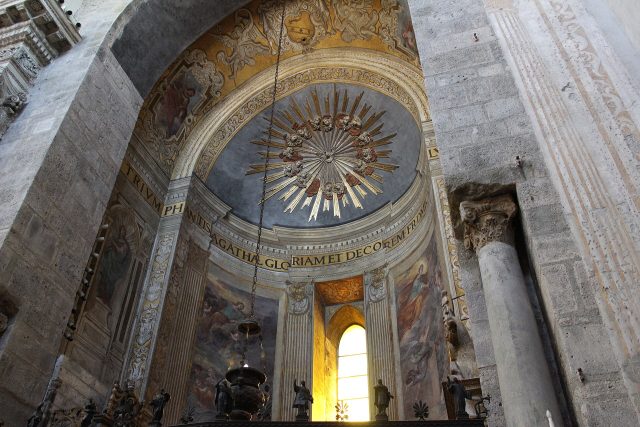
The architecture here tells a story of resilience. Catania has been shaped by earthquakes and volcanic eruptions, and the buildings around the square bear the marks of that turbulent history. The most striking feature is the Fontana dell’Elefante, a fountain crowned by a lava-stone elephant, the city’s symbol. Known as Liotru, the elephant is more than decoration—it’s a guardian, a figure woven into local legend. The fountain is surrounded by Baroque buildings, their facades a mix of grandeur and wear. The Cathedral of Saint Agatha, the city’s patron saint, dominates one side of the square. Its facade is a masterpiece of Sicilian Baroque, with intricate carvings and statues that seem to dance in the sunlight. The cathedral has been rebuilt many times, each version layering history upon history.
Opposite the cathedral stands the Palazzo degli Elefanti, the town hall, its facade also adorned with elephant motifs. The building has a quiet authority, its presence reassuring rather than imposing. Nearby, the Church of Santa Maria della Purità hides its ornate interior behind a modest exterior, a reminder that in Catania, beauty often lies beneath the surface. Together, these buildings create a harmonious whole, each contributing to the square’s character without overshadowing the others.
What makes Piazza del Duomo special is how seamlessly it blends history with everyday life. In the morning, the scent of espresso and fresh pastries drifts from the cafés as locals hurry to work or linger over their first coffee of the day. By midday, the square fills with people—tourists snapping photos, street musicians tuning their instruments, and groups of friends chatting under the shade of umbrellas. As evening falls, the pace slows. The cafés stay open late, and the square becomes a gathering place, a stage for conversations, laughter, and the occasional impromptu performance.
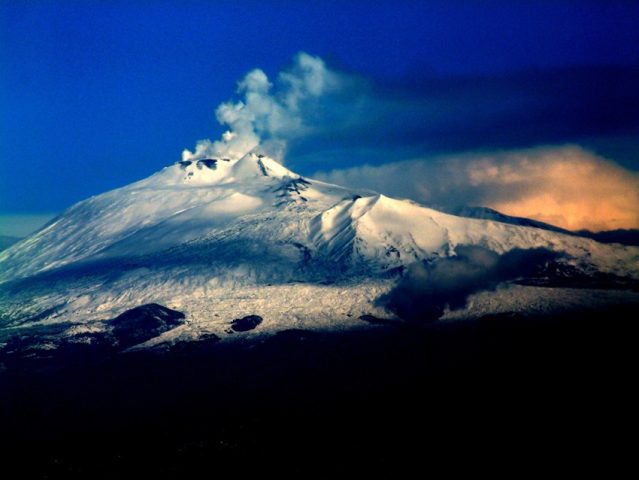
The square’s connection to nature is impossible to ignore. Catania sits at the foot of Mount Etna, and the volcano’s presence is felt even here, in the heart of the city. The black lava stone used in the fountain and many of the buildings is a constant reminder of the land’s volatility. It gives the piazza a raw, almost elemental energy, as if the city is still in conversation with the forces that shaped it. The light changes throughout the day, casting shifting shadows across the facades, and the breeze carries the scent of the sea, a reminder that the Mediterranean is never far away.
Piazza del Duomo is also a stage for Catania’s traditions. The most famous is the Festival of Saint Agatha in February, when the square becomes the center of a week-long celebration. Thousands gather for processions, fireworks, and religious ceremonies, turning the piazza into a sea of color and sound. But even outside of festival season, the square pulses with the spirit of Sicily. It’s in the way locals greet each other, in the music drifting from a nearby café, in the way the sun warms the stone at midday.
There’s something deeply satisfying about simply sitting here, watching the world go by. Despite the crowds, the square never feels chaotic. Instead, it has a rhythm of its own, a pace that invites you to slow down. You can order a coffee, pick up a cannoli from a nearby pasticceria, and spend an hour observing the ebb and flow of life. Children play near the fountain, elderly men argue over a game of cards, and tourists wander in and out of the cathedral. It’s a place where time feels fluid, where the past and present coexist without tension.
Catania is a city of contrasts, and Piazza del Duomo embodies that perfectly. Here, the grandeur of Baroque architecture meets the simplicity of daily life. The raw power of Etna contrasts with the gentle warmth of the Sicilian sun. The noise of the crowd fades into the quiet of ancient walls. The square doesn’t try to be perfect—it’s messy, alive, and endlessly fascinating. That’s why it never feels the same twice. Whether you’re seeing it for the first time or the tenth, there’s always something new to notice, something unexpected to discover. It’s not just a place to visit; it’s a place to experience.