Chowk Yadgar, often called Chowk Chaukandi by locals, is one of those rare places in Peshawar where the city’s layers of history feel almost tangible. It’s not just a square—it’s a crossroads where the past and present collide in the most ordinary, unscripted ways. Here, in the heart of the old city, the air carries the scent of charcoal grills, freshly baked naan, and the faint mustiness of centuries-old stone. The narrow streets branching out from the square hum with the rhythm of daily life, where donkey carts rattle over cobblestones and the call to prayer mingles with the shouts of vendors.
The name Chaukandi comes from the Pashto word for "four corners," and that’s exactly what this place is—a junction where four major streets converge, each leading to a different facet of Peshawar’s identity. One path winds toward Qissa Khwani Bazaar, the legendary "Street of Storytellers," where merchants have traded fabrics, spices, and jewelry for generations. Another leads to the workshops of artisans, where craftsmen still carve wood and hammer metal as they have for centuries. A third street points toward the old caravanserais, once bustling with traders from Central Asia, while the fourth heads toward the city gates, the same ones that welcomed caravans traveling the Silk Road. This intersection has always been more than just a physical space; it’s where the city’s soul has been shaped by trade, migration, and the constant ebb and flow of people.
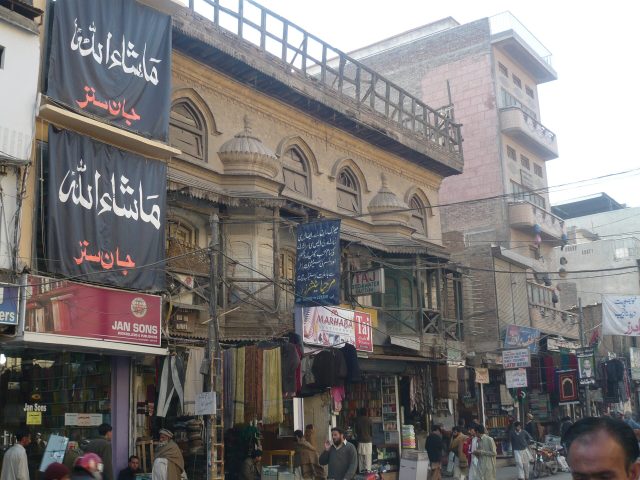
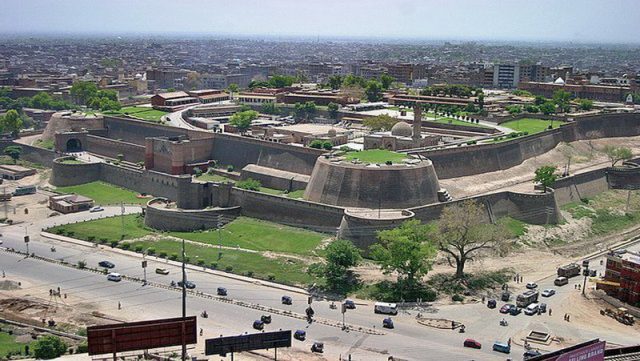
The architecture around Chowk Yadgar tells a story without words. The buildings here are a patchwork of eras—medieval structures with intricately carved wooden balconies stand beside colonial-era facades left by the British. Nearby, the imposing walls of Bala Hisar Fort loom over the square, a silent witness to the rise and fall of empires. The fort’s ramparts have seen Mughal rulers, Sikh conquerors, and British administrators come and go, each leaving their mark on the city. The square itself is framed by low-rise buildings with flat roofs, where families dry fruit in the sun and gather in the evenings to escape the day’s heat. Many of these structures are adorned with traditional woodwork, passed down through generations of craftsmen, their patterns as much a part of Peshawar’s identity as the stories told in the bazaars.
Life here never pauses. Mornings begin with shopkeepers unfurling their awnings, displaying everything from handmade pottery to antique coins. By midday, the square is alive with the chatter of schoolchildren, the clatter of hooves as donkeys pull carts through the alleys, and the occasional honk of a rickshaw navigating the tight spaces. As the sun sets, the square transforms into a gathering place. Men sip steaming cups of green tea in roadside stalls, debating politics or sharing news, while others simply watch the world go by. On festive occasions—Eid, local festivals, or weddings—the square becomes a stage for celebrations, with traditional music filling the air and dancers moving to the beat of drums.
For many Peshawaris, Chowk Yadgar is more than just a landmark; it’s a chapter in their personal histories. It’s where childhood memories were made, where first crushes blossomed, and where friends still meet to while away the hours over tea. The elders of the city remember how the square has changed over the decades—new shops replacing old ones, faces coming and going—but the sense of belonging remains. For outsiders, it’s a window into a side of Peshawar that guidebooks rarely capture. There’s no curated experience here, no polished narrative. What you see is what the city has always been: messy, vibrant, and unapologetically real.
This isn’t a place frozen in time. Chowk Yadgar isn’t a museum exhibit or a postcard-perfect snapshot of the past. It’s a living, breathing part of the city where the old and the new coexist without pretense. A shop selling handwoven textiles might stand next to a store hawking the latest smartphones, and a centuries-old wall could be plastered with advertisements in English. The smells are just as authentic—the sizzle of kebabs on a grill, the sharp tang of spices, the earthy aroma of rain-soaked stone. The sounds are just as real—the call to prayer echoing from a nearby mosque, the haggling of shoppers, the laughter of children playing in the alleys.
Peshawar has always been a gateway—a city where cultures, religions, and ideas have collided for centuries. Chowk Yadgar embodies that legacy. The influences of Persians, Mughals, British, and Afghans are all visible here, not just in the architecture but in the food, the language, and even the way people move through the streets. You’ll hear conversations in Pashto, Urdu, Farsi, and English, sometimes all in the same sentence. The bazaars are filled with goods from across the region—Afghan carpets, Indian spices, Chinese electronics—each telling a story of trade and connection.
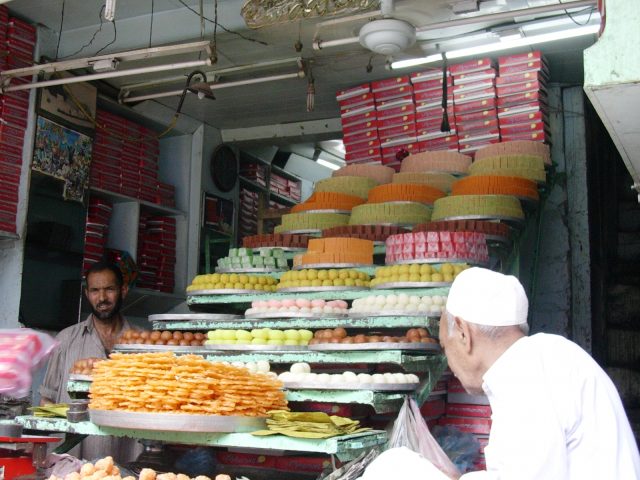
Visiting Chowk Yadgar isn’t about ticking off a tourist attraction. There are no guided tours, no plaques explaining the history, and no carefully marked paths. That’s part of its charm. You could spend hours wandering the surrounding alleys, peeking into workshops where craftsmen shape metal or weave fabric by hand. You might stop at a stall to try chapli kebabs or a cup of sweet, milky chai. Or you could just sit on the steps of an old building, watching the world unfold at its own pace. The key is to let the place reveal itself slowly, the way it has for generations.
Today, Chowk Yadgar is one of the few places in Peshawar where the old city’s spirit still feels intact. Modern development has crept in around the edges—new roads, shopping malls, and high-rises—but here, time moves differently. The past isn’t erased; it’s woven into the fabric of daily life. For anyone trying to understand what Peshawar truly is, this square is the perfect starting point. It’s not about grandeur or spectacle. It’s about the quiet, unshakable sense of a place that has seen empires rise and fall, yet remains, stubbornly and beautifully, itself.