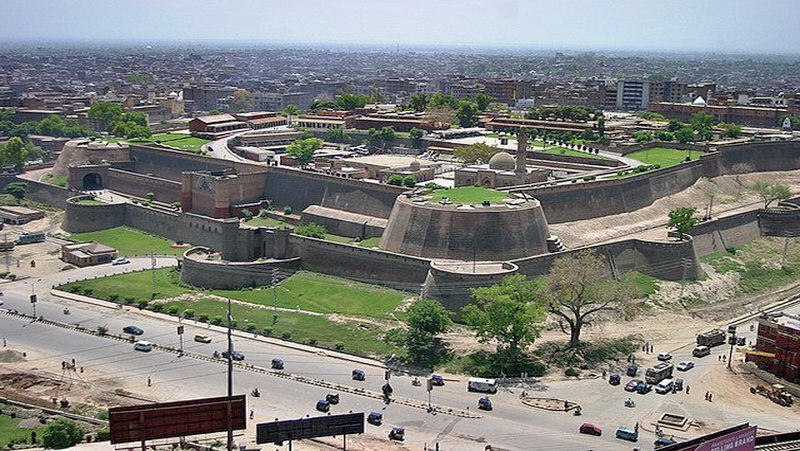
Bala Hisar Fort overlooks Peshawar from a hill in the city’s north. Its walls have endured empires, armies, and the routines of those who lived in their shadow. For centuries, it guarded trade routes where merchants, soldiers, and travelers passed, each leaving traces in its stone.
The fort’s beginnings are unclear. Written records first mention it during the Mughal era, when it housed governors and served as a military post. Yet earlier fortifications may have stood here, possibly from the Kushan or Greco-Bactrian periods. Peshawar’s strategic value made it a target, and the fort changed hands repeatedly—Afghan rulers, Sikh invaders, and the British all claimed it, altering its structure each time.
The design reflects its many owners. The Mughals built thick clay and stone walls, while the Sikhs added European-style bastions and moats. The British later converted it into a garrison, constructing barracks and administrative buildings that still define its layout. Few Mughal elements remain, and even the British additions show wear, their edges softened by time.
The fort’s interior is split into two courtyards. The lower once held barracks and storerooms; the upper contains the ruins of palace buildings. Now, the space is quiet, but the past lingers—the sounds of hooves, soldiers’ shouts, and officials’ voices once filled these grounds. From the upper courtyard, the old city sprawls below: narrow streets, mosque minarets, and markets that have endured for generations.
The British also used the fort as a prison. In the late 1800s, it held anti-colonial rebels and political dissidents. Local stories claim ghosts still wander its halls, though it no longer imprisons anyone. Now controlled by the Pakistani military, the fort is mostly off-limits, but its outer walls and gates are visible from nearby streets. Its presence serves as a reminder—it has been both protector and oppressor.
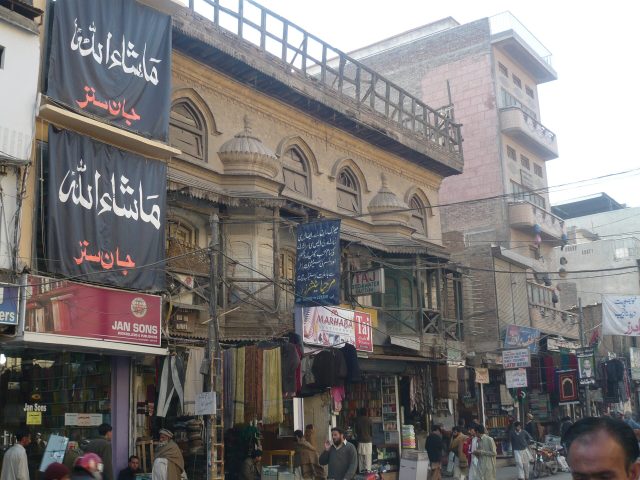
Peshawar’s history is palpable at every turn, and Bala Hisar is one of its most prominent landmarks. Beyond its walls lies the old city, where time moves differently. Narrow alleys lead to Qissa Khwani Bazaar, one of Asia’s oldest markets, filled with spices, textiles, and the sounds of bargaining. Nearby, Mughal-era mosques and the Peshawar Museum display artifacts from the Kushan and Gandhara civilizations. The fort connects these layers, grounding the city’s past in its stones.
For Peshawar’s residents, Bala Hisar is more than a ruin—it’s part of their story. It has been a seat of power, a wartime refuge, and a place of suffering. It has always stood there, a fixture in the skyline. Today, its walls are weathered, but that only deepens its character. Unlike Lahore’s polished monuments, Bala Hisar remains untouched by tourism, a place where past and present coexist without pretense.
Walking its ramparts, you might catch echoes of military drills or distant voices. The fort doesn’t present history neatly—it asks you to piece it together, to feel the weight of its stones and the life of the city below. Here, history isn’t just remembered; it’s still alive.