Santa Quaranta Beach feels like one of those rare places where the land simply gives way to the sea without fuss or fanfare. Tucked a few kilometers south of Sarandë, it stretches as a narrow ribbon of sand between the Ionian waters and the low, rocky hills that rise behind it. There’s no grand promenade here, no rows of sunbeds or beachfront hotels competing for attention. Instead, the shoreline remains quiet, even in summer, with only the sound of waves and the occasional cry of gulls breaking the stillness. The breeze off the water keeps the heat at bay, making the midday sun feel less oppressive than it does in busier coastal spots.
The sand is fine and pale, almost white in certain lights, with a faint golden tint that shifts as the day progresses. The water is clear enough to see the seabed, its color deepening from turquoise near the shore to a rich blue further out. The slope into the sea is gentle, without sudden drops, which makes it easy for families with children to wade in without worry. Along the edges of the beach, low cliffs rise, covered in scrubby bushes and stunted pines that offer patches of shade when the sun is high. Locals often bring their own makeshift shelters—old sheets strung between branches or towels spread beneath the trees—rather than relying on rented umbrellas. After storms, the tide sometimes leaves behind broken shells and small stones, but the water itself stays clean, free of seaweed or debris.
This stretch of coast hasn’t always been a destination. Just a couple of decades ago, Santa Quaranta was little more than a local secret, known mostly to fishermen and a handful of travelers who stumbled upon it. There were no cafes, no paved roads—just a rough track winding down from the hills. Even now, the changes have been modest. A few small bars have sprung up along the shore, serving coffee, fresh juice, or simple seafood dishes, but they don’t dominate the landscape. Most visitors still arrive for the day, bringing their own food and drinks, leaving only footprints in the sand when they go. The beach has kept its unpolished charm, resisting the kind of development that has transformed other parts of Albania’s coastline.
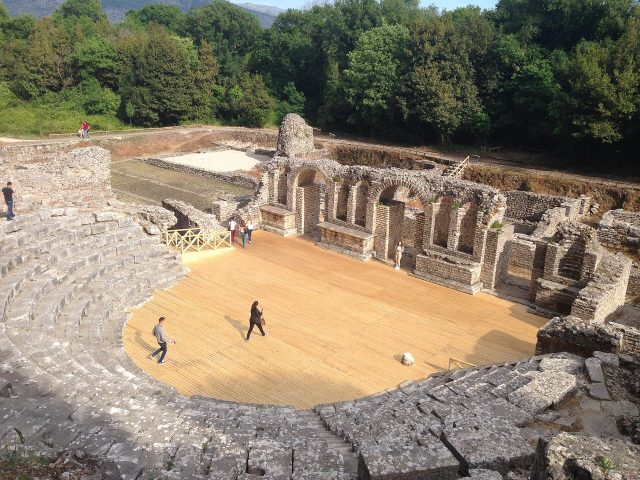
What makes Santa Quaranta interesting isn’t any single landmark or attraction, but the way it fits into the broader landscape. The hills behind the beach are covered in wild olives, myrtle, and rockroses, their scent mingling with the salt air. Just a short drive away lies Butrint, one of Albania’s most important archaeological sites, where the ruins of an ancient city stand near a lagoon. Many people who come to Santa Quaranta pair a morning on the beach with an afternoon exploring the mosaics and stone walls of Butrint, as if the two places—one shaped by nature, the other by history—are part of the same quiet rhythm. The beach doesn’t demand attention; it simply exists, a pause between the sea and the past.
The pace here is slow, almost reluctant. Even in July and August, when other beaches in Albania are crowded, Santa Quaranta remains peaceful. There are no jet skis, no beach volleyball tournaments, no vendors weaving through the sand. People come for the silence, for the way the light plays on the water, for the chance to sit and watch the waves without distraction. Mornings are especially quiet—just a few fishermen checking their nets or preparing their boats. By midday, the beach fills slightly, but it never feels packed. As the sun dips toward the horizon, casting long shadows across the sand, most visitors drift away, heading back to Sarandë or stopping for dinner at a seaside taverna.
For those who want more than just sunbathing, the area around Santa Quaranta offers a few low-key options. The coastline curves into small coves where the water is even clearer, and the rocks form natural pools that fill with the tide. Snorkeling here can be rewarding—fish dart between the stones, and the seabed is a mix of sand and seagrass. Some visitors rent a boat for a few hours, cruising along the shore to hidden inlets that can’t be reached by land. There are also walking trails that wind up the hills, offering views of the Ionian Sea and, on clear days, the faint outline of the Greek islands in the distance. The paths aren’t well-marked, but that’s part of the appeal—there’s no rush, no set route, just the landscape unfolding as you go.
Santa Quaranta isn’t for everyone. There are no luxury resorts, no nightclubs, no organized entertainment. What it offers instead is simplicity: sand, sea, and the kind of quiet that’s hard to find on more developed stretches of coast. Some might call it boring, but for those tired of crowded beaches and overpriced cocktails, it’s a relief. The beach doesn’t try to impress; it doesn’t need to. It’s one of those places that feels like a secret, even though it’s not really hidden. In a country where tourism is growing fast, Santa Quaranta remains stubbornly itself—a reminder that Albania’s coast isn’t just about the bustle of Durrës or the trendy bars of Vlorë, but also about the quiet corners where the sea still feels wild.