Butrint is one of those rare places where the past doesn’t just linger—it breathes. Tucked along the southern coast of Albania, a short distance from Sarandë, this national park holds the layered stories of civilizations that once thrived here. Greeks founded a colony, Romans built a bustling city, and later, Byzantines and Venetians left their marks. Today, the ruins stand not as silent relics but as witnesses to centuries of life, each stone carrying the weight of history.
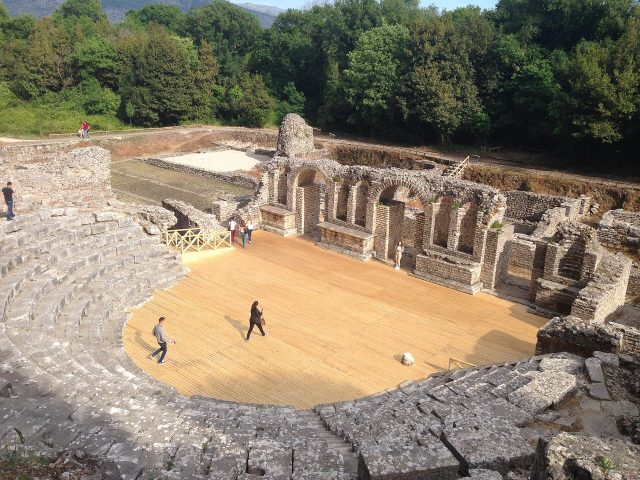
The archaeological site sprawls across rolling hills and valleys around Lake Butrint, a quiet body of water framed by dense forests. The entrance leads through ancient gates, beyond which the remnants of theaters, temples, and baths unfold. The Greek theater, carved into the hillside, still feels alive, its stone seats echoing with the voices of long-ago performances. Nearby, the columns of the Temple of Asclepius rise, a place where pilgrims once sought healing from the god of medicine.
Rome’s influence is impossible to miss. The forum, public buildings, and baths—some still clad in marble—speak of a city that was both grand and practical. One of the most striking discoveries is the so-called Villa of the Mosaics, where fragments of intricate floor designs survive, depicting geometric patterns and mythological scenes. The Romans didn’t just build for beauty; their aqueducts and drainage systems show an understanding of engineering that still impresses.
Byzantine rule brought new purpose to Butrint. Christian basilicas replaced pagan temples, and the city became a religious hub. The 6th-century baptistery, with its mosaic floors of peacocks and crosses, remains one of the best-preserved structures from this era. Butrint wasn’t just a spiritual center—it was strategic, its fortifications guarding the approaches to the bay and controlling trade routes.
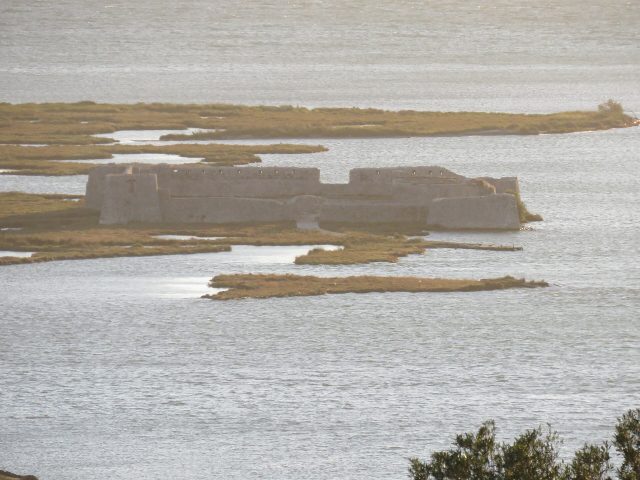
The Middle Ages saw Butrint’s decline. The city slowly faded, its stones repurposed for new settlements. Yet the Venetians, who arrived in the 14th century, left behind a fortress perched on a hill, offering sweeping views of the bay. Today, these walls are one of the park’s most striking features, especially at sunset, when the light softens the ancient stone.
Nature here is as compelling as the ruins. The lake, ringed by reeds and forests, is home to pelicans, flamingos, and tortoises, while wild boars occasionally wander through the undergrowth. Walking the park’s trails feels like stepping into another world—one where time moves differently, and the only sounds are the rustle of leaves and the distant call of birds.
Butrint’s inclusion on the UNESCO World Heritage list isn’t just about its historical significance. It’s a place where cultures overlap, where nature and history coexist without conflict. Visitors often remark on the atmosphere, how easy it is to imagine the city as it once was, alive with people, now reduced to whispers in the wind.
For anyone visiting Sarandë, Butrint is a must. The journey takes about half an hour, and arriving early helps avoid the midday heat. Unlike more famous ancient sites, it’s rarely crowded, allowing for quiet exploration. The paths wind past ruins and through forests, offering space to reflect. And if you’re lucky, on the way back, you might see fishermen returning with their catch—a small but vivid reminder of the life that still flows through this place.